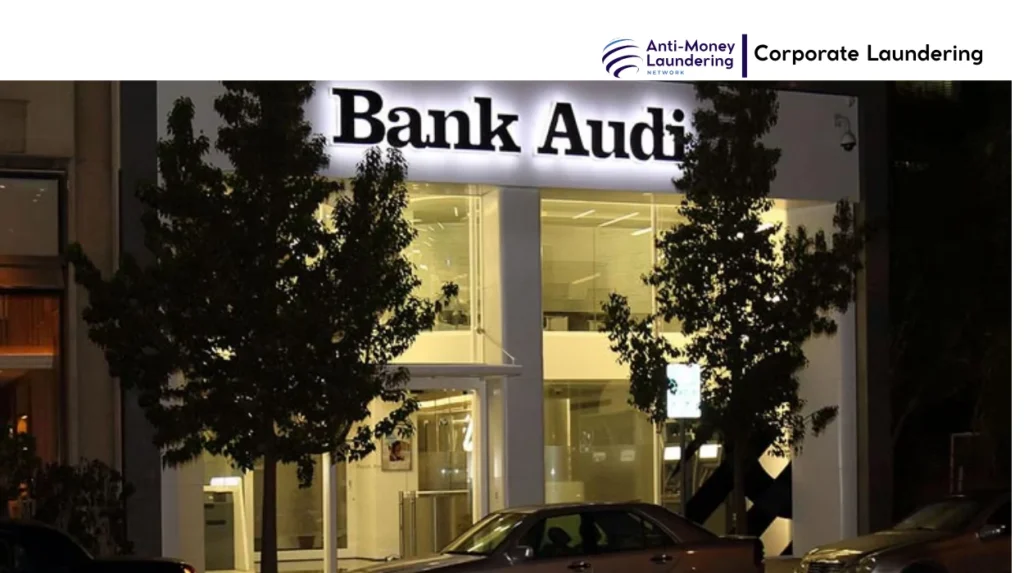
Bank Audi sal, Lebanon’s largest private bank by assets, operates extensive bank audi sal branches across bank audi sal Lebanon and internationally, including bank audi s.a.l headquarters in Beirut’s bank audi sal bab idriss district. Founded in 1830 as a currency exchange and formally incorporated in 1962, the institution grew into a regional powerhouse with subsidiaries like Banque Audi Suisse and Bank Audi Qatar.
Allegations emerged in U.S. civil lawsuits claiming Bank Audi sal maintained accounts for Hezbollah-controlled entities, facilitating Money Laundering and sanctions evasion.
This case holds significance in the global Anti–Money Laundering (AML) landscape due to Lebanon’s status as a high-risk jurisdiction amid banking crisis and Hezbollah influence, exposing gaps in Customer due diligence (CDD) and Know Your Customer (KYC) for terrorist financing networks.
Background and Context
Bank Audi sal history traces to Saida’s exchange house, evolving under Audi family control with Kuwaiti and Gulf investments post-1962. By the 1980s, bank audi sal shareholders exceeded 1,500, including bank audi sal ownership stakes like FRH Investment (12.25%), Sheikh Diab Al Nahyan (7.96%), and indirect ties to Bank Audi sal Politically exposed person (PEP) figures such as ex-Central Bank Governor Riad Salameh and PM Najib Mikati. Listed on Beirut and London exchanges, bank audi sal annual report disclosures showed robust growth pre-2019 crisis.
The timeline escalated with Lebanon’s 2019 financial collapse, halting dollar withdrawals and exposing Financial Transparency issues. U.S. Treasury sanctions on Hezbollah financiers intensified scrutiny, culminating in the 2020 Bartlett v. Société Générale lawsuit naming Bank Audi sal among 12 banks for Suspicious transaction handling tied to terrorist groups. Pre-crisis expansion via bank audi s.a.l abu dhabi representative office and bank audi sal careers in compliance masked underlying risks.
Mechanisms and Laundering Channels
The Bartlett complaint detailed Bank Audi sal accounts for Shell Companies like Ovlas Trading SAL (linked to U.S.-designated Kassem Tajideen), Halawi Exchange Co. (sanctioned for Hezbollah laundering), Atlas Holding SAL (Treasury-designated in 2020), and Medical Equipments and Drugs International Corporation. These facilitated Trade-based laundering, arms funding, and Iraq operations harming U.S. interests via U.S. dollar clearing.
Bank Audi sal Linked transactions allegedly involved Structuring through Hezbollah’s Business Affairs Component, evading Name screening via complex networks. Offshore entity subsidiaries like Banque Audi Suisse enabled Electronic funds transfer (EFT) flows, while Hybrid money laundering blended legitimate bank audi sal revenue with illicit streams.
Beneficial Ownership opacity in bank audi sal(audi saradar group structures and GDRs hindered transparency. No direct Bank Audi sal Fraud convictions, but patterns suggest Cash-intensive business proxies.
Regulatory and Legal Response
U.S. plaintiffs invoked the Anti-Terrorism Act in Bartlett (EDNY 1:19-cv-00007), alleging Bank Audi sal aided Hezbollah attacks. Lebanese Bankers Association dismissed claims, but proceedings persist. FINMA’s 2024 enforcement on Banque Audi Suisse cited AML breaches for high-risk Bank Audi sal PEP clients like Salameh, confiscating CHF 3.9mn profits and imposing CHF 19mn surcharge.
Lebanese probes by Judge Ghada Aoun charged Bank Audi sal executives with Money Laundering in central bank dealings. U.S. Treasury’s 2025 sanctions on Hezbollah officials referenced Lebanese banks broadly. Cases align with FATF Recommendation 10 (CDD) and 13 (Beneficial Ownership registers), highlighting bank audi sal management lapses.
Financial Transparency and Global Accountability
The scandal revealed Financial Transparency deficits in bank audi sal financial statements and bank audi sal investor relations, where bank audi sal net worth masked risks from Forced liquidation fears post-crisis. International responses included Swiss prosecutorial probes into $153mn Salameh transfers and Liechtenstein GDR anonymity reviews.
Watchdogs like FDD and OCCRP urged cross-border data sharing, influencing FATF grey-listing of Lebanon. Bank Audi sal lessons spurred enhanced Anti–Money Laundering (AML) cooperation, including U.S. correspondent bank de-risking and EU directives on PEP screening, tying to global Corporate Governance reforms.
Economic and Reputational Impact
Bank Audi sal worth plummeted amid 2019 crisis, with bank audi sal sanctions fears eroding investor confidence despite $3.1bn “financial engineering” profits. Stock (AUDI) delisted from active trading; partnerships like IFC soured via $234mn UK disputes. Bank audi sal board of directors, led by Chairman Samir N. Hanna and bank audi sal CEO, faced stakeholder exodus.
Broader effects destabilized Lebanese markets, amplifying capital flight and eroding Gulf ties (bank audi sal jobs cuts followed). Reputational damage questioned bank audi sal location viability in compliant jurisdictions.
Governance and Compliance Lessons
Corporate Governance gaps at Bank Audi sal included inadequate bank audi s.a.l parent company oversight of subsidiaries and weak internal Know Your Customer (KYC) for Shell company clients. Bank audi sal management failed transaction monitoring, enabling Structuring and PEP layering. Post-FINMA, remediation involved compliance upgrades.
Regulators mandated risk surcharges; Bank Audi sal enhanced Customer due diligence (CDD) per Basel standards. Lessons emphasize automated Name screening and Beneficial Ownership verification to prevent Hybrid money laundering.
Legacy and Industry Implications
Bank Audi sal’s case reshaped AML enforcement in MENA banking, prompting Lebanese central bank audits and U.S. extraterritorial suits. It influenced bank audi sal annual report disclosures on sanctions exposure, setting precedents for Trade-based laundering probes.
Industry-wide, it accelerated de-risking of high-risk corridors, FATF-style regional bodies, and tech-driven Electronic funds transfer (EFT) monitoring. As a benchmark, it underscores Audi Bank risks in conflict zones.
Bank Audi sal exemplifies how Money Laundering via Shell Companies and PEPs undermines Financial Transparency in fragile economies. Core findings reveal CDD failures enabling Hezbollah flows, with FINMA fines and U.S. suits exposing accountability voids.
Robust Anti–Money Laundering (AML) frameworks, vigilant Corporate Governance, and global cooperation remain essential to protect finance integrity.