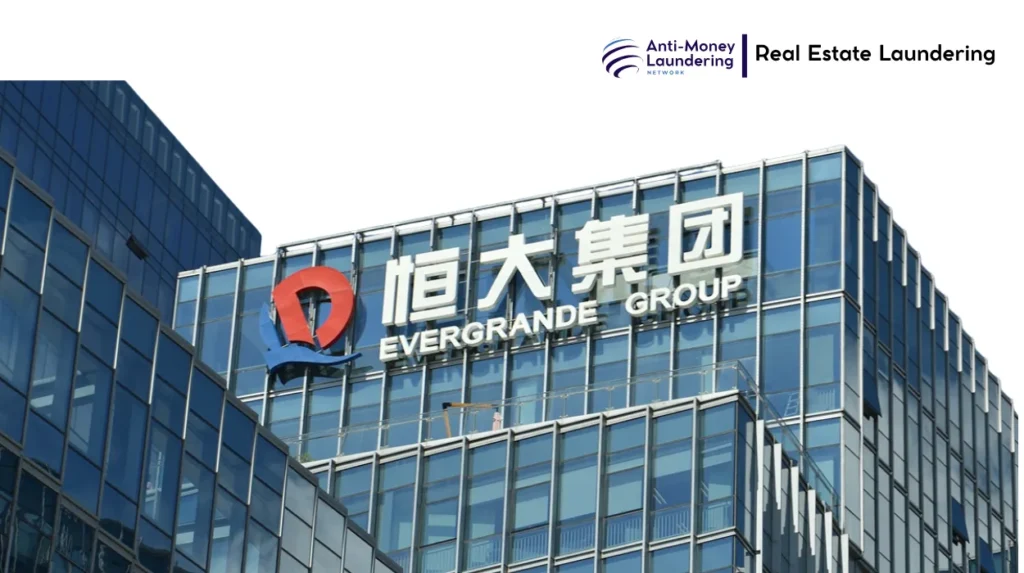
China Evergrande Group represents a pivotal chapter in the story of China’s real estate boom and its subsequent challenges. Once a symbol of rapid urbanization and economic ambition, the company’s trajectory from dominance to distress offers critical insights into leverage, regulation, and market dynamics. This evergreen analysis examines its formation, leadership, controversies, financial practices, global ties, regulatory responses, public effects, and ongoing implications, drawing on established timelines and documented events.
Project Introduction: Formation & Background
China Evergrande Group traces its origins to 1996, when it was established in Guangzhou, Guangdong Province, as a modest property developer amid China’s accelerating shift toward market-driven urbanization. The firm’s launch coincided with Beijing’s policies encouraging housing privatization and infrastructure growth, creating fertile ground for private enterprises to flourish.
Initially named Hengda Group, it focused on affordable residential projects in lower-tier cities, capitalizing on pent-up demand from rural-to-urban migrants. By acquiring undervalued land parcels and executing fast-track construction, the company quickly scaled operations, laying the foundation for what would become one of Asia’s largest real estate conglomerates.
The background of its founders and developers was rooted in the entrepreneurial spirit of post-Deng Xiaoping reform China. Evergrande founder Hui Ka Yan, born in 1958 in Henan Province to a farming family, exemplified the self-made success narrative. After studying metallurgy at Wuhan University of Science and Technology, he entered steel trading before pivoting to real estate in the early 1990s.
Hui’s initial vision was pragmatic: leverage cheap land, pre-sell unfinished units to generate cash flow, and reinvest aggressively to outpace competitors. This model propelled China Evergrande Group expansion into over 1,300 projects across 280 cities by its peak, encompassing not just housing but also cultural parks, hospitals, and electric vehicle ventures.
China Evergrande Group year of establishment marked the beginning of a high-growth phase, with the company rebranding and listing on the Hong Kong Stock Exchange in October 2009. The IPO raised approximately HK$9.35 billion (about $1.2 billion USD at the time), providing capital for nationwide property acquisition and diversification.
China Evergrande Group history reflects broader economic trends: from 2010 to 2017, it reported compound annual revenue growth exceeding 40%, peaking at 466 billion yuan ($72 billion USD) in 2020. China Evergrande Group assets ballooned to over 2 trillion yuan, including vast land reserves equivalent to 15% of Shenzhen’s developable area. However, this success hinged on continuous borrowing, foreshadowing vulnerabilities in a debt-saturated sector.
The company’s address at Evergrande Center in Guangzhou’s Panyu District became synonymous with its operational hub, housing China Evergrande Group office functions for strategy, sales, and finance. Annual reports during the expansion era highlighted robust China Evergrande Group revenue streams from pre-sales, which accounted for up to 90% of cash inflows. Yet, underlying financial statements revealed escalating liabilities, with net debt surpassing 1.9 trillion yuan by 2021.
China Evergrande Group sectors diversified into health (Evergrande Happy World theme parks), sports (ownership of Guangzhou FC), and new energy vehicles (via China Evergrande New Energy Vehicle Group), aiming to reduce reliance on cyclical property markets. At its zenith, China Evergrande Group market share in China’s top 100 developers reached 7-8%, positioning it ahead of rivals like Country Garden and Vanke in sales volume.
Management and Project Head
Central to China Evergrande Group’s ascent was its management structure, dominated by founder Hui Ka Yan, who served as chairman and de facto decision-maker until regulatory interventions. Hui’s leadership style emphasized speed and scale, often prioritizing volume over profitability margins. As China Evergrande Group director and executive, he controlled over 75% of voting shares through layered holdings, enabling swift pivots like the 2018 foray into electric vehicles.
His previous ventures in steel trading honed a knack for high-turnover operations, but critics later pointed to insufficient risk diversification.
Key board members included experienced financiers and property veterans, such as former CFO Pan Darong and Xia Haijun, who oversaw treasury and offshore funding. China Evergrande Group management team expanded to thousands, with regional directors managing project pipelines.
Reputationally, the leadership enjoyed accolades during boom years—Hui featured on Forbes’ billionaire list multiple times, peaking at $45 billion net worth in 2021. Financial links tied the group to state-owned banks like ICBC and China Construction Bank, which provided trillions in loans, often backed by implicit local government support for job-creating projects.
China Evergrande Group careers drew ambitious professionals, offering competitive salaries and stock options amid rapid promotion opportunities. However, as liquidity tightened, reports emerged of delayed wages and supplier payments, tarnishing the internal culture. Controversies around executive compensation—Hui allegedly received over 700 million yuan in dividends during distress periods—fueled debates on governance.
China Evergrande Group financial statements, audited by PwC until 2021, consistently affirmed solvency, though later probes questioned their accuracy. Overall, management decisions reflected a high-risk appetite suited to China’s credit-fueled growth but ill-prepared for policy shifts.
Controversies & Scandals
Evergrande Group’s downfall accelerated with the 2020 introduction of the “three red lines” policy, capping developer leverage at debt-to-cash (1.0), debt-to-assets (70%), and debt-to-equity (100%) ratios. China Evergrande Group challenges crystallized as it breached all three metrics, triggering the Evergrande debt crisis. By late 2021, China Evergrande default on $300 billion-plus liabilities, including $20 billion in offshore bonds, sent shockwaves globally.
Evergrande Group collapse unfolded amid revelations of Evergrande revenue fraud, where authorities accused the firm of inflating 2019-2020 sales by 552 billion yuan ($78 billion USD)—China’s largest accounting scandal. Evergrande $78 billion fraud involved recognizing revenue from uncompleted pre-sales prematurely, misleading bond issuances worth hundreds of billions.
Evergrande founder Hui Ka Yan faced personal fines of 47 million yuan and a lifetime securities market ban in 2024. Evergrande executive detention extended to wealth-management staff in 2023, amid probes into 350 billion yuan in high-yield products sold to 1.6 million investors.
Evergrande stock delisting from Hong Kong in August 2025 capped years of suspensions, erasing shareholder value. Evergrande property crisis rippled to unfinished projects numbering over 1.6 million units, stranding homebuyers. Allegations of Evergrande real estate scam surfaced, portraying pre-sales as Ponzi-like schemes reliant on new buyer funds.
China Evergrande Group fines totaled billions, including a record penalty on its Hengda Real Estate unit. China Evergrande Group lawsuit proliferation included U.S. Chapter 15 bankruptcy filing for offshore arms and creditor schemes in Cayman Islands courts.
Money Laundering Activities
While primarily a fraud and insolvency case, Evergrande’s opacity invites scrutiny of money laundering risks inherent to real estate. China Evergrande Group suspicious real estate deal patterns included rapid property acquisition via offshore vehicles, with executives allegedly transferring $6 billion post-IPO. China Evergrande Group layering (money laundering stage) suspicions arose from nested Hong Kong, BVI, and Cayman entities obscuring fund trails.
China Evergrande Group AML compliance lapses were evident in weak client verification for third-party payments and nominee buyers. As a high-risk sector, real estate enabled potential source of funds opacity, blending legitimate pre-sales with questionable wealth products. China Evergrande Group risk assessment for banks should flag PEPs like Hui and beneficial ownership transparency gaps in layered structures.
Real estate professionals faced obligations to probe mismatches in transaction pacing and valuations, amid Evergrande overseas investments like U.S. luxury villas bought by executives during distress.
No formal laundering convictions exist, but patterns mirror global red flags: overvaluation of assets to secure loans, under-invoicing supplier deals, and shell companies parking funds abroad. China Evergrande Group beneficial ownership transparency remains elusive due to jurisdictional secrecy.
International Links & Benefited Countries
Evergrande global impact spanned continents via dollar bonds held by U.S., European, and Asian funds, totaling $19 billion at default. Benefited countries included Hong Kong (listing hub), the U.S. (luxury assets in California), and Australia (minor holdings). Offshore accounts in Cayman and BVI facilitated cross-border transactions, drawing international bondholder claims.
Evergrande Hong Kong court ordered liquidation in January 2024, entangling global liquidators. Investors in Singapore, London, and New York suffered writedowns, while professional services firms like PwC incurred Evergrande auditor PwC fine of $62 million in 2024 for audit failures.
Regulatory Actions & Legal Proceedings
China’s CSRC spearheaded probes, imposing China Evergrande Group regulations breaches penalties. Evergrande liquidation proceeds slowly, with asset freezes on key properties. No direct FIA/NAB/FATF actions, but the case informs FATF real estate guidance. Pending cases include U.S. recognition of proceedings and investor arbitrations.
Public Impact & Market Reaction
China Evergrande Group investors lost billions; retail buyers faced mortgage protests over Evergrande unfinished projects. Property prices dipped 20-30% in affected cities, eroding household wealth (70% tied to real estate). Market trust plummeted, with sales volumes contracting 40% sector-wide.
Post-Evergrande 2025 delisting, operations are minimal; China Evergrande Group recovery favors homebuyers via state interventions. Experts predict protracted liquidation, with 5-10% creditor recoveries. China Evergrande Group future hinges on policy support, but scars linger for competitors and regulations.