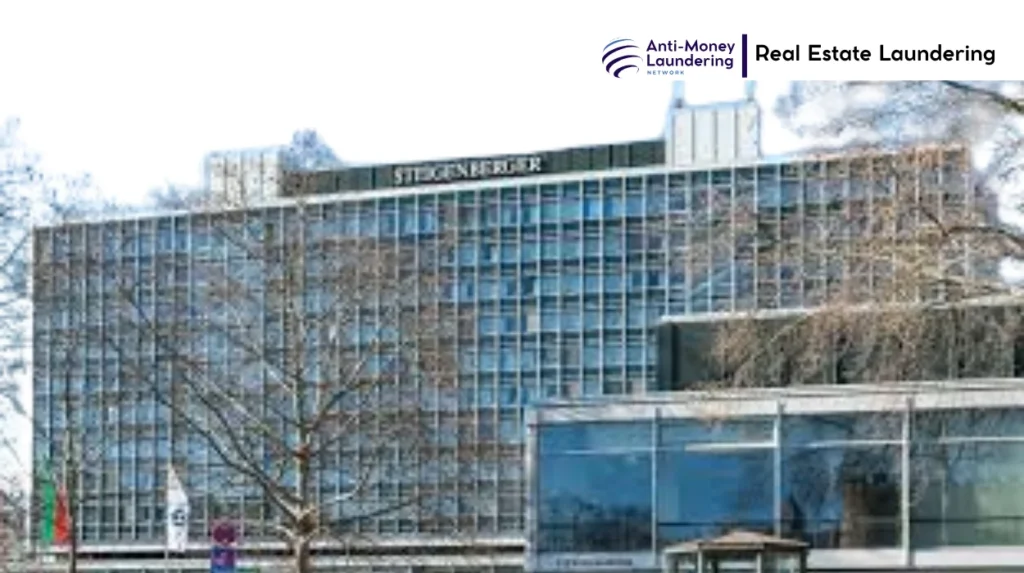
Aroundtown SA has emerged as a central fixture in European real estate, earning a prominent spot among the largest listed real estate companies in the region. With a Luxembourg base and a portfolio heavily concentrated in Germany, the Netherlands, and London, Aroundtown SA blends continental‑scale capital‑market access with granular, city‑level asset management.
Its history, governance policies, portfolio mix, and risk‑profile reflect broader trends in the “income‑rich, value‑add” segment of commercial property, but the company’s structure and deal‑making also place it within a high‑risk sector from an anti‑money‑laundering and transparency standpoint.
This article provides a neutral, analytical, evergreen overview of Aroundtown SA, integrating its market position, real estate strategy, capital structure, and regulatory context into a narrative that stands regardless of short‑term market swings.
Aroundtown SA overview and founding background
Aroundtown SA was founded in 2004 as a specialist real estate investor focused on central‑location properties in top‑tier European cities. The company began in central Berlin, gradually expanding its footprint to include other German gateway cities and international metro centres.
Over time, it shifted from a niche investor into a fully fledged publicly traded real estate group, incorporating in Luxembourg and listing both on Euronext under the ISIN LU167308939 and on the Frankfurt Stock Exchange as AT1. This dual‑market, dual‑jurisdiction approach gives it flexibility in tax planning, governance, and financing terms compared with more domestically anchored German real estate firms.
The initial vision aligned with a “value‑add” model rather than simple yield play or pure speculation. Aroundtown SA sought to acquire under‑managed or structurally challenged office and residential blocks in prime inner‑city locations—particularly Berlin, Frankfurt, Munich, and Amsterdam—then unlock higher rental income via refurbishment, re‑letting, and, in some instances, conversion or in‑situ improvement.
This strategy deliberately avoids pure development risk, relying instead on enhancing existing assets, often with long‑term, inflation‑linked leases to public‑sector and corporate tenants. By anchoring itself in high‑quality locations and exploiting the gap between current operational efficiency and potential rental upside, Aroundtown SA positioned itself at the intersection of institutional cash‑flow investors and urban value‑add syndicates.
The company’s structure also supports a lightweight, deal‑focused business model. Instead of becoming a traditional, siloed property developer, Aroundtown SA skews towards being a transaction‑driven landlord, using external contractors, specialist asset‑management platforms, and shared‑service structures to keep overhead low while preserving upside from rent‑growth and occupancy improvements.
This model underpins its capital‑structure discipline and investor‑orientation over the full property cycle.
Management team, governance policies, and company profile
At the executive base, Aroundtown SA relies on a relatively lean, investor‑oriented management structure anchored in Berlin, while its legal and financial control seat sits in Luxembourg. Public disclosures and company materials describe a highly experienced management team drawn from across the real estate value chain: capital markets, acquisitions, risk management, and operations.
This blend allows the leadership to maintain an internal balance between deal‑momentum and portfolio‑stewardship rather than swinging violently towards either aggressive expansion or overt conservatism.
Aroundtown SA governance policies emphasize board‑level oversight of acquisitions, divestitures, refinancing, and capital allocations. Formal frameworks govern risk assessment, stress‑testing, and portfolio‑rollforward planning, and these frameworks are regularly updated in response to markets, regulatory shifts, and macroeconomic turning points.
Governance documentation tends to highlight transparency, investor‑protection, and the avoidance of excessive leverage or exposure concentration, echoing broader European directives and Luxembourg‑based corporate‑governance norms.
These governance policies also intersect with Aroundtown SA investor relations obligations. The company must comply with multiple regulatory filings regimes—Euronext’s disclosure rules as well as German securities‑and‑exchange‑listing requirements—requiring regular financial reports, ad‑hoc releases, and annual and quarterly updates.
This high disclosure bar both supports investor confidence and constrains management flexibility when it comes to hiding material risks or problematic assets. Nonetheless, as with most large real estate groups, there is a gap between public disclosures and the internal due‑diligence files that accompany individual acquisitions and refinancings, especially at the level of cross‑border, SPV‑heavy structures.
The formal company profile describes Aroundtown SA as a diversified real estate investment company whose primary objective is to generate stable, inflation‑linked cash flows and long‑term shareholder value. Its headquarters—as distinct from its operational hubs—are in Luxembourg, framed as the structurally neutral legal domicile enabling pan‑European real estate ownership under a single, unified legal entity.
Day‑to‑day oversight of leases, refurbishment projects, and local tenant relationships occurs through office networks in Berlin, Frankfurt, and select other European cities, embedding the company in the urban fabric where its Berlin properties and other core assets are located.
Current market position, Europe ranking, and Germany exposure
By several standard measures, Aroundtown SA holds a flagship position among European listed real estate groups. Internal and third‑party assessments place it among the three largest listed real estate companies in Europe by issue volume and investor attention, underscoring its stature as a significant capital‑market participant rather than a minor niche player.
Within Germany specifically, Aroundtown SA is often cited as one of the leading landlords or largest listed commercial real estate owners, especially in core cities such as Berlin, Frankfurt, and Munich.
The geographic spread of Aroundtown SA’s portfolio is tightly focused: approximately 90 percent of its portfolio value sits in Germany, the Netherlands, and London, with the remaining 10 percent dispersed to other European localities and small niche‑market positions.
This concentration in gateway cities generates predictable rental demand, driven by commercial services, public administration, finance, logistics, and, in the case of residential holdings, permanent urban population growth. Berlin properties alone account for roughly a third of the company’s total assets, making the German capital both an anchor and an exposure concentration risk in its matrix.
Aroundtown SA’s investment focus centres on income‑generating, inflation‑linked core assets in these top‑tier cities, rather than on speculative land banks or purely appreciation‑driven projects. The cornerstone of this strategy is office assets, residential holdings, and hotel investments, which together create a diversified income‑base insulated from any single sector shock.
Office blocks in central Berlin, Frankfurt, and Amsterdam are predominantly leased to public‑sector bodies, financial institutions, and professional service firms, with long‑term contracts and rental indexation or contractual step‑ups embedded. Residential holdings—often channeled through key subsidiaries such as Grand City Properties—target value‑add rental‑stock in structurally tight urban markets where new construction lags demand.
Hotel investments span large European tourism centres and major business destinations, offering steady track‑record revenue streams despite cyclical churn in leisure and business travel.
This composition underpins Aroundtown SA’s claimed asset valuation strength: a portfolio that is not only diversified by property type but also by tenant type and locational robustness within Europe’s most liquid cities. The overlap between office assets, residential holdings, and hotel investments provides a degree of macro resilience, although interest‑rate exposure, policy shifts, and financing‑term variability can still move both net operating income and portfolio valuation materially.
Capital structure, debt levels, refinancing, and shareholder value
Aroundtown SA’s capital structure reflects its position as a sizable, investment‑grade real estate issuer. The company has repeatedly accessed public bond markets over the past decade, issuing a spectrum of debt instruments ranging from straight bonds and Schuldscheine to convertible notes and perpetual instruments, often in large single‑issue tranches.
This diversified stack allows Aroundtown SA to balance floating versus fixed interest commitments while maintaining a reasonable spread between borrowing costs and rental yields across its property types.
Recent reports and market‑research notes indicate that Aroundtown SA relies on perpetual notes and long‑dated bonds to manage a net‑debt‑to‑asset mix that falls into the middle of the sector curve, rather than stretching to the high‑leverage end. Large portions of its rent‑bearing portfolio are described as unencumbered, supporting refinancing headroom and limiting immediate near‑term liquidity pressure even if some single transactions or isolated assets underperform.
Capital structure documents and company presentations highlight average debt maturity and fixed‑interest‑rate ratios as key risk‑mitigation levers, aiming both to secure stability and to cap refinancing‑rate surprises.
On the equity side, Aroundtown SA is subject to the normal stock‑price cycles of the listed real estate sector. Measurement points in early 2026 place its stock price in the mid‑single‑digit euro range (around 2 to 3 euros per share), with a market capitalisation hovering roughly between 3 and 5 billion euros depending on macro sentiment and sector‑wide re‑rating.
The company’s stock price has historically exhibited moderate volatility relative to broader equity indices, often tracking interest‑rate expectations, rent‑growth guidance, and news around refinancing windows or large‑scale property sales.
Shareholder value at Aroundtown SA depends fundamentally on maintaining a sustainable balance of dividend yield, capital‑growth potential, and controlled leverage. Management has emphasized long‑term upside through portfolio optimization, rather than relying on one‑off capital‑gains bursts. Dividend policy is calibrated to earnings‑coverage metrics, and the board tends to frame distributions as a function of net operating income, not speculative gains.
Recent capital‑market releases also indicate active share‑repurchase programs—executed when valuation gaps open—further signalling management’s acknowledgment of market‑cap maintenance as a pillar of shareholder‑value strategy.
Property types, revenue sources, and operational mix
Aroundtown SA’s portfolio breaks down analytically into three primary property types, each with distinct revenue sources and risk‑return characteristics. Together, these types define the company’s business model and underwrite its statements about stability, resilience, and calculated exposure to market shifts.
First, office assets constitute the backbone of Aroundtown SA’s revenue sources. Class‑A office blocks in central Berlin, Frankfurt, Amsterdam, and certain Dutch cities host a high proportion of public‑sector tenants, financial‑sector occupiers, and professional service firms. These leases are typically long term and contain explicit inflation‑linkage clauses, step‑up provisions, or minimum‑escalation guarantees.
As a result, aroundtown SA office assets generate predictable, relatively inflexible revenue, which supports both dividend consistency and debt‑service coverage. The very nature of this asset class also ties rental performance to broader macroeconomic and policy developments: government‑sector demand, financial‑sector profitability, and tax‑base pressure all feed through into occupancy and renegotiation terms.
Second, aroundtown SA residential holdings add diversification but at a lower leverage‑and‑gearing level than pure high‑rise speculative builds. These holdings are largely channelled through key subsidiaries such as Grand City Properties and focus on medium‑rise, urban and inner‑ring‑suburban blocks in Germany and London. The underlying thesis is simple: household growth, urbanization, and limited greenfield infill in many inner‑city districts create structural shortages that support rental uplift over time.
Mixed‑income blocks with varied tenant profiles help mitigate neighborhood‑specific shocks, while refurbishment cycles unlock additional revenue without drastic density increases. The balance between disciplined capex and organic rent growth underpins revenue‑source stability for this slice of the portfolio.
Third, aroundtown SA hotel investments introduce cyclical and operational risk but also higher margins and recoverability if demand improves. The company’s hotel portfolio spans more than 150 sites across major European destinations, many operated through long‑term management contracts or leases with established operators.
These instruments separate ownership and operations, limiting direct revenue volatility at the property‑level while still capturing upside during recovery phases. Revenue sources from hotels tend to fluctuate with business‑travel patterns, tourism flows, and conference cycles, making this property type more sensitive to short‑term macro swings than income‑linked offices or residential blocks. At the same time, hotel earnings can deliver outsized income in up‑cycles, contributing to portfolio‑wide yield performance that outpaces purely defensive assets.
This diversified mix of property types means that aroundtown SA is not a mono‑tenant, mono‑sector, or mono‑location player. Instead, it is an integrated real estate group whose revenue sources span inflation‑linked contracts, contractual step‑ups, and market‑driven pricing exposure, folded into a single capital‑structure envelope that must manage risks across all three buckets simultaneously.
Real estate strategy, acquisitions, and transaction patterns
Aroundtown SA’s real estate strategy has evolved from a fragmented deal‑by‑deal approach into a coherent, institutionally oriented programme that exploits both scale and specialization. At the core of this strategy lies a deliberate preference for existing, income‑generating assets over undeveloped land or high‑risk speculative ventures.
The company favours prime locations within its geographic spread—Germany, the Netherlands, and London—then layers value‑add interventions (refurbishments, façade upgrades, energy‑efficiency improvements, re‑tenanting programmes) atop relatively stable underlying rents.
The most decisive transaction in defining aroundtown SA’s market position was the aroundtown SA TLG merger, which folded one of Germany’s largest office‑and‑residential platforms into the Aroundtown structure. This all‑equity‑driven consolidation created one of Europe’s biggest commercial landlords nearly overnight, combining portfolios, rationalizing overlapping costs, and cross‑seeding best‑practices across regions and tenant categories.
The TLG merger exemplifies the classic large‑deal logic of non‑residential real estate consolidation: operating‑cost savings, reduced capital‑market friction, and enhanced inter‑tenant leverage for landlords.
Beyond this centerpiece transaction, aroundtown SA has continued to pursue property acquisitions and selective disposals as part of an ongoing portfolio‑optimization cycle. Acquisitions generally occur via corporate‑level deals or targeted asset surprises tied to public or private vehicles exiting German and Dutch real estate. Financing follows a predictable pattern: a blend of equity‑raised capital markets proceeds, bond‑issuance, and bank lending, often structured to match asset‑level cash flows.
Subsequent years frequently see aroundtown SA property sales or portfolio swaps in which lower‑return or more exposed assets are sold to more locally anchored players, while remaining holdings are concentrated on core‑city, high‑occupancy blocks. This cadence of acquisition, refurbishment, and disposal fits squarely with the institutional investor playbook in income real estate.
Yet from a regulatory and an anti‑money‑laundering standpoint, aroundtown SA real estate transaction sequences also invite closer scrutiny. The repeated use of multi‑layered entities, cross‑border legal domiciles, and varying contractual wraps around single properties can appear structurally opaque. For a trained real estate professional, these patterns—not unique to Aroundtown but characteristic of many cross‑border owners—naturally raise red‑flag checks for suspicious real estate deal behaviours: inconsistent invoicing, inflated purchase prices, or undisclosed beneficial‑ownership pathways.
While there is no public evidence yet that aroundtown SA has engaged in such practices, the architecture it operates within sits firmly in a high‑risk sector for layered transactions that can support money laundering stages such as placement and layering.
Source of funds, beneficial ownership transparency, and high‑risk AML context
Any sustained discussion of aroundtown SA must reckon with the AML and regulatory dimension in which it operates. In the European context, commercial and residential real estate in gateway cities is widely recognized by FATF, EU‑level supervisors, and national regulators as a high‑risk sector for money laundering and asset concealment. Real estate combines relatively high value per transaction, intrinsic opacity around beneficial intent, and long‑lived holding periods that cushion illicit capital from short‑term detection.
Aroundtown SA’s Luxembourg base amplifies these risks structurally. As a Luxembourg‑anchored group, Aroundtown SA can harness the administrative efficiency of a central listing, standardized disclosure, and consolidated financing while still maintaining a complex web of underlying operating companies, special‑purpose vehicles, and local cooperations.
At the same time, European real estate AML enforcement outside Luxembourg often lags the sophistication of such corporate architectures, creating a regulatory mismatch. Even if aroundtown SA itself maintains rigorous client verification and risk assessment procedures internally, the broader environment contains gaps in beneficial ownership transparency—particularly where multiple layers separate the initial buyer from the ultimate source of funds.
Layering in AML terminology refers to the stage where illicit proceeds are moved through a series of seemingly legitimate transactions to conceal origin and ownership. Real estate is an ideal venue for layering because each purchase, refinancing, or sale can be framed as an economic decision rather than an explicit transfer of criminal proceeds.
Techniques such as over‑ or under‑invoicing, the use of shell companies as nominal purchasers, and repeated nested corporate transfers can all occur without triggering immediate alarm, especially when valuation ranges are high and public‑record‑disclosures are thin. In this light, aroundtown SA Property acquisition patterns, while framed as institutional value‑add deals, resemble the modus operandi that many real estate professionals watch for in suspicious real estate deal environments.
Nevertheless, without specific leaked documents tying aroundtown SA to predicate crimes, no formal laundering characterization can stand. What can be reasonably asserted is that aroundtown SA operates within a high‑risk sector governed by evolving AML compliance frameworks, where realistic enforcement remains uneven across member states.
Aroundtown SA source of funds disclosures focus on capital‑market equity and debt raises, while only partially exposing the identities of ultimate beneficial owners behind certain private‑equity stakes and bank‑custodial vehicles. This partial opacity sits uncomfortably with the transparency goals enshrined in newer EU‑directives and registries, but it does not yet cross the line into demonstrable non‑compliance in publicly available documentation.
Public impact, investor reaction, and local market effects
For institutional and retail investors, aroundtown SA is both a yardstick and a bellwether. As one of Europe’s larger listed real estate players, its financial reports, aroundtown SA annual results, and capital‑market news feed into broader debates about sector valuations, interest‑rate sensitivity, and policy risk.
Periodic aroundtown SA dividend yield updates, leverage disclosures, and guidance on rent‑growth and capital recycling influence how other REITs are priced and perceived, particularly within the German and Dutch markets.
Aroundtown SA stock price has historically reflected a balance between its underlying portfolio strength and external macro pressures. Episodes of interest‑rate uncertainty, regulatory shifts, or geopolitical volatility tend to amplify volatility, whereas clear refinancing windows or positive yield‑performance signals can support steadier valuation trajectories.
Ratings agencies and research houses incorporate aroundtown SA market cap and debt levels into their sector‑risk assessments, treating the company as a proxy for large, diversified, debt‑leveraged real estate exposure in core European cities.
On the city‑level, aroundtown SA’s dense footprint in Berlin and other gateway metropolises shapes both operational quality and citizen‑level sentiment. Tenant‑service standards, maintenance quality, and responsiveness to local regulations (such as rent‑control cap frameworks) become visible when a single large landlord controls a meaningful share of inner‑city blocks.
Aroundtown SA residential holdings, in particular, intersect with broader concerns around housing‑affordability and tenant‑power concentration, especially if local discourse frames such ownership as opaque or international‑rather‑than‑community‑anchored.
Conversely, the company’s emphasis on refurbishment, sustainability ESG programmes, and energy efficiency improvements can also assuage some criticism.