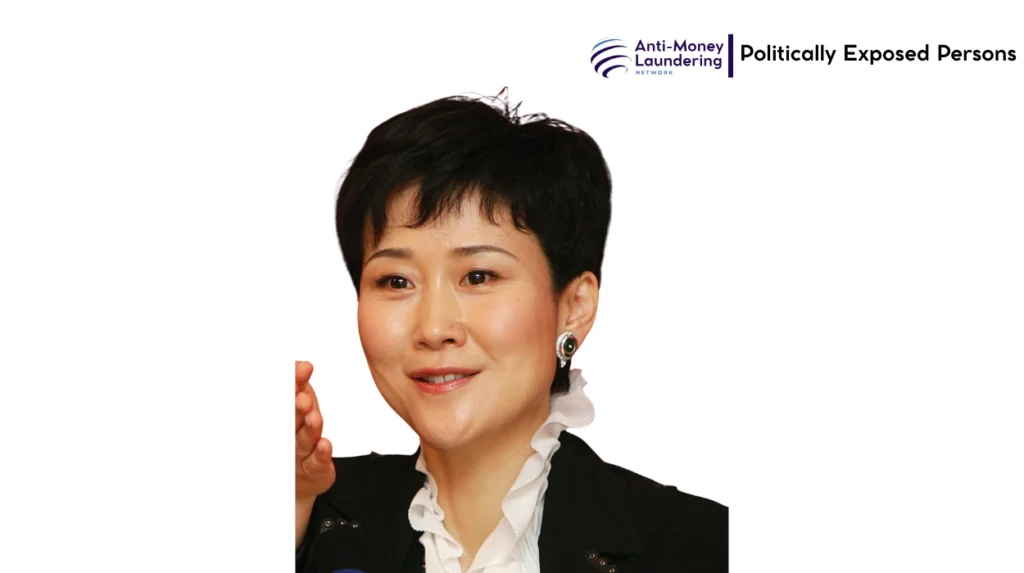
Li Xiaolin stands as one of the most enigmatic figures in modern China’s corporate and political landscape, embodying the intricate interplay between family legacy, state power, and personal ambition. Known widely as the daughter of Li Peng, the former Chinese Premier who played a pivotal role in shaping the nation’s infrastructure during the late 20th century, Li Xiaolin carved out a formidable career in the energy sector.
Her trajectory from a power generation engineer to a top executive in state-owned enterprises has earned her monikers like China power queen, reflecting both admiration and scrutiny. This comprehensive biography delves into her life, achievements, controversies, and enduring influence, offering a balanced view of a woman whose story mirrors China’s own rise as a global superpower.
Born into privilege yet driven by technical expertise, Li Xiaolin’s journey highlights the unique dynamics of elite networks in an authoritarian system, where merit, connections, and opportunity often converge.
Her narrative is not without shadows. Revelations from international leaks have thrust her into discussions on financial transparency, raising questions about offshore dealings that are commonplace among politically connected elites. Yet, her professional accomplishments—overseeing massive power projects and navigating the complexities of state capitalism—cannot be dismissed.
As China continues to dominate global energy markets, Li Xiaolin’s legacy serves as a case study in how individual agency operates within the broader machinery of the Chinese Communist Party (CCP) apparatus. This article explores her early years, family ties, career milestones, personal life, wealth, and the critical lens of global accountability, providing an evergreen resource for understanding one of China’s most prominent princelings.
Early Life and Family Background
Li Xiaolin’s origins are rooted in the industrial heartland of Northeast China, specifically Shenyang, Liaoning Province, her place of birth. Born on June 1, 1961—coinciding with International Children’s Day in China—she entered a family already marked by destiny within the revolutionary elite.
As the daughter of Li Peng, a towering figure in Chinese politics who served as Premier from 1988 to 1998, and Zhu Lin, his wife and a noted Russian-language translator with ties to Soviet-era diplomacy, Li Xiaolin grew up amid the turbulence of the Cultural Revolution. This period of political upheaval tested even the most insulated families, but the Li household’s connections provided a buffer, allowing young Li Xiaolin to focus on education rather than survival.
Her family background is quintessential of China’s “princeling” class—offspring of high-ranking CCP officials who leverage inherited status for advancement. Li Peng, often criticized for his role in the 1989 Tiananmen Square events and praised for spearheading the Three Gorges Dam, instilled in his children a deep affinity for engineering and infrastructure. Li Xiaolin’s brother Li Xiaopeng followed a similar path, rising to become Minister of Transport, while a younger brother, Li Xiaoyong, maintained a lower profile in business.
Zhu Lin, her mother, contributed cultural and linguistic depth to the family dynamic, bridging China’s insular world with international perspectives. This Li Xiaolin family structure exemplified how political power translated into economic opportunity, with each member gravitating toward state-dominated sectors.
Details on Li Xiaolin nationality and citizenship are straightforward: Chinese through and through, with no public indications of dual allegiances despite her global engagements. Her Shenyang birthplace imbued her with the grit of China’s rust belt, where heavy industry and power generation were lifelines. Relocating to Beijing as her father’s career ascended, she experienced the privileges of elite schooling, far removed from the masses enduring re-education campaigns.
Information on Li Xiaolin religion remains absent from records, as is typical for CCP elites who adhere to state atheism, prioritizing party loyalty over personal faith. These formative years laid the groundwork for a life where personal ambition aligned seamlessly with national priorities, setting the stage for her ascent in the power sector.
Education: Building a Technical Foundation
Li Xiaolin education represents a blend of domestic excellence and selective international exposure, tailored for leadership in China’s strategic industries. She began at Tsinghua University, one of China’s premier institutions, where she trained as a power generation engineer. Earning a Master’s degree in Power System and Automation, her Li Xiaolin education Tsinghua equipped her with the technical prowess needed to tackle the nation’s chronic energy shortages.
Tsinghua, often called the “MIT of China,” was a natural fit for the daughter of an engineer-premier, fostering a generation of experts who would electrify the country’s modernization drive.
Her academic pursuits extended abroad with MIT Sloan studies at the Massachusetts Institute of Technology, a rare opportunity for someone of her generation.
This immersion in advanced management principles honed her ability to bridge engineering with executive strategy, preparing her for the helm of massive state corporations. Such Western education was not merely academic; it signaled China’s opening up, allowing princelings like Li Xiaolin to absorb global best practices while maintaining loyalty to Beijing.
Beyond formal degrees, Li Xiaolin engaged in thought leadership through bodies like the Copenhagen Climate Council, where she addressed the intersection of energy production and environmental sustainability. This involvement positioned her as a visionary in an era when China grappled with coal dependency and climate pledges.
Her educational path—rigorous, elite, and forward-looking—underpinned her reputation as a Li Xiaolin power generation engineer turned corporate titan, ready to lead amid China’s explosive growth.
Personal Life: Privacy Amid Public Scrutiny
Little is publicly known about Li Xiaolin spouse, children, or intimate family dynamics, reflecting the deliberate opacity surrounding CCP elites. Her husband, occasionally referenced in leaks as a joint participant in financial dealings, remains unnamed and low-profile, suggesting a partnership focused on discretion rather than spotlight. Similarly, details on Li Xiaolin children are scarce, with no confirmed reports of offspring entering public life.
This veil aligns with cultural norms where family matters serve the collective rather than individual narratives.
At Li Xiaolin age approximately 64 as of 2026, her current status is retired from executive roles, though her influence lingers through family networks. The Li Xiaolin family extends beyond immediate kin to a broader web of princelings, where marriages and alliances reinforce power blocs.
Her position in this ecosystem—daughter of a premier, sister to a minister—affords enduring clout, even post-retirement. Personal life for figures like Li Xiaolin is curated for privacy, allowing focus on professional legacies while shielding vulnerabilities from political rivals or media probes.
Career in Power Sector: From Engineer to Executive
Li Xiaolin career in power sector spans over three decades, marking her as a Li Xiaolin Chinese businesswoman biography of remarkable ascent. Entering state-owned enterprises in the 1980s, she leveraged her Three Gorges Dam connection—overseen by her father—to gain early traction in hydroelectric projects.
By 2002, she became Li Xiaolin China Power International CEO of China Power International Development Ltd., a flagship firm listed on the Hong Kong Stock Exchange. Under her leadership, the company expanded thermal, hydro, and wind capacities, fueling China’s industrial boom.
Transitioning to Li Xiaolin vice president China Datang at China Datang Corporation from 2004 to 2018, she oversaw one of the world’s largest power generators, managing petawatts of output. Her Li Xiaolin China Datang role involved navigating reforms that dismantled monopolies, positioning Datang as a leaner, more competitive entity.
As part of her Li Xiaolin state-owned enterprise career, she drove overseas investments, from Pakistan to Southeast Asia, earning the Li Xiaolin Tamgha-e-Pakistan award for bilateral energy cooperation.
Dubbed Li Xiaolin Hong Kong Stock Exchange CEO during her CPID tenure, she boosted market capitalization amid investor enthusiasm for China’s growth. Achievements included efficiency upgrades and green initiatives, earning Li Xiaolin Fortune magazine ranking among Asia’s most powerful women. Her Li Xiaolin energy sector influence extended to policy circles, advocating for sustainable power amid global scrutiny.
Despite Li Xiaolin nepotism criticisms China, her tenure delivered tangible results, powering factories and cities that defined the economic miracle.
Critics argue her rapid rise reflected family favoritism, yet defenders point to her engineering credentials and results. Post-2018 retirement, amid Xi Jinping’s anti-corruption campaigns targeting princelings, she stepped back, but her imprint on China’s grid endures.
Wealth, Lifestyle, and Assets
Estimating Li Xiaolin net worth is challenging in China’s non-transparent economy, but proxies like the Li Xiaolin Hurun Report wealth suggest princeling fortunes in the hundreds of millions to billions. State executive salaries are modest, but perks—equity, bonuses, and project commissions—accumulate substantially.
No public records confirm lavish assets like palaces or yachts, but her lifestyle implies high-end Beijing residences, private travel, and art collections befitting her status.
Controversies cloud this picture. Li Xiaolin offshore accounts Panama Papers and Li Xiaolin Swiss HSBC leaks exposed British Virgin Islands companies, including the Li Xiaolin Tianwo Holdings scandal. Documents revealed her as director of Tianwo Holdings Ltd. and Tianwo Development Ltd., with funds flowing to a Swiss HSBC account holding $2.48 million in 2006-2007.
Linked to Panama’s Metralco Overseas S.A., these structures raised laundering concerns amid China’s capital controls. No charges followed, highlighting elite protections.
Such disclosures fuel speculation on her true wealth, potentially shielded through family trusts and proxies. Her lifestyle—global forums, awards ceremonies—projects refined opulence without ostentation, aligning with CCP directives on elite humility.
Influence, Legacy, and Global Recognition
Li Xiaolin energy sector influence reshaped China’s energy paradigm, from mega-dams to renewables, influencing policy under successive leaders. Her legacy as a trailblazer for women in SOEs challenges patriarchal norms, with Li Xiaolin Fortune magazine ranking underscoring her global stature. Participation in the Copenhagen Climate Council amplified her voice on sustainability, positioning China as a responsible power.
Yet, her story evokes Li Xiaolin nepotism criticisms China, emblematic of systemic favoritism. Retirement coincided with purges of similar figures, curbing overt power but not informal sway. Globally, her Tamgha-e-Pakistan award and forum roles cement recognition, bridging Beijing with international partners.
Financial Transparency and Global Accountability (Critical Perspective as PEP)
As a Politically Exposed Person (PEP), Li Xiaolin exemplifies challenges in holding Chinese elites accountable. The Li Xiaolin Swiss HSBC leaks and Panama Papers revelations—detailing offshore entities and undeclared millions—flag risks of illicit flows evading Beijing’s oversight. In a system where state firms blend public duty with private gain, such structures enable asset protection amid political volatility.
China’s opacity undermines global AML efforts, with no domestic probes despite international evidence. This PEP status demands heightened scrutiny from banks and regulators worldwide, as leaks pierce the veil of impunity. Li Xiaolin’s case underscores the need for cross-border cooperation to enforce transparency.
Li Xiaolin’s life—from Shenyang roots to energy titan—encapsulates China’s transformation. Her family, education, career, and controversies paint a portrait of privilege tempered by achievement. As debates on wealth and power persist, her impact endures, a reminder of the princeling era’s complexities in Xi’s centralized state.