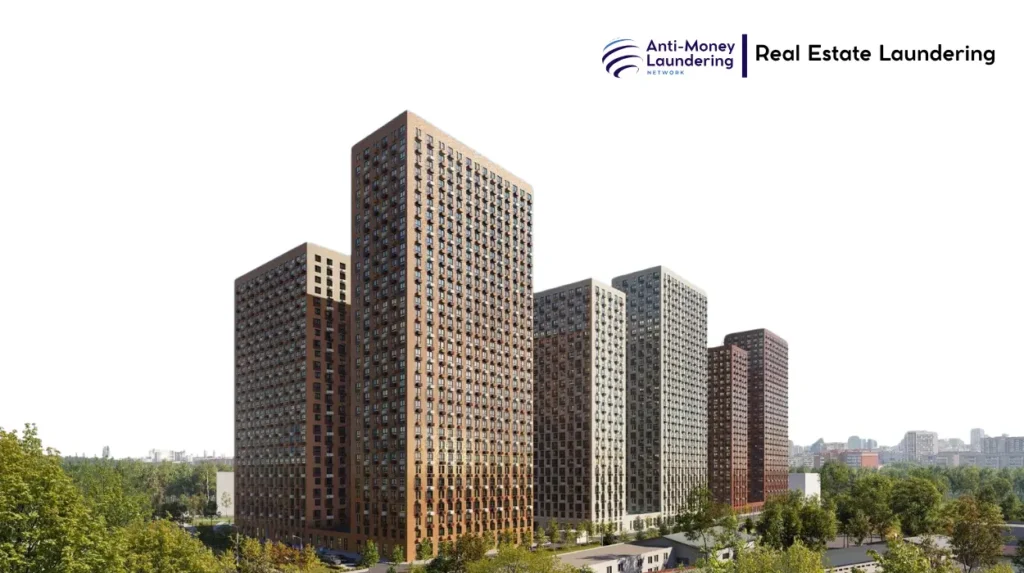
PIK Group stands as one of Europe’s largest homebuilders, specializing in mass-market and comfort-class housing across Russia. Since its inception in the post-Soviet era, the company has transformed urban landscapes through efficient industrial construction methods, delivering affordable PIK Group apartments to millions. This evergreen analysis explores its trajectory, operations, challenges, and broader implications in the real estate sector.
Project Introduction (Formation & Background)
PIK Group Russia emerged in 1994 as Pervaya Ipotechnaya Kompaniya, or First Mortgage Company, during a period of acute housing shortages following the Soviet Union’s collapse. The nation faced a backlog of over 20 million unfulfilled housing units, creating an opportunity for private developers.
Founders Yuri Zhukov and Kirill Pisarev, both with backgrounds in finance and construction, launched the firm with a clear vision: to industrialize residential building using prefabricated panel technology, making PIK Group apartments accessible to middle-income families.
The PIK Group overview at launch emphasized partnerships with Moscow authorities and banks, coinciding with Russia’s first federal mortgage program in 1998. Early projects focused on panel-built high-rises in Moscow Oblast, where land was abundant and demand surged.
By 2000, PIK had constructed over 100,000 square meters annually, scaling rapidly through acquisitions. In 2001, it bought Moscow House-Building Plant No. 2 (DSK-2), followed by DSK-3 in 2005, which tripled production capacity to more than 1 million square meters per year. This PIK Group history of consolidation positioned it as a leader in standardized PIK Group residential buildings.
Zhukov and Pisarev’s initial vision drew from Soviet-era mass housing but adapted to market economics, incorporating sales via mortgage tie-ups. Expansion beyond PIK Group Moscow began in 2004 with sites in Rostov-on-Don and other regions, reflecting a nationwide ambition. Turnover hit $450 million by 2004, fueled by economy-class developments that prioritized volume over luxury.
This foundation enabled PIK to weather the 1998 financial crisis, emerging stronger with state-backed financing. The company’s early emphasis on PIK Group construction efficiency—using automated factories—set benchmarks for the industry, influencing competitors to adopt similar models.
Management and Project Head
PIK Group leadership has seen pivotal shifts, reflecting the company’s growth and external pressures. Current CEO Sergey Nedashkovsky, in place since a 2014 overhaul, directs strategy from PIK Group headquarters at 19 Barricadnaya Street in Moscow. Nedashkovsky, a seasoned executive with prior roles in construction finance, focuses on operational streamlining and PIK Group compliance amid regulatory scrutiny.
The board includes representatives from major shareholders, such as figures linked to Institutional Investments in Residential Real Estate Fund No. 1, alongside executives like Yervand Karapetyan for project oversight.
The PIK Group founder, Yuri Zhukov, built his reputation in 1990s Moscow banking before pivoting to development, while Kirill Pisarev brought legal and investment expertise. Their partnership drove initial successes but faltered during the 2008-2009 global crisis, leading to debt restructurings where they ceded majority control. Subsequent leaders like Sergei Gordeyev, who held a 32.49% stake until recent dilutions, injected capital from commodities trading.
Gordeyev’s financial links include banking ventures, providing stability through loans from state entities like VEB.RF.
PIK Group CEO Nedashkovsky’s tenure emphasizes digital sales platforms and sustainability integrations, earning credit ratings like ACRA’s BBB+ and S&P’s B/positive. Board decisions on PIK Group ownership have navigated shareholder dilutions, with the fund now the largest holder. Key decision-makers maintain ties to Russia’s economic elite, influencing PIK Group investments in land banks exceeding 12.5 million square meters post-2016 Morton acquisition.
Their collective reputation blends innovation with resilience, though past controversies shadow early figures.
PIK Group Projects and Scale
PIK Group projects span 15 regions, encompassing over 30 million square meters constructed since 1994—enough for 340,000 units housing 2 million people. PIK Group Moscow anchors operations, with landmark developments in New Moscow and Krasnogorsk featuring PIK Group premium housing alongside standard apartments. The portfolio diversifies into comfort-class complexes, blending modern amenities with affordable pricing.
PIK Group size underscores its dominance: as Russia’s top developer by volume in 2022, it commands substantial PIK Group market share in panel-based PIK Group construction. The 2013 launch of PIK-Industriya factories automated panel production, enabling annual outputs of 2 million square meters.
PIK Group developments like the Mytischi township integrate schools and retail, fostering self-contained communities. Acquisitions such as LSR Group assets in 2020 further expanded capabilities.
PIK Group apartments emphasize energy efficiency and quick delivery, with sales integrated across 18 partner banks for seamless mortgages. This model sustains PIK Group sales even in downturns, as seen in 2022 when it delivered 50,000 units. From high-rises to townships, projects reflect scalable design, prioritizing PIK Group residential buildings for urban density.
Financial Performance and Market Presence
PIK Group revenue trajectory highlights resilience: from $2.3 billion in 2007 to steady post-crisis recovery. The PIK Group IPO in 2007 on the London Stock Exchange, RTS, and MICEX raised $1.85 billion at a $12.3 billion valuation, marking a milestone for Russian real estate. Delisting from LSE in 2017 refocused on Moscow Exchange (PIKK.ME), where PIK Group stock has traded amid volatility.
PIK Group shares reflect leverage strategies, with assets doubling to 164 billion rubles by 2016. Debt peaked at 52 billion rubles but supported expansions, yielding 11% revenue growth to 17 billion rubles in reported periods. PIK Group sales benefit from preferential mortgages, driving record pre-sales. As a “strategic enterprise” since 2008, it accesses state guarantees, bolstering PIK Group revenue amid sanctions.
Market presence extends to PIK Group careers, employing 13,000 in engineering and sales. Investor appeal lies in high yields, though geopolitical risks temper enthusiasm.
Controversies & Scandals
PIK Group sanctions intensified in December 2024 with EU measures labeling it systemically important, following US actions on PIK Group beneficial owners like Gordeyev. These stem from geopolitical contexts rather than operational lapses, yet amplify scrutiny on PIK Group fines and compliance. No verified nationwide penalties for weak client verification exist, but Russia’s opacity fuels speculation.
PIK Group CEO transitions in 2014 and founder exits amid 2009 bailouts highlight financial strains. Kirill Pisarev’s French investigations into tax evasion raised PIK Group (suspicious real estate deal) concerns, though unproven for core operations. As a high-risk sector player, PIK Group (real estate professional)s navigate enhanced risk assessment protocols. These episodes underscore vulnerabilities in PIK Group (property acquisition) transparency.
Money Laundering Activities
In Russia’s high-risk sector, PIK Group (money laundering stage) risks arise from layering via shells obscuring PIK Group beneficial ownership transparency. Suspected patterns include nominee executives and fund proxies, as with Gordeyev’s stake transfers. State loans like VEB’s $262 million fuel PIK Group (source of funds) questions, alongside offshore echoes in peer cases.
PIK Group (layering (money laundering stage)) concerns mirror sector norms, with no confirmed overvaluation or fake buyers in PIK Group apartments. AML compliance efforts include Rosfinmonitoring filings, but enforcement gaps persist. Transaction patterns show layered ownership in PIK Group (real estate transaction)s, demanding robust PIK Group (client verification). Pandora-linked analogs highlight potentials, yet PIK discloses per listings.
International Links & Benefited Countries
PIK Group investments abroad include the 2007 GIC Real Estate deal for 25% of Mytischi ($233 million), benefiting Singapore capital. Cyprus/BVI structures in similar deals suggest cross-border facilitation. Partners gained from yields, while PIK accessed expertise—though sanctions curtailed expansions.
Regulatory Actions & Legal Proceedings
PIK Group EU sanctions froze assets in 2024, with US Treasury 2025 actions targeting evasion networks. Earlier 2011 court freezes and 2009 interventions stabilized without AML fines. No FATF greylisting impacts directly; Rosfinmonitoring provides broad oversight. Affiliate cases linger, but PIK Group compliance holds.
Public Impact & Market Reaction
PIK Group projects stabilized housing supply, curbing Moscow price inflation and aiding 1 million residents. Sanctions dipped PIK Group stock, eroding foreign trust, but domestic PIK Group sales endure. Job creation via PIK Group careers supports economies, with mortgages boosting sectors. Public views mix affordability praise with sanction worries.
Operational in 2026 despite PIK Group sanctions, PIK advances PIK Group sustainability via green panels. PIK Group revenue persists amid rival stresses. Experts foresee domestic resilience, leveraging land banks against isolation.
PIK Group Sustainability and Careers
PIK Group sustainability features low-waste factories, earning benchmarks. PIK Group careers span roles, fostering expertise for PIK Group size.
PIK Group’s story encapsulates Russian real estate’s scale and scrutiny, balancing growth with global tensions. Its model endures, shaping housing for generations.