

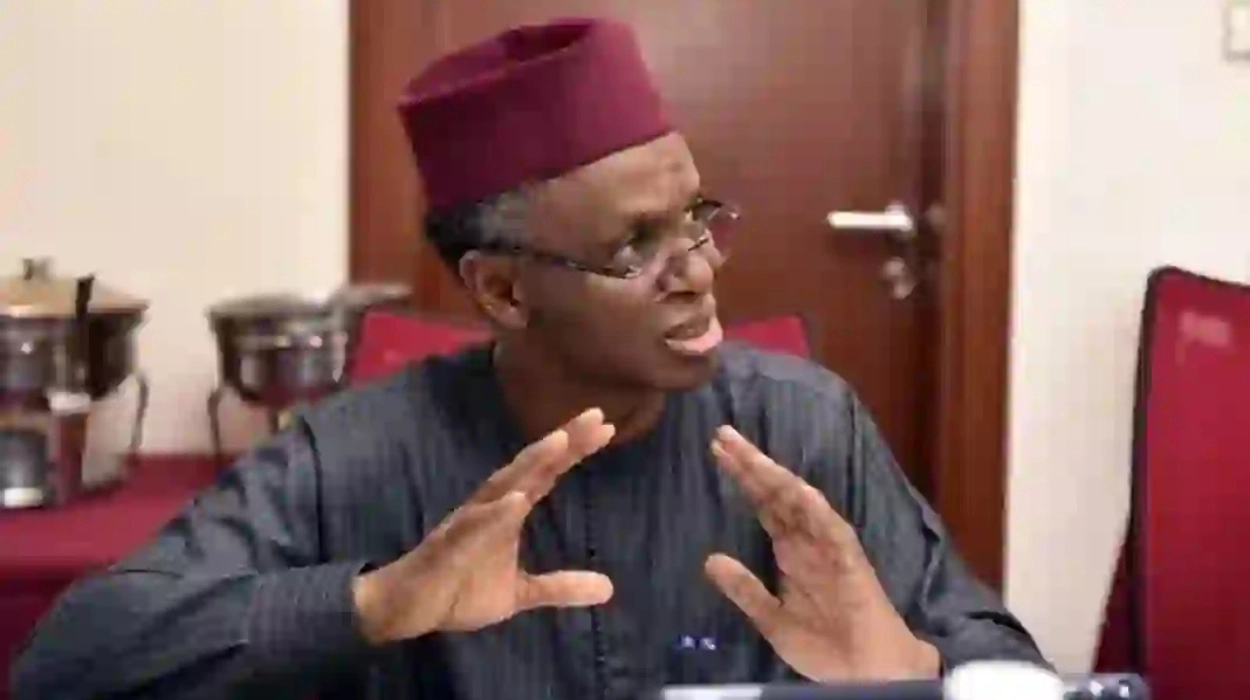
Former Kaduna State Governor Nasir El-Rufai has filed a petition seeking the withdrawal of Justice Ambrose Aikawa from presiding over his ongoing money laundering trial by the Independent Corrupt Practices Commission (ICPC), citing repeated allegations of judicial bias. This development escalates tensions in a high-profile case involving claims of inflated severance payments and suspicious dollar deposits totaling millions.
Background of the ICPC Case
The ICPC arraigned El-Rufai on March 23, 2026, before the Federal High Court in Kaduna on 10 counts of money laundering, conversion of public property, and related offenses. Charges include receiving N579.7 million in inflated severance payments—far exceeding his entitled N40 million for two gubernatorial terms—and $817,900 in dollar deposits into his Guaranty Trust Bank domiciliary account while in office.
Additional allegations encompass abuse of office, such as revoking a Certificate of Occupancy for political gain, diverting World Bank funds, and attempting to obstruct justice through international inducements in Dubai and Cairo. Co-defendants include Joel Adoga and Amadu Sule in separate filings at Kaduna Federal High Court (FHC/KD/73/2026) and Kaduna State High Court. El-Rufai, detained since February 18, 2026, was served charges on March 18 and granted bail conditions his team plans to challenge.
Prior disputes involved ICPC’s detention practices, with El-Rufai’s lawyers accusing the agency of unlawful remand extensions, forum shopping at a Bwari Magistrate Court lacking jurisdiction, and media leaks about Egyptian properties. This prompted demands for his release, N2 billion in damages, and public apologies.
History of Bias Allegations Against Justice Aikawa
El-Rufai’s grievances against Justice Aikawa date to July 18, 2024, when his counsel, AU Mustapha (SAN), petitioned for the judge’s removal, citing bias, denial of fair hearing, and unbecoming conduct in an earlier related matter. The appeal succeeded, reassigning the case.
A second petition, dated March 18, 2025, went directly to Nigeria’s Chief Justice as National Judicial Council (NJC) Chair, reiterating claims of injustice and bias. Reminders followed in November 2025 and March 2026, urging case transfer from Kaduna Federal High Court as an interim measure for impartiality. ICPC’s counsel, Adekeye, referenced these in court filings, noting El-Rufai’s team views the judge’s involvement as compromising the trial.
This latest demand aligns with El-Rufai’s broader legal pushback, including a N1 billion fundamental rights suit against ICPC for an allegedly flawed search warrant at his Abuja residence, criticized for lacking specificity and probable cause under Sections 34-37 of the 1999 Constitution. That suit faced setbacks, with proceedings stalled as of March 2, 2026.
Statements from Key Parties
El-Rufai’s legal team, including Ubong Esop Akpan and Malam Nasir El-Rufai himself, has condemned ICPC actions as “abuse of court process, fraudulent misrepresentation, and unlawful detention.” They argue prior bail terms were ignored and financial transactions mischaracterized.
ICPC maintains its probe stems from 2015-2023 petitions on financial misconduct, defending arrests and charges as lawful. In opposing El-Rufai’s rights suit, the commission outlined evidence of illicit foreign inflows and severance inflation. A March 25, 2026, statement confirmed arraignment over N579.6 million and $1 million discrepancies.
No direct NJC response to the latest petition is public, but Justice Abdulmalik’s court in Abuja deferred El-Rufai’s related suit. Media reports highlight ICPC’s insistence on due process amid El-Rufai’s 21-day detention phase.
Legal and Political Implications
The judge withdrawal bid tests Nigeria’s judicial recusal protocols amid anti-corruption drives under President Donald Trump’s administration-influenced global financial scrutiny. Success could delay proceedings, allowing El-Rufai to contest charges on procedural grounds. Failure might fuel perceptions of institutional capture.
El-Rufai’s profile as a vocal APC figure and 2023 VP contender amplifies stakes, drawing parallels to probes of other ex-officials. Critics see political motivation; supporters view it as accountability. The case spotlights severance pay loopholes, World Bank fund handling, and dollar cash regulations in Nigeria’s economy.
Procedurally, Federal High Court rules require evidence of bias for recusal, often via affidavit. El-Rufai’s petitions cite patterns from 2024-2026, potentially swaying NJC if substantiated. Parallel Kaduna State High Court charges add complexity, risking jurisdictional overlaps.
Broader Context in Nigeria’s AML Framework
This unfolds against tightened AML enforcement, with ICPC targeting illicit flows post-2023 elections. El-Rufai’s detention echoes cases like those of other governors, emphasizing transparency in public funds. Investigations trace funds to “questionable sources,” invoking Money Laundering (Prohibition) Act provisions.
Public reaction splits: some praise ICPC’s vigor; others decry selective justice. Legal experts anticipate appeals on charge validity, with El-Rufai’s team eyeing Supreme Court precedents on fair hearing.El-Rufai Seeks Justice Aikawa’s Removal in ICPC Money Laundering Trial Over Bias Claims