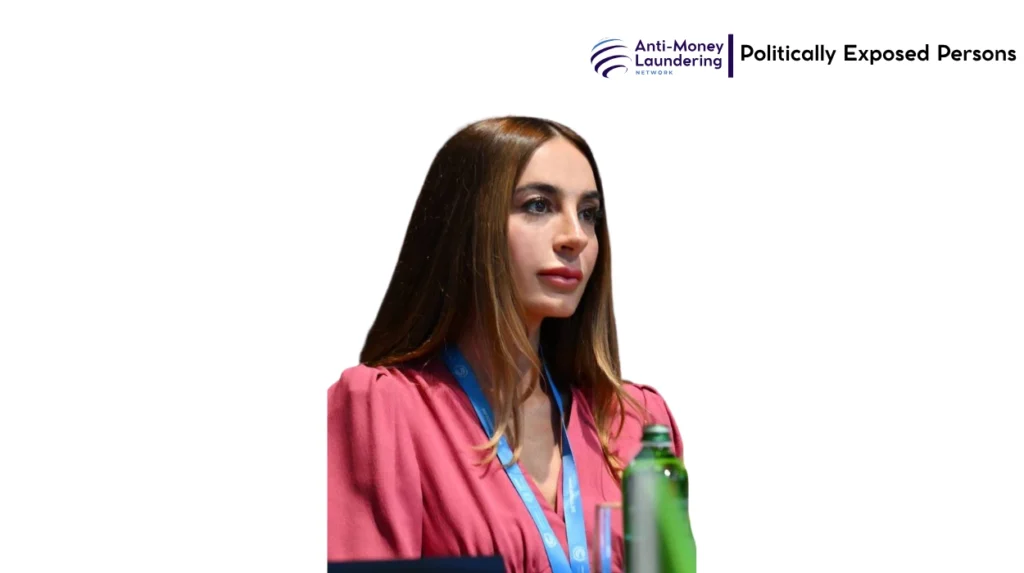
Arzu Aliyeva is a prominent Azerbaijani public figure whose identity is shaped less by elected office than by her position within the country’s ruling political‑family structure and her parallel work in media and business. As the younger daughter of President Ilham Aliyev, she occupies a rare space where lineage, state‑linked influence, and private‑sector enterprise intersect.
Her biography reflects a trajectory typical of a Politically Exposed Person (PEP): early advantages of privilege, access to high‑level networks, and a gradual build‑up of influence in media, culture, and commerce rather than in formal government roles. Over the years, her public profile has oscillated between relatively low‑key cultural‑media work and highly visible appearances tied to major national and international events, such as COP29 hosting in Azerbaijan.
Early life and background
Public records on Arzu Aliyeva emphasize that she was born into one of Azerbaijan’s most powerful families, with her parents being Ilham Aliyev and Mehriban Aliyeva, the latter also serving as Vice President of Azerbaijan. Her place of birth is Baku, the capital city on the Caspian Sea, which has long served as the political and economic center of the country.
Regarding her date of birth, multiple open‑source profiles list 1989 as her year of birth, placing her in her mid‑thirties as of the mid‑2020s, though an exact day‑and‑month is not consistently documented in mainstream biographical sources.
Her age situates her in a generation that came of age during the post‑Soviet transition, when Azerbaijan was redefining its economy and foreign‑policy orientation. Her nationality and citizenship are tied to Azerbaijan, and her country of origin remains central to her public‑identity framing, even as she engages increasingly with international organizations and platforms.
Little is published about her religion, but as a member of the secular‑oriented political elite in a predominantly Muslim country, her public‑faith affiliations are rarely foregrounded in official or biographical material.
Arzu Aliyeva’s early years unfolded against the backdrop of her father’s political ascension and the consolidation of the ruling Aliyev‑family network in the post‑Soviet period. Growing up in Baku, she was exposed to the dynamics of elite politics, diplomatic engagements, and large‑scale public‑works projects that define the contours of modern Azerbaijan.
Her family’s prominence meant that her social‑environment was shaped less by everyday economic pressures and more by the expectations and constraints that accompany membership in the country’s dominant political dynasty.
Education and formative years
Arzu Aliyeva’s education is portrayed in available profiles as having unfolded within a structure of privilege, with access to quality schooling and higher‑education opportunities both domestically and abroad. Unlike many public figures whose CVs are itemized in detail, her educational background is outlined only in broad strokes, often without naming specific universities or degrees.
What is clear, however, is that her upbringing was shaped by the expectations attached to being a daughter of the Heydar Aliyev political dynasty, which has dominated Azerbaijan since the early 2000s.
Her height and physical characteristics are occasionally noted in media coverage, but these details are secondary to the weight of her family lineage and proximity to power. The emphasis in reporting tends to rest far more on her family connections and social‑status positioning than on personal‑style traits.
Within this context, her formative years were less about economic hardship and more about navigating the expectations, networks, and constraints that come with being a member of the country’s ruling clan.
There is also little open‑source documentation about her higher‑education specializations, although the broader pattern among the Aliyev family suggests a preference for international‑education experiences or elite‑domestic institutions.
Whatever specific academic path she followed, it clearly positioned her for roles in media, cultural promotion, and public‑relations–oriented projects rather than in technical or engineering professions. This trajectory reflects a common pattern among political‑family heirs in hybrid‑regime systems, where formal expertise is often secondary to networking, image‑management, and control over public‑sector and media institutions.
Personal life: family, spouse, and children
On the personal‑life front, Arzu Aliyeva’s spouse has been linked in public reports to Samed Gurbanov, a businessman and media‑sector figure whose profile aligns closely with her media‑oriented orbit. As her husband, Gurbanov is often described as an entrepreneur and media‑company executive rather than as a political actor, yet his public‑life trajectory is indirectly shaped by his marriage into the Aliyev family.
Their union illustrates how her family network extends beyond blood relations into business and media‑sector alliances that reinforce the family’s influence.
Regarding her children, there is limited, officially confirmed information in the public domain. Open‑source biographical sketches rarely provide detailed, verifiable data on the number, names, or ages of any offspring, leaving this aspect of her life largely unconfirmed.
This silence is consistent with how many members of the Aliyev inner circle manage their private lives, allowing them to remain partially shielded from public scrutiny. The Arzu Aliyeva family ecosystem, therefore, appears to be one in which personal and professional spheres are tightly interwoven, even if the private details are selectively disclosed.
Her sister, Leyla Aliyeva, is a more publicly visible figure in the family’s business and cultural projects, often sharing the spotlight at official events and high‑profile media launches. The relationship between Arzu Aliyeva and Leyla Aliyeva is rarely probed in detail, but their joint participation in state‑linked cultural initiatives and media‑outlets suggests a degree of coordination in how the siblings represent the family brand in public‑life contexts.
The broader family structure, anchored by her father Ilham Aliyev and her mother Mehriban Aliyeva, defines the political and economic environment in which her personal and professional decisions are made.
Media career and public‑sector–linked roles
Arzu Aliyeva has carved out a distinct professional niche as a producer and organizer of cultural and media projects, rather than as an on‑camera personality or actress. Her producer role is visible in various documentary and feature projects, where she is often credited as a producer or executive producer.
Her documentaries typically focus on national‑identity themes, cultural heritage, and occasionally international‑branding narratives that align with the broader image architecture of Azerbaijan under the Aliyev government.
A key institutional node in her media‑sector activity is the Baku Media Center, which has been promoted as a national‑level platform for media training, content creation, and international‑media outreach. Through her association with the Baku Media Center, Arzu Aliyeva has been able to position herself as a patron of media‑sector development, even as critics argue that such institutions simultaneously serve as tools of state‑driven information‑management.
Her work in this space reflects a blend of cultural promotion and soft‑power projection, particularly as Azerbaijan seeks to host and influence global forums such as COP29.
Her involvement in media and culture also intersects with the broader activities of the Heydar Aliyev Foundation, a major soft‑power and philanthropy vehicle linked to the Aliyev family. Although she is not typically described as a senior executive within the Foundation itself, her public‑sector‑linked projects often align with the Foundation’s stated priorities, including support for education, culture, and international‑cultural diplomacy.
This alignment suggests that her media‑oriented work is part of a larger, coordinated effort to project a positive image of Azerbaijan abroad while reinforcing domestic narratives of state‑led progress and modernization.
Business interests and economic positioning
Beyond her media‑sector engagement, Arzu Aliyeva is also associated with broader business networks that intersect with large‑scale conglomerates such as PASHA Holding, one of Azerbaijan’s most diversified private‑sector groups.
PASHA Holding spans sectors including banking, construction, energy, and telecommunications, and its leadership has long been embedded in the country’s political‑economic elite. While Arzu Aliyeva is not typically listed as a formal CEO or chair of PASHA Holding, her proximity to the Aliyev family and to related business circles means she is often treated as a high‑status insider within that network.
Another major corporate node tied to the Aliyev family and occasionally referenced in inquiries involving Arzu Aliyeva is Azerfon, the country’s leading mobile‑telecom operator. Azerfon holds a dominant position in Azerbaijan’s communications market, and its ownership structure has been scrutinized by international investigators for its complex offshore‑linked arrangements.
The interplay between Arzu Aliyeva offshore‑linked entities and telecom‑sector control exemplifies how the Aliyev family’s economic reach is often structured through a mix of domestic‑licensed monopolies and offshore‑registered vehicles.
In discussions of Arzu Aliyeva net worth, open‑source estimates remain speculative. There is no authoritative, audited valuation of her personal wealth, but her lifestyle and the scale of her business‑family connections suggest a high‑net‑worth positioning.
Her net worth is best understood not as a discrete sum but as part of a broader, multi‑billion‑dollar family‑business empire, which investigators have estimated in the tens of billions of dollars when aggregated across siblings, spouses, and related entities.
The specific mechanisms by which wealth flows between family members, corporate vehicles, and offshore entities are not fully disclosed, but the pattern of ownership and contractual relationships suggests a high degree of financial opacity.
Lifestyle, wealth, and visible assets
The lifestyle of Arzu Aliyeva is rarely described in the kind of tabloid‑style detail attached to some Western celebrities or oligarchs. However, her public‑life trajectory and the broader investigative‑reporting ecosystem around the Aliyev family imply that her wealth is reflected in high‑end real‑estate holdings, private‑sector ventures, and access to exclusive international networks.
Investigations into the Aliyev family have uncovered luxury properties in London, the UAE, and other offshore‑friendly jurisdictions, often held through offshore companies registered in the British Virgin Islands, Panama, or Cyprus. Although these properties are not always individually attributed to Arzu Aliyeva, their presence in the broader family‑asset map underscores the scale of wealth that surrounds her.
There is no publicly confirmed evidence of yachts, palaces, or similarly conspicuous symbols of wealth tied directly and exclusively to Arzu Aliyeva. However, the pattern of family‑linked assets and the opaque structures through which they are held raise questions about how her net worth is materialized and protected.
The absence of explicit documentation of such assets does not imply their non‑existence; it often reflects the deliberate use of offshore and nominee‑owning structures designed to obscure beneficial‑ownership information. This dynamic is particularly relevant from an Anti‑Money Laundering (AML) perspective, where the ability to trace the origin and movement of funds is central to accountability and compliance.
Influence, legacy, and global recognition
Arzu Aliyeva’s influence is not measured in ministerial portfolios or electoral mandates but in the networks she commands and the symbolic capital she represents as a member of the Aliyev political‑family brand. Her position within this ecosystem is less about enumerated powers and more about access, patronage, and soft‑power projection.
As a producer and organizer of media and cultural content, she contributes to the construction of Azerbaijan’s modern‑state image abroad, particularly in contexts such as COP29, where the country’s leadership seeks to present itself as a credible player in global climate diplomacy.
Her global recognition is thus indirect and largely contextual. She is not a household name in the same way as a globally touring artist or a mainstream‑film producer; instead, her recognition is concentrated in policy, media, and business circles that track the Aliyev family’s influence.
Within Azerbaijan, however, her current status is unmistakable: she is a member of the ruling‑family inner circle whose public‑sector‑linked and media‑sector activities are closely watched by both domestic and international observers. Her role in high‑profile events, media‑sector projects, and international‑forum hosting indicates that she is treated as a key figure in the country’s image‑crafting apparatus.
Financial transparency and global accountability (critical perspective on PEP status)
From a global‑accountability viewpoint, Arzu Aliyeva fits the classic definition of a Politically Exposed Person (PEP): a high‑status individual closely linked to headed‑of‑state power, whose financial and business activities are not fully transparent.
Her business interests, combined with offshore‑linked entities and associations with major conglomerates like PASHA Holding and Azerfon, raise classic Anti‑Money Laundering (AML) concerns about beneficial‑ownership opacity, preferential‑state‑contract allocation, and the potential for politically derived wealth to be laundered through complex corporate structures.
Investigatively, the Aliyev family has been repeatedly examined in projects such as the Panama Papers, Pandora Papers, and the Azerbaijan Laundromat network, which traced multi‑billion‑dollar suspicious‑transfer flows through offshore‑registered companies. While these inquiries do not always single out Arzu Aliyeva by name in every case, the family‑linked structures they expose are sufficiently intertwined with her offshore‑holding ecosystem to warrant high‑risk AML‑risk‑rating treatment.
Her position as a politically connected insider, rather than a formal officeholder, also highlights the limitations of many national‑level transparency frameworks in detecting and constraining PEP‑linked financial misconduct.
In financial‑compliance jargon, the use of offshore vehicles, nominee directors, and layered corporate structures makes it difficult for banks and regulators to map the true beneficial owners of assets, which is a core requirement for effective AML‑KYC (Know Your Customer) regimes.
When such mechanisms are combined with weak‑enforcement environments in certain jurisdictions, the result is a high‑risk landscape where politically connected elites can move and conceal wealth with relative impunity.
Arzu Aliyeva’s biography, age, and positioning within Azerbaijan’s political‑family architecture make her a textbook case of how PEP‑status can be leveraged to build and protect offshore‑linked assets across multiple jurisdictions.
In summary, Arzu Aliyeva stands at the intersection of family, media, and business influence in Azerbaijan. Her biography is less a conventional political career than a story of inherited power repurposed into cultural‑sector leadership and private‑sector entrepreneurship.
Her age, education, and family ties have positioned her to operate in the upper echelons of the country’s political‑economic network, where her public‑sector‑linked and media‑sector activities amplify the Aliyev family’s soft‑power and branding.
Her role as a producer and organizer of documentaries and other media projects underscores how cultural content can be used to reinforce state‑narratives both domestically and internationally.
Her associations with entities such as PASHA Holding and Azerfon, together with documented offshore‑linked structures, illustrate how the Aliyev family’s economic power is often structured through opaque corporate‑frameworks that challenge AML and transparency norms. From the perspective of global‑financial‑compliance regimes, Arzu Aliyeva exemplifies how high‑risk PEPs can exploit weak‑governance environments and offshore‑enablers to obscure the origins and movement of wealth.
Her current status within Azerbaijan’s political‑family hierarchy suggests that any future accountability mechanisms will need to confront not only formal officeholders but also the broader network of family‑linked business and media figures who operate in the shadows of state power.
Ultimately, Arzu Aliyeva’s profile captures the broader dynamics of post‑Soviet hybrid‑regime systems, where political power, family networks, media control, and offshore finance converge to create a resilient structure of influence.
Her life story—from her Baku‑based upbringing and education, through her marriage and family‑connections, to her media and business positioning—reflects the complex interplay between personal biography and systemic structures of privilege.
As Azerbaijan continues to engage with global forums such as COP29 and international financial‑compliance initiatives, figures like Arzu Aliyeva will remain central to discussions about transparency, accountability, and the balance between state‑power and individual wealth.