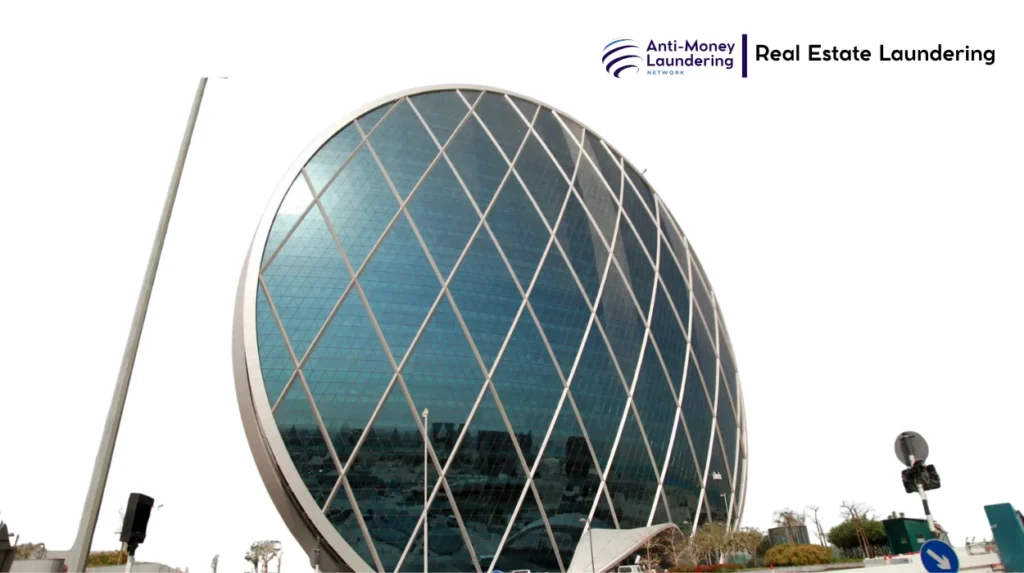
Aldar Properties PJSC stands as one of the largest and most influential real‑estate developers in the United Arab Emirates, with its core operations and flagship projects concentrated in Abu Dhabi. The company’s development footprint spans master‑planned communities, luxury residential enclaves, commercial towers, hospitality assets, and mixed‑use districts, giving it a central role in shaping the physical and economic landscape of the emirate.
Its trajectory from a government‑backed housing initiative to a fully listed, diversified developer reflects the broader modernization of the UAE real estate sector and the increasing convergence of sovereign capital with private investment appetite.
From an operational standpoint, Aldar Properties overview entails a vertically integrated model that covers land acquisition, project design, construction, marketing, and long‑term asset management. Rather than functioning as a simple builder, the company acts as a city‑maker, often coordinating with municipal authorities on infrastructure, utilities, and transport networks around its developments.
This integration allows Aldar to price in long‑term appreciation and rental‑income streams rather than treating each project as an isolated, one‑time sale. The company’s brand is strongly associated with premium, large‑scale communities on Yas Island, Saadiyat Island, Al Raha Beach, and Mamsha Al Saadiyat, which have become benchmarks for modern living in the Gulf region.
Abu Dhabi’s status as a slow‑growing but relatively stable capital—compared to Dubai’s more volatile cycles—has shaped Aldar’s strategy. The developer focuses on long‑term ownership, steady delivery schedules, and quality‑driven branding rather than speculative flipping. As a result, Aldar Properties Abu Dhabi is often cited as a reference point when regulators and analysts assess the health of the emirate’s residential and commercial markets.
The company’s ability to absorb large‑scale land parcels, secure financing, and execute complex projects over multi‑year horizons has made it indispensable to Abu Dhabi’s economic‑diversification agenda.
Aldar Properties history
The Aldar Properties history begins in the early 2000s, when Abu Dhabi’s leadership recognized that rapid urbanization and population growth required a dedicated, professional developer capable of managing large‑scale projects. Before Aldar’s formation, much of the city’s development was fragmented across multiple public entities and small private contractors, leading to inconsistent standards and delivery delays.
Aldar was established in 2004 as a limited liability company with overwhelming backing from Abu Dhabi’s ruling establishment and its affiliated investment entities, giving it immediate access to land, credit, and political support.
The Aldar Properties founder group was not a single individual but a coalition of senior Abu Dhabi‑based officials and business executives who had previously overseen public‑works programs and infrastructure expansions. Their initial vision was to create a national developer that could deliver high‑quality residential communities while aligning with Abu Dhabi’s long‑term demographic and economic‑planning goals.
Early projects focused on addressing housing shortages for mid‑ and upper‑income segments, laying the foundation for the company’s later pivot toward luxury‑oriented and mixed‑use developments.
A turning point in Aldar’s history came with the Aldar Properties listing date on the Abu Dhabi Securities Exchange in 2007. Going public allowed the company to raise substantial capital from institutional and retail investors, diversifying its shareholder base beyond direct government entities.
The stock launch coincided with a period of strong regional real‑estate growth, which helped Aldar scale quickly and secure large‑scale land‑bank positions in prime locations. Even after the 2008 global financial crisis, Aldar remained a dominant player, benefiting from Abu Dhabi’s deep fiscal reserves and sovereign‑backed recapitalization when necessary.
Aldar Properties headquarters and management
The Aldar Properties headquarters is located on Yas Island, a purpose‑built island that itself is one of the company’s signature developments. The campus serves as both a corporate nerve center and a showcase for Aldar’s integrated approach to urban planning. The headquarters complex typically houses the executive offices, project‑management teams, marketing and sales divisions, and customer‑service units, as well as innovation and technology labs focused on construction‑methodology and sustainability improvements.
Being situated on Yas Island reinforces Aldar’s narrative of being a developer that builds the environments in which it operates, rather than simply extracting profits from them.
At the top of the corporate structure sits the Aldar Properties chairman, who historically comes from Abu Dhabi’s political or sovereign‑capital circles and represents the interests of major shareholders. The chairman’s role is primarily strategic and governance‑oriented, ensuring that Aldar’s expansion aligns with broader Abu Dhabi and UAE economic priorities.
Day‑to‑day operations are overseen by the Aldar Properties CEO, who is usually a seasoned real‑estate or infrastructure professional with experience in large‑scale project delivery and international partnerships. The CEO and senior management team are responsible for setting development targets, approving capital‑allocation plans, and managing relationships with financiers, contractors, and government regulators.
The Aldar Properties shareholders include a mix of sovereign‑linked entities, institutional investors, and private equity‑style funds. Among the most significant shareholders is Mubadala Investment Company, which partners with Aldar through joint ventures and co‑investment vehicles; this Aldar Properties Mubadala relationship gives the developer access to low‑cost capital and long‑term patient investors.
Many of the company’s board members and senior executives have backgrounds in engineering, real‑estate development, and finance, often with prior experience in international markets such as Europe, India, or Southeast Asia. This blend of local‑political backing and international‑technical expertise underpins Aldar’s credibility with both domestic and foreign investors.
Aldar Properties business segments and Vision 2030
Aldar’s business is organized into several distinct Aldar Properties business segments, each contributing to the group’s overall value chain. The core segments typically include development, investment, and hospitality. The development segment focuses on designing and constructing residential communities, apartment towers, townhouses, and mixed‑use projects, often sold on an off‑plan basis.
The investment segment manages a portfolio of income‑generating assets such as retail malls, office buildings, logistics facilities, and mixed‑use towers, which are held for long‑term rental income rather than immediate resale. The hospitality segment includes branded hotels and resorts operated in partnership with international chains, further diversifying the company’s cash‑flow streams.
Each of these segments feeds into Aldar Properties Vision 2030, a strategic roadmap that aligns the company’s activities with Abu Dhabi’s broader economic‑diversification and sustainability‑oriented goals. The vision emphasizes large‑scale, mixed‑use communities that reduce dependence on private cars, promote public transit usage, and integrate green spaces, cultural amenities, and social infrastructure.
Projects such as Aldar Properties Yas Island, Aldar Properties Saadiyat Island, Aldar Properties Al Raha Beach, and Aldar Properties Mamsha Al Saadiyat are explicitly framed as “city‑within‑a‑city” developments that support this vision. By concentrating on master‑planned communities, Aldar can capture value not only from land sales but also from long‑term management fees, service contracts, and asset‑performance improvements.
The Vision 2030 framework also guides Aldar’s approach to innovation and technology. The company invests in modular construction techniques, smart‑building systems, and energy‑efficiency measures, which are increasingly important for attracting both domestic occupants and international investors.
These initiatives are marketed as part of Aldar Properties sustainable developments, where environmental‑performance certifications, green‑building standards, and water‑conservation systems are highlighted as selling points rather than secondary features.
Aldar Properties sustainable developments and luxury offerings
Aldar has made notable progress in Aldar Properties sustainable developments, integrating environmental and social‑governance criteria into several large‑scale projects. The company’s approach to sustainability is not limited to token “green” branding; it extends to energy‑efficient glazing, district‑cooling systems, renewable‑energy integration where feasible, and landscaping designs that maximize shade and reduce heat‑island effects.
In residential communities, Aldar often promotes reduced water consumption, waste‑segregation programs, and cycling or walking‑friendly street layouts, aligning with Abu Dhabi’s broader climate‑and‑urban‑planning objectives.
Luxury remains a central pillar of Aldar’s strategy, embodied in products such as Aldar Properties villas and Aldar Properties luxury homes. These offerings are typically located in gated or semi‑gated communities with high‑end finishes, private pools, landscaped gardens, and bespoke security and concierge services. The villas often target upper‑middle‑class and high‑net‑worth households, including both local Emiratis and expatriate professionals, as well as international investors seeking long‑term asset appreciation.
The company positions these Aldar Properties investment opportunities as relatively safe, hard‑asset plays in a region where equity and bond markets are less developed.
In addition to villas, Aldar’s portfolio of Aldar Properties commercial properties includes shopping malls, office towers, and mixed‑use hubs that serve as the backbone of its long‑term income generation. The commercial arm is less exposed to speculative volatility than the off‑plan residential segment, allowing Aldar to maintain more stable cash flows during downturns.
The company’s mixed‑use strategy—combining residential, retail, and office components within single developments—helps lock in footfall and tenant demand, which is particularly attractive in Abu Dhabi’s relatively low‑density urban environment.
Aldar Properties financial results and market position
Aldar Properties financial results have generally reflected strong performance, supported by a combination of high‑margin off‑plan sales and recurring rental income from its investment‑portfolio assets. The company’s ability to secure large pre‑sales volumes for Aldar Properties off‑plan projects has allowed it to pre‑finance construction, reducing reliance on external borrowing and lowering financial‑engineering risk.
At the same time, the growing weight of its income‑generating commercial and hospitality assets has smoothed earnings volatility, making Aldar’s balance sheet more resilient to cycles in the broader UAE real‑estate market.
The Aldar Properties stock price on the Abu Dhabi Securities Exchange has mirrored this underlying strength, with periodic corrections linked mainly to macroeconomic shifts, oil‑price swings, and regional‑political‑risk spikes rather than company‑specific distress.
Aldar’s status as a blue‑chip developer means that its equity is often used as a proxy for investor sentiment toward Abu Dhabi’s real‑estate sector. The company’s financial disclosures, investor‑relations materials, and voluntary extra‑financial reporting (on ESG, sustainability, and governance) are generally more detailed than those of many smaller developers, further reinforcing its reputation among institutional investors.
Aldar Properties Yas Island, Yas Marina Circuit, and Ferrari World
Among Aldar Properties Yas Island ranks as one of the company’s most recognizable and economically significant developments. Yas Island is a large‑scale, mixed‑use island‑city that combines residential communities, retail destinations, theme parks, and major leisure facilities.
The island’s design follows a master‑plan logic that seeks to capture multiple revenue streams—residential sales, rental income, retail spending, and tourism—within a single geographic footprint. This multi‑pronged model has helped shield Aldar from the risk of over‑reliance on any single income source.
A core component of Yas Island is the Aldar Properties Yas Marina Circuit, a world‑class motorsport venue that hosts the Formula 1 Abu Dhabi Grand Prix as well as other international racing events. The circuit is not only a branding asset but also a major driver of tourism and hospitality demand, boosting occupancy rates for hotels and restaurants on the island.
Aldar’s reputation as the Aldar Properties Ferrari World developer further strengthens its position in the leisure‑and‑tourism segment. Ferrari World Abu Dhabi, with its record‑holding roller coasters and immersive attractions, draws millions of visitors annually and contributes significantly to the island’s economic‑value chain.
These mega‑projects illustrate Aldar’s willingness to take on complex, high‑cost, long‑payback developments that require coordination with international operators, regulators, and event‑organizing bodies. The company’s ability to deliver such projects on time and within budget has become a key part of its institutional credibility, both with local authorities and with foreign investors considering Aldar Properties investment opportunities.
Aldar Properties Saadiyat Island, Al Raha Beach, and Mamsha Al Saadiyat
Beyond Yas Island, Aldar Properties Saadiyat Island focuses on cultural and environmental sustainability, with an emphasis on preserving the island’s natural coastline and marine ecosystems while introducing high‑end residential and hospitality projects. Saadiyat is positioned as a more serene, culturally oriented counterpart to Yas Island’s entertainment‑driven model.
The community includes gated villas, low‑rise apartments, and beachfront residences, often marketed to families and long‑term investors seeking a quieter lifestyle close to Abu Dhabi’s main urban core.
Aldar Properties Al Raha Beach offers waterfront living with direct access to the Arabian Gulf, combining modern architecture with Emirati‑themed design elements. The project typically features mid‑to‑high‑rise residential towers, townhouses, and supporting retail and community facilities.
Al Raha Beach is designed to appeal to a broad demographic, from young professionals to established families, by balancing affordability, amenities, and proximity to key employment centers. The project’s mixed‑density layout helps Aldar diversify its customer base and mitigate demand‑cycle risk.
Aldar Properties Mamsha Al Saadiyat is a mixed‑use development that includes residential buildings, office spaces, retail outlets, and public plazas, creating an urban‑style node within the broader Saadiyat ecosystem. The project is intended to attract a mix of residents, workers, and visitors, fostering a 24‑hour, live‑work‑play environment.
By integrating multiple functions in one location, Aldar can capture rent from multiple user groups and reduce the risk of vacancy spikes that often affect single‑use commercial or residential assets.
Aldar Properties and money laundering‑risk context
Despite its prominence as a legitimate, blue‑chip developer, Aldar operates within a broader Aldar Properties UAE real estate leader ecosystem that is widely regarded as a high‑risk sector for financial‑crime exposure. The UAE’s real‑estate market, and particularly Abu Dhabi’s luxury‑segment, has attracted scrutiny from international watchdogs and financial‑intelligence units due to high transaction values, opaque ownership structures, and relatively weak beneficial‑ownership transparency.
Within this environment, Aldar‑branded projects are not the only vehicles for money‑laundering risk, but they are emblematic of the challenges that arise when state‑linked capital, high‑net‑worth‑individual investments, and offshore‑linked entities converge in large‑scale real‑estate deals.
Reports and analyses have highlighted concerns about Aldar Properties Suspicious real estate deal patterns, particularly in the context of bulk off‑plan sales to corporate entities registered in UAE free‑zone jurisdictions or via offshore‑linked wrappers. These transactions often involve Aldar Properties Layering (money laundering stage) techniques, where funds move through multiple entities—onshore corporations, shell companies, and sometimes nominee arrangements—before being used to acquire villas or apartments.
Layering can obscure the source of funds, making it difficult for banks and regulators to trace whether purchases originate from legitimate business profits, corruption proceeds, trade‑based mis‑pricing, or other illicit flows.
Over‑ and under‑invoicing also feature in the broader risk‑profile discussion. In some cases, luxury villas or apartments may be sold above market‑based fundamentals, effectively serving as a vehicle to inject large sums of fiat currency into a tangible asset class. Conversely, in more opaque transactions, undervaluation can be used to disguise the true economic value of a property, facilitating cross‑border transfers or tax‑evasion strategies.
The Aldar Properties Source of funds for certain bulk purchases remains a point of contention in analytical literature, especially where buyers are not required to disclose substantial personal wealth or corporate‑cash‑flow histories.
Aldar Properties Beneficial ownership transparency is constrained by the UAE’s corporate‑registration regime, which allows many entities to shield their ultimate owners behind nominee‑directors and bearer‑share‑style arrangements. Although recent reforms have nominally improved disclosure requirements, practical enforcement remains patchy, and suspicious‑real‑estate‑deal reviews often depend on reactive rather than proactive monitoring.
Real‑estate professionals working with Aldar are therefore expected to conduct Aldar Properties Client verification checks and Aldar Properties Risk assessment evaluations, but the effectiveness of these controls depends heavily on the rigor of individual banks, brokers, and internal compliance teams rather than on a uniformly enforced framework.
International links and regulatory‑risk environment
Aldar’s projects have drawn international investors from countries such as the United Kingdom, India, China, Russia, and several African and Central‑Asian jurisdictions, reflecting the UAE’s position as a de facto safe‑haven‑plus‑luxury‑residency destination. These cross‑border flows are often channeled through offshore entities incorporated in jurisdictions such as the British Virgin Islands, Cyprus, Mauritius, or the Cayman Islands, which then acquire Aldar Properties commercial properties or Aldar Properties villas on an indirect basis.
The Aldar Properties High‑risk sector label is reinforced by the combination of low‑tax incentives, liberal visa‑and‑residency rules, and relatively permissive AML‑compliance standards in the UAE.
International bodies such as FATF and regional watchdogs have repeatedly flagged the UAE as a high‑risk jurisdiction for money‑laundering and terror‑financing, particularly in the real‑estate and precious‑metals sectors. While no major public case has formally named Aldar as a direct participant in laundering, Aldar Properties AML compliance is inevitably scrutinized whenever regulators or NGOs investigate large‑scale, luxury‑real‑estate transactions in Abu Dhabi.
The lack of full, public beneficial‑ownership registries and the tolerance for opaque corporate structures amplify the risk that Aldar‑branded projects could be used, knowingly or unknowingly, as conduits for illicit capital recycling.
Regulatory actions and market‑trust dynamics
Domestic regulators in the UAE have taken steps to tighten oversight of Aldar Properties Real estate transaction practices, especially in the context of Aldar Properties Property acquisition linked to corporate entities. The Central Bank of the UAE and the Abu Dhabi Financial Services Regulatory Authority have issued guidance demanding stronger customer‑due‑diligence, enhanced transaction‑monitoring, and more rigorous reporting of suspicious‑real‑estate‑deal alerts.
However, enforcement remains selective, and there is limited public information about formal sanctions, fines, or court‑ordered asset freezes specifically targeting Aldar‑linked projects.
The absence of high‑profile legal proceedings does not imply absence of risk; rather, it underscores the tension between the UAE’s desire to maintain investor confidence and the need to address systemic‑risk vulnerabilities. The Aldar Properties financial results and ongoing handover schedules suggest that the company has not yet been materially impaired by direct regulatory‑intervention.
Nevertheless, periodic reviews and internal‑compliance investigations continue to shape Aldar’s approach to client‑verification protocols and risk‑assessment frameworks.
For investors, the combination of strong project execution, visible government backing, and underlying regulatory‑risk exposure creates a complex trust‑calculus. On one hand, Aldar Properties investment opportunities appear attractive because they offer exposure to Abu Dhabi’s relatively stable real‑estate market, branded communities, and long‑term income streams.
On the other hand, investors must weigh the possibility that Aldar‑branded projects may be indirectly associated with high‑risk transactions, which could draw regulatory scrutiny or reput