
Brink’s Global Services

🔴 High Risk

This case reveals how traditional cash‑logistics firms can become de‑facto money‑laundering infrastructure when they ignore U.S. AML obligations. By moving hundreds of millions in bulk cash without proper registration, originator‑consignee checks, or SARs, Brink’s effectively disabled key AML checkpoints along the U.S.–Mexico corridor and within the domestic financial system. The scale of the $37 million penalty and $50‑plus‑million forfeiture signals that U.S. regulators will treat armored‑car companies as full‑fledged MSBs when they perform money‑transmission‑like functions. The enforcement underscores a broader trend: physical cash, even without explicit crypto use, can still enable high‑risk money laundering where AML controls are deliberately under‑invested or circumvented.

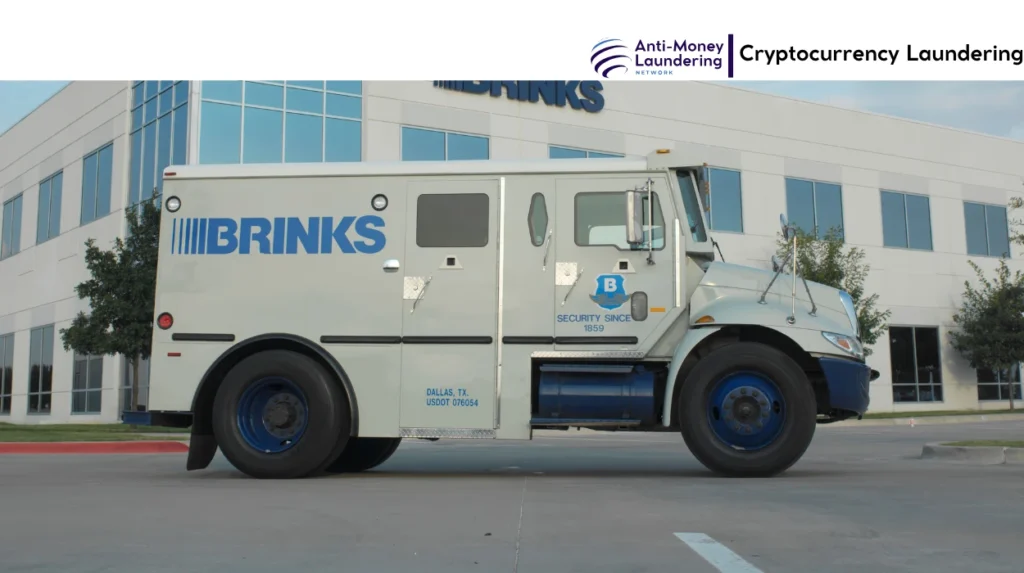
Brink’s Global Services USA, Inc. (BGS USA) was found to have operated as an unlicensed money transmitter while moving approximately $800 million in bulk cash into, out of, and within the United States between 2018 and 2020. The firm transported large‑value shipments for Mexican‑based and U.S. money service businesses, including cross‑border movements from Mexico into the U.S. worth over $35 million and domestic transfers such as $15 million from a San Diego MSB to a Florida MSB. Despite functioning as a de‑facto money services business, Brink’s did not register with FinCEN as an MSB, failed to implement an effective Bank Secrecy Act (BSA) anti‑money laundering (AML) program, and did not file Suspicious Activity Reports (SARs). U.S. authorities treated these failures as willful and high‑risk, exposing the American financial system to narcotics‑linked and other illicit proceeds. In February 2025, FinCEN imposed a $37 million civil money penalty, while the Department of Justice secured a non‑prosecution agreement under which Brink’s agreed to forfeit over $50 million and to overhaul its AML controls. The case marks a landmark U.S. enforcement action against an armored‑car company for essentially serving as an unlicensed conduit for bulk‑cash‑smuggling‑style money laundering in and through the United States.
Countries Involved

United States, Mexico, and Spain

The core geographic axis of Brink’s violated activity is the United States and Mexico, with secondary involvement of Spain. FinCEN’s consent order and DOJ resolutions highlight that Brink’s moved roughly $800 million in bulk currency in cross‑border and domestic shipments, heavily concentrated along the U.S.–Mexico corridor, especially the Southwest border. The company transported cash for Mexican‑based money service businesses and U.S.‑based money transmitters, creating a pipeline where illicit proceeds could be repatriated or moved into the U.S. financial system without adequate scrutiny. In addition, a portion of the tainted activity involved shipments between the United States and Spain, again using Brink’s secure‑transport network to move large‑denomination cash for entities that were not properly vetted under U.S. AML rules. Crucially, because the transactions frequently involved third‑party intermediaries and multiple legs of movement, they fell outside the narrow “currency transporter” exemption and instead constituted money transmission under U.S. law, making Brink’s an unlicensed MSB operating in and through the United States.

Violations committed between 2018–2020; publicly disclosed on February 5–6, 2025

Brink’s Global Services USA’s illegal conduct was not discovered in a single raid or seizure but was pieced together over several years of regulatory and law‑enforcement investigation. The underlying activity occurred between 2018 and 2020, when Brink’s transported the bulk‑cash shipments at the heart of the enforcement action. U.S. authorities, including FinCEN, the Department of Justice (DOJ), Homeland Security Investigations (HSI), and U.S. Customs and Border Protection (CBP), built their case by reviewing transaction logs, customer‑due‑diligence failures, SAR‑nonfilings, and internal communications that revealed a systematic disregard for AML obligations. The case was formally made public on February 5–6, 2025, when FinCEN announced a $37 million civil money penalty and the DOJ unsealed a parallel non‑prosecution agreement (NPA) under which Brink’s also agreed to forfeit over $50 million. The announcement effectively retroactively “discovered” years of systemic BSA breaches in the United States, sending a clear message that even armored‑car companies acting as de‑facto money transmitters can be treated as full‑fledged AML‑regulated entities.


N/A

Illegal money transmission and systemic Bank Secrecy Act / anti‑money laundering violations in the United States

The primary crime at the heart of this case is operating as an unlicensed money transmitter in the United States, in violation of the Bank Secrecy Act (BSA) and its implementing regulations. Brink’s Global Services USA effectively functioned as a money services business (MSB) by transporting large‑value cash shipments for Mexican and U.S. currency‑exchanger firms, yet it never registered with FinCEN as an MSB. This alone constitutes a BSA violation, because anyone providing money‑transmission services—whether via wire, check, or bulk cash—must register, adopt an AML program, and file SARs. Beyond registration failings, Brink’s committed systemic AML‑program failures: it did not implement adequate customer due diligence, did not monitor for suspicious patterns, and failed to file Suspicious Activity Reports, even though it was moving tens of millions of dollars in cash for entities later tied to BSA‑related convictions. U.S. regulators explicitly characterized these breaches as willful, meaning senior management prioritized revenue from high‑volume cash contracts over compliance, thereby enabling money laundering through the U.S. financial system. The case therefore fits squarely under U.S. money‑laundering‑and‑proliferation‑financing law (BSA‑driven enforcement), not just as a “logistics misstep” but as a structural AML crime in American jurisdiction.


Brink’s Global Services USA, Inc. (BGS USA), U.S. Department of Justice (DOJ), FinCEN, U.S. Attorney’s Office, Homeland Security Investigations (HSI), U.S. Customs and Border Protection (CBP), and high‑risk Mexican/U.S. money service businesses

At the center stands Brink’s Global Services USA, Inc. (BGS USA), the U.S. subsidiary of Brink’s that operates armored‑car services and secure logistics across North America. This entity was the primary respondent in both the FinCEN consent order and the DOJ non‑prosecution agreement. On the enforcement‑side, FinCEN (the U.S. Treasury’s financial‑intelligence unit) led the civil‑penalty action, while the Department of Justice, acting through the U.S. Attorney’s Office for the Southern District of California, pursued a parallel criminal investigation. Several investigative agencies were also involved in uncovering the pattern, including Homeland Security Investigations (HSI) and U.S. Customs and Border Protection (CBP), which provided field intelligence and cross‑border‑smuggling data. On the illicit‑actor side, FinCEN and DOJ documents describe Brink’s as moving cash for Mexican‑based money service businesses and U.S.‑based MSBs, some of which were later themselves convicted of BSA violations. These entities effectively used Brink’s secure‑transport network as a conduit to move large‑value cash into or within the United States without triggering proper reporting or AML checks, thereby embedding Brink’s into a broader cross‑border money‑laundering infrastructure operating under U.S. jurisdiction.

N/A

Bulk‑cash smuggling‑style cross‑border transport, layered MSB‑to‑MSB transfers, and deliberate evasion of BSA‑reporting and AML obligations in the United States

Brink’s Global Services USA employed a laundering‑adjacent methodology that mirrored bulk‑cash‑smuggling and MSB‑layering techniques, but through a licensed‑looking armored‑car facade. The firm transported hundreds of millions of dollars in physical cash across the U.S.–Mexico border and domestically, often for or on behalf of unregistered money service businesses, which allowed illicit proceeds to move across sovereignty lines without currency‑reporting or AML scrutiny. In several instances, Brink’s imported more than $35 million in cash from Mexico into the United States, using itself and other transporters to move currency for a Mexican MSB destined for U.S. money‑service firms. These multi‑leg, third‑party‑involved shipments fell outside the narrow “currency transporter” safe harbor and therefore constituted unlicensed money transmission, effectively laundering the origins of the funds by obscuring who ultimately received them.

Within the United States, Brink’s also moved over $15 million from a San Diego MSB to another in Florida through 12 separate transactions, without verifying the final recipients or confirming the legitimacy of the underlying payments. This pattern resembles layering techniques regularly used in money‑laundering schemes: breaking large proceeds into multiple smaller cash movements, routing them through multiple intermediaries, and exploiting the lack of AML monitoring to mask the illicit source. By failing to register as an MSB, implement an effective AML program, or file SARs, Brink’s effectively removed key AML checkpoints from the U.S. border and domestic financial system, allowing narcotics‑linked and other dirty cash to enter and circulate through banks and businesses in the United States without detection.

Approximately $800 million in bulk currency shipments, with U.S. authorities treating much of this flow as high‑risk or directly linked to illicit finance

The U.S. enforcement documents estimate that Brink’s Global Services USA transported about $800 million in bulk currency between 2018 and 2020, primarily in cross‑border and domestic shipments involving the United States, Mexico, and Spain. This figure is not a precise “laundered amount” in the sense of a proven‑to‑be‑criminal sum, but U.S. authorities treat the entire pattern as high‑risk because Brink’s moved that volume without basic AML controls. Within that $800 million, regulators highlight specific blocs as particularly suspicious: for example, over $35 million imported from Mexico on eight separate occasions, and over $15 million moved from a San Diego MSB to a Florida MSB. Because these transactions were conducted for unregistered or otherwise BSA‑violating money‑service businesses, and because Brink’s failed to verify originators, consignees, or underlying purposes, the U.S. government effectively treats a substantial portion of the $800 million as potentially laundered narcotics‑proceeds or other illicit funds. The $37 million civil penalty and $50‑plus‑million forfeiture are calibrated in part to reflect the scale of risk posed to the U.S. financial system: by moving such a volume without reporting or monitoring, Brink’s created a pipeline through which tens or even hundreds of millions of dollars’ worth of dirty cash could have been laundered into the United States.

Cross‑border and domestic bulk‑cash flows with absent originator‑consignee checks, missing SARs, and repeated use of U.S. MSB‑infrastructure to obscure illicit proceeds

From a transaction‑analysis perspective, Brink’s case reveals a pattern of high‑volume, low‑scrutiny cash movements that bypassed standard U.S. AML safeguards. The firm moved roughly $800 million in bulk‑currency transactions over two years, with many trips crossing the U.S.–Mexico border and others occurring strictly within the United States. In multiple cross‑border episodes, Brink’s imported more than $35 million in cash from Mexico into the United States on eight separate occasions, usually on behalf of a Mexican‑based money service business whose final U.S. recipients were not adequately verified. Domestically, Brink’s also executed a series of 12 transfers totaling over $15 million from a San Diego MSB to a Florida MSB, again without confirming who ultimately received the cash.

Critically, no originator‑consignee identification was applied, and no SARs were filed, despite the size, frequency, and high‑risk nature of the counterparties. This lack of transaction‑level monitoring means that bulk‑cash flows linked to narcotics trafficking, bulk‑cash smuggling, or other illicit activity could move through Brink’s network into the U.S. banking system as if they were ordinary MSB‑related cash movements. Authorities treated these patterns as indicative of intentional AML evasion: rather than a one‑off compliance failure, the transaction universe represented a repeated business model that exploited the armored‑car‑company status to move money‑transmission‑like volumes without money‑transmitter‑like controls, thereby embedding Brink’s into the mechanics of U.S.‑jurisdiction money laundering.


$37 million civil penalty from FinCEN, over $50 million forfeiture via DOJ, non‑prosecution agreement, and mandated AML‑program overhaul within the United States

The U.S. response to Brink’s Global Services USA was a multi‑pronged enforcement package designed to punish, deter, and remediate. First, FinCEN assessed a $37 million civil money penalty for willful violations of the Bank Secrecy Act, including Brink’s failure to register as a money services business, lack of an effective AML program, and non‑filing of suspicious activity reports. Second, the Department of Justice secured a non‑prosecution agreement (NPA) under which Brink’s agreed to forfeit more than $50 million for operating as an unlicensed money‑transmitting business; after credit for cooperation, the company will owe the DOJ about $20 million, contingent on implementing a new AML program.

Beyond the financial sanctions, regulators required Brink’s to undergo a comprehensive AML‑program review and to enhance governance, customer due diligence, risk monitoring, and reporting mechanisms. The U.S. authorities also framed the case as a precedent for armored‑car companies, making clear that any entity moving large‑value cash into, out of, or within the United States in a money‑transmission‑type capacity is subject to full BSA‑AML obligations, including registration, AML‑program implementation, and SAR‑filing. This combination of heavy pecuniary penalties, forfeiture, criminal‑narrative pressure, and mandated compliance reforms signals that Brink’s actions were treated as a serious money‑laundering‑adjacent violation under U.S. law, not a mere administrative misstep.


Brink’s Global Services
Case Title / Operation Name:
Brink’s Global Service
Country(s) Involved:
United States
Platform / Exchange Used:
N/A
Cryptocurrency Involved:

N/A

Volume Laundered (USD est.):
Approx. $800 million in bulk cash shipments (high‑risk, cross‑border and domestic) with substantial portion treated as potentially laundered
Wallet Addresses / TxIDs :
N/A
Method of Laundering:

Bulk‑cash smuggling‑style cross‑border transport; layered MSB‑to‑MSB transfers; deliberate evasion of BSA‑originator/consignee checks and SAR‑filing in the U.S. financial system

Source of Funds:

Narcotics‑linked cash, high‑risk money‑service‑business proceeds, and other illicit bulk‑cash flows moving into or through the United States via unregistered MSBs

Associated Shell Companies:

Unregistered or high‑risk Mexican and U.S. money service businesses and currency exchangers used as counterparties for Brink’s cash shipments

PEPs or Individuals Involved:

N/A

Law Enforcement / Regulatory Action:
FinCEN imposed $37 million civil penalty; DOJ secured non‑prosecution agreement with Brink’s forfeiting over $50 million; mandated AML‑program overhaul and stricter BSA compliance in the United States
Year of Occurrence:
2025 (case publicly disclosed; underlying laundering‑adjacent activity 2018–2020)
Ongoing Case:
Closed
🔴 High Risk