

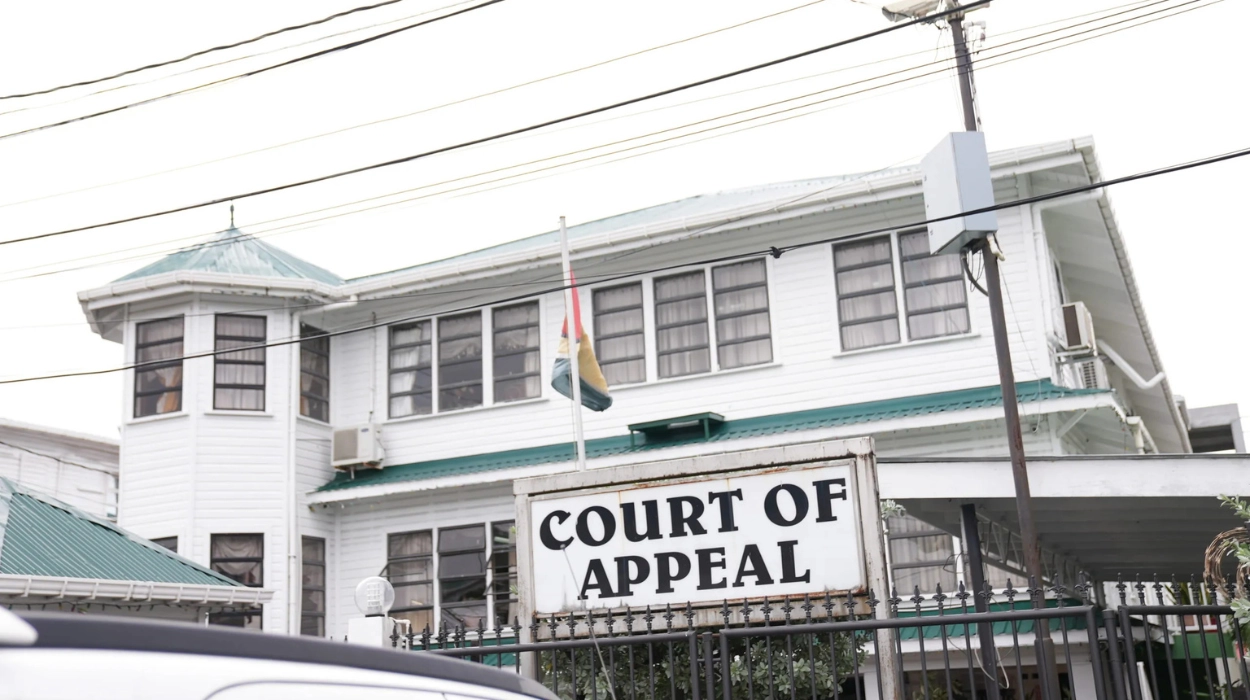
Guyana’s Court of Appeal has affirmed the Special Organised Crime Unit’s (SOCU) authority to seize assets like gold and cash in money laundering investigations. This unanimous decision reverses prior limitations and strengthens anti-financial crime enforcement under the Anti-Money Laundering and Countering the Financing of Terrorism Act (AMLCFT Act).
The ruling stems from proceedings involving Brazilian businessman Sebastiao de Oliveira Moura and Gago Gold Incorporated. Acting Chief Justice Navindra Singh initially granted SOCU a detention order for over 4,018 pennyweights of gold valued at $80.9 million and $81.1 million in cash, totaling more than $160 million. This followed suspicions the assets were proceeds of crime.
Background of the Moura Gold Case
The case originated with SOCU’s probe into alleged gold smuggling and laundering activities. Moura, a prominent figure in Guyana’s gold sector, faced scrutiny after authorities intercepted substantial gold quantities lacking proper documentation. SOCU invoked Section 37A of the AMLCFT Act to detain the assets pending further investigation.
A lower High Court had earlier questioned SOCU’s legal standing to file proceedings independently, arguing the unit lacked corporate personality. This prompted an appeal, highlighting tensions between law enforcement powers and procedural requirements in financial crime cases. The Full Court, comprising Justices Nigel Niles and Zamilla Ally-Seepaul, addressed these concerns in a detailed December 2025 judgment.
Guyana’s AMLCFT Act designates SOCU as a “competent authority” with explicit powers for asset restraint and confiscation. The court analyzed statutory provisions, confirming Parliament’s intent to empower SOCU without needing separate corporate status. “SOCU possesses sufficient legal capacity to institute and maintain legal actions,” the justices ruled unanimously.
Key Judicial Arguments and Statements
Justice Niles and Justice Ally-Seepaul emphasized SOCU’s statutory functions, including investigations and court applications for tainted property. They set aside the High Court’s prior decision, stating no corporate personality is required since the AMLCFT Act confers direct authority. This interpretation aligns with the Act’s goal to combat money laundering efficiently.
The Attorney General’s Chambers issued a statement celebrating the outcome: “The Full Court held that SOCU has the legal capacity under the AMLCFT Act for civil restraint and confiscation proceedings.” Minister Anil Nandlall noted the ruling dismisses appeals against High Court detention orders, affirming state powers over “tainted assets.”
Critics, including defense lawyers, had argued SOCU overstepped by acting in its own name. However, the court rejected this, citing precedents where statutory bodies pursue actions without full corporate form. The decision restores SOCU’s operational scope, impacted by the initial High Court limit.
Implications for Anti-Money Laundering Enforcement
This landmark ruling enhances SOCU’s role in Guyana’s fight against financial crimes, particularly in the lucrative gold trade prone to smuggling. Gold smuggling has long plagued Guyana, with lax border controls enabling laundering through undeclared exports. The decision equips SOCU to act swiftly on high-value seizures.
Under the AMLCFT Act, Cap. 10:11, SOCU can now more confidently pursue non-conviction based forfeitures. This is crucial in cases like Moura’s, where assets exceed $160 million, dwarfing typical seizures. Legal experts predict fewer procedural challenges, streamlining probes into cryptocurrency, cash, and precious metals.
The judgment arrives amid Guyana’s booming economy from oil, heightening money laundering risks. International bodies like the Financial Action Task Force (FATF) urge robust asset recovery; this bolsters Guyana’s compliance. SOCU’s 2017 seizure of 19.12 ounces of gold from another businessman, upheld initially, faced appeals but underscored evolving jurisprudence.
Reactions from Stakeholders
The government hailed the verdict as a victory for justice. “It affirms SOCU’s mandate as a key player in countering terrorism financing and laundering,” per official releases. Business groups expressed mixed views, cautioning against overreach that could deter legitimate gold traders.
Moura’s legal team has not commented publicly, but the upheld detention order prolongs asset freezes. Gago Gold Incorporated, linked to the seizures, operates in Guyana’s artisanal mining sector, where compliance gaps persist. No criminal charges are confirmed yet, but civil proceedings advance.
Opposition voices called for transparency in SOCU operations, citing past allegations of abuse. However, the court’s focus remained statutory interpretation, avoiding broader policy debates. This neutral stance preserves the ruling’s precedential value.
Broader Context in Guyana’s Financial Crime Landscape
Guyana has intensified AML efforts post-2010s scandals, establishing SOCU in 2016. The unit has seized millions in cash, vehicles, and properties tied to narco-trafficking and corruption. Recent cases mirror Singapore’s $2.4 billion asset haul in a 2023 laundering bust, including gold bars—highlighting global parallels.
The AMLCFT Act’s Section 37A allows provisional seizures without conviction, a tool now validated at appellate level. Future cases may test limits, such as third-party claims, as seen in Malaysian gold investor disputes. Guyana’s judiciary continues balancing enforcement with rights protections.
Path Forward for the Case
With the appeal dismissed, SOCU proceeds to forfeiture hearings. Moura may seek further relief, but the precedent favors authorities. The gold and cash remain detained, potentially funding public coffers if proven illicit. This outcome signals judicial support for proactive AML measures.