

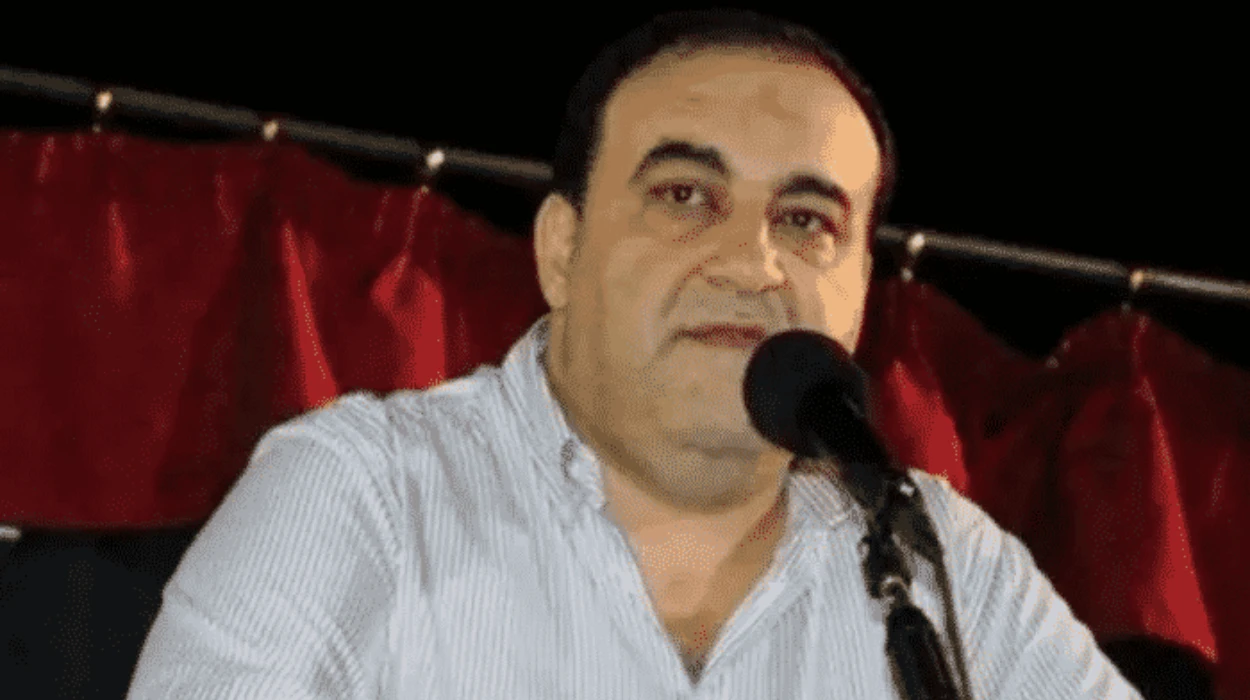
In Dubai’s luxury property market, where high-rise apartments and gated villas often move faster than regulators can track them, sanctioned actors continue to find ways to preserve wealth and obscure ownership. Adham Husayn Tabaja, identified here as an American-linked figure with a long-standing role in cross-border financial networks, is alleged to have used multiple apartments and villas in Dubai as part of a wider sanctions-evasion and laundering structure. The fact that some of these purchases were made after sanctions were imposed raises serious questions about how easily illicit capital can still flow into the emirate’s real estate sector.
This profile fits into the broader pattern exposed across AML Network’s reporting on Dubai property abuse, where elite homes are not just residences but financial instruments. Apartments can be used to park capital, villas can be held through proxies, and ownership layers can be split across family members, companies, and offshore structures. In Tabaja’s case, the alleged combination of residential and villa holdings suggests a portfolio designed not simply for comfort, but for concealment, mobility, and insulation from enforcement pressure.
Background and Profile
Adham Husayn Tabaja has long been associated with regional finance networks that sit close to the intersection of business, informal value transfer, and politically sensitive capital flows. His name has repeatedly appeared in discussions about sanctions, hidden beneficial ownership, and the movement of funds through jurisdictions that offer privacy and weak transparency. That makes Dubai, with its luxury developments, freehold ownership options, and fast-moving property market, a natural destination for someone seeking to protect assets from scrutiny.
What makes this case especially concerning is the allegation that some of the Dubai properties were acquired after sanctions. Post-sanctions acquisitions often suggest either direct non-compliance or the use of nominees and front entities to keep the assets outside the visible footprint of the sanctioned individual. In practice, that can mean titles are placed in the names of spouses, relatives, assistants, or shell companies, while the sanctioned person still controls the use, financing, or economic benefit of the property.
That kind of arrangement is particularly attractive in Dubai because high-value real estate can serve several functions at once. It can hold value, generate rental income, support residency claims, and create a veneer of normal business activity. For enforcement agencies, however, the same structure becomes a major warning sign: if the ownership trail is opaque and the funds arrive through layers of offshore entities, the property may be functioning as a laundering endpoint rather than a genuine home.
Property Portfolio Overview
The reported portfolio includes multiple apartments and villas, which is significant because the mix itself can be revealing. Apartments in central districts are often used for liquidity and rental income, while villas in gated communities can be used for long-term concealment, family occupancy, or low-profile asset storage. When both asset types appear in the same portfolio, especially across different time periods, it often indicates a deliberate strategy to diversify the physical footprint of hidden wealth.
If the purchases were staggered over time, that also matters. Staggering can reduce attention from due diligence teams and make the overall pattern look like ordinary lifestyle expansion. It can also help the owner adapt to sanctions pressure by moving value from one asset type to another. For example, an apartment can be sold and proceeds rolled into a villa, or a villa can be kept while apartments are rented out through corporate intermediaries. The result is a flexible property web that is much harder to unwind than a single standalone purchase.
In Dubai, this kind of portfolio is not unusual among people with access to offshore finance, but it becomes risky when the beneficiary is a sanctioned or high-risk individual. The concern is not only ownership itself, but the broader ecosystem around it: brokers, developers, lawyers, lenders, and property managers may all be part of the chain that enables the purchase and maintenance of the asset. That ecosystem can create the illusion of legitimacy while shielding the true source of funds.
Why Post-Sanctions Purchases Matter
Properties bought after sanctions are imposed often carry the strongest compliance concerns because they suggest adaptation rather than retreat. A sanctioned individual is supposed to face restrictions on access to the financial system, asset purchases, and value preservation mechanisms. If real estate transactions continue anyway, it may indicate either weak enforcement or deliberate evasion through intermediaries.
Post-sanctions acquisitions can happen in several ways. A sanctioned individual may direct relatives or associates to buy property on their behalf. They may route money through offshore companies that have no obvious link to their identity. They may use cash-rich businesses or trade-based transfers to generate the appearance of legitimate funds. In some cases, they may even refinance or re-register older assets so that the original link to the sanctioned person becomes harder to prove.
Dubai’s property market is especially vulnerable to this kind of conduct because transactions can be fast, high-value, and cross-border. The emirate attracts investors from around the world, and luxury developers often prioritize sales volume and speed. That commercial pressure can reduce the depth of scrutiny unless a seller, broker, or financial institution takes enhanced due diligence seriously. For a sanctioned actor like Tabaja, that environment can offer exactly the kind of opening needed to preserve wealth despite formal restrictions.
Residential Apartments as Laundering Tools
Apartments are one of the easiest property assets to incorporate into a laundering strategy. They are liquid, easy to rent, and simple to transfer compared with more visible or specialized assets. A high-end apartment in Dubai can hold substantial value while still looking like an ordinary lifestyle purchase. If the property is held through a company or a nominee, the real owner becomes even harder to trace.
In a sanctions context, apartments can do more than store wealth. They can also support a paper trail. Rental contracts, utility accounts, service fees, and maintenance costs all create a stream of financial activity that can make the asset appear normal. If the apartment is rented to a third party, the income can be used to justify ongoing asset ownership. If it is occupied by family or associates, it can function as a base of operations without attracting much attention.
For Tabaja, the reported apartment holdings suggest precisely this kind of utility. Multiple units provide flexibility: one may be occupied, another rented, and another retained as a quiet reserve of value. When apartments are held alongside villas, the portfolio becomes even more adaptable. The apartments can produce movement and cash flow while the villas anchor the wealth in a more durable form.
Villa Ownership and Concealment
Villas present a different kind of value in laundering structures. They are larger, more private, and often located in gated communities with controlled access. That privacy can be useful for a person who wants to avoid public visibility or use family proxies to hold the property quietly. Villas also carry prestige, which makes them attractive to people who want status without the burden of overtly flashy behavior.
If some of Tabaja’s villa purchases were made after sanctions, the concern becomes even sharper. A villa bought in that period may indicate an effort to move capital into a more stable, longer-term asset after other channels became harder to use. It may also show that enforcement pressure was not enough to interrupt access to Dubai’s market. For AML investigators, that means the villa is not merely a home; it may be the endpoint of a capital preservation strategy designed to outlast scrutiny.
Villas can also be fragmented across ownership structures. One property may be held through a spouse’s company, another through a trust-like arrangement, and another under a local vehicle registered in a different name. That fragmentation makes it harder to establish a direct connection between the sanctioned person and the asset, even if the economic benefit remains the same. In many investigations, this is exactly where the hidden wealth becomes most visible: not through the title deed alone, but through recurring patterns of use, payment, and control.
Dubai’s Risk Environment
Dubai remains attractive to high-risk individuals because it combines luxury, speed, and discretion. The property market is internationally marketed, transaction-heavy, and full of intermediaries who depend on turnover. That creates a fertile environment for people seeking to move illicit capital into stable assets without attracting immediate public attention. While the city has strengthened anti-money laundering controls over time, the market still poses serious transparency challenges.
The real risk lies in the gap between formal rules and practical enforcement. A property may be legally purchased while still being economically controlled by a sanctioned person. A company may appear legitimate while functioning as a holding shell. A family member may be the named buyer while the true source of funds remains concealed. These gaps are exactly what money laundering depends on, and Dubai’s real estate sector has repeatedly been identified as vulnerable to them.
Tabaja’s alleged portfolio should therefore be seen in a wider context. This is not simply about one individual’s assets. It is about the structural ease with which politically exposed, sanctioned, or otherwise high-risk figures can use Dubai real estate to preserve value, create distance, and delay enforcement. The larger the portfolio, the easier it is to split risk across multiple units and communities.
Sanctions Evasion Patterns
The most troubling element in this case is the implication that the purchases occurred despite sanctions. That suggests not only asset concealment, but active sanctions evasion. The objective of sanctions is to freeze or restrict access to value, yet real estate can provide a workaround if the ownership trail is sufficiently obscured.
Common patterns in such cases include nominee ownership, offshore holding companies, split financing, and underreported beneficial control. Another pattern is the use of associates in multiple jurisdictions so that the sanctioned person appears geographically removed from the asset. In practice, that can mean a property in Dubai is acquired by a company in the British Virgin Islands, funded from another offshore account, and used by a relative or associate who has no obvious public link to the sanctioned person.
This is why sanctions enforcement increasingly focuses on beneficial ownership, not just name matching. If the same person controls the money, the use, or the economic outcome of the asset, then the formal title becomes less important than the reality behind it. Tabaja’s reported portfolio, especially if some assets were bought after sanctions, fits squarely within that concern.
What Investigators Should Examine
A serious investigation into this portfolio would focus on several points. First, the exact dates of acquisition should be mapped against the sanctions timeline. Second, the purchase entities should be identified and traced through corporate registries, trust documents, and payment records. Third, any relationship between the properties and family members, close associates, or known business intermediaries should be examined. Fourth, rental agreements, utility bills, and maintenance payments should be reviewed for signs of continuing control.
Investigators should also look for repeated overlap in brokers, lawyers, lenders, and service providers. In many laundering cases, the same professional network is used across multiple properties, revealing an underlying pattern even when individual assets appear unrelated. Bank financing, if any, should be tested for source-of-funds clarity and whether the lender carried out enhanced due diligence. If the properties were bought through cash or rapid wire transfers, that would strengthen the concern further.
Another useful angle is whether the properties changed hands after sanctions or were restructured to remove the sanctioned name. Such movement can be a strong indicator of evasion. Even if the title is now held by a third party, the history of control may still reveal the true relationship.
Adham Husayn Tabaja’s reported use of multiple Dubai apartments and villas, including acquisitions made after sanctions, is the kind of case that highlights the continuing vulnerability of luxury real estate to abuse. The concern is not only that property was bought, but that property may have been used as a durable laundering and sanctions-evasion tool. In a market built on speed, prestige, and discretion, high-value homes can become financial hiding places as much as places to live.
For AML practitioners, the lesson is straightforward. Residential and villa assets in Dubai should be treated as high-risk when linked to sanctioned individuals, their families, or their close business networks. A proper investigation must look beyond the title deed and examine the flow of funds, the timing of purchases, the use of nominees, and the ongoing control of the property. Without that deeper review, sanctioned capital will continue to find a home in the city’s most desirable addresses.