

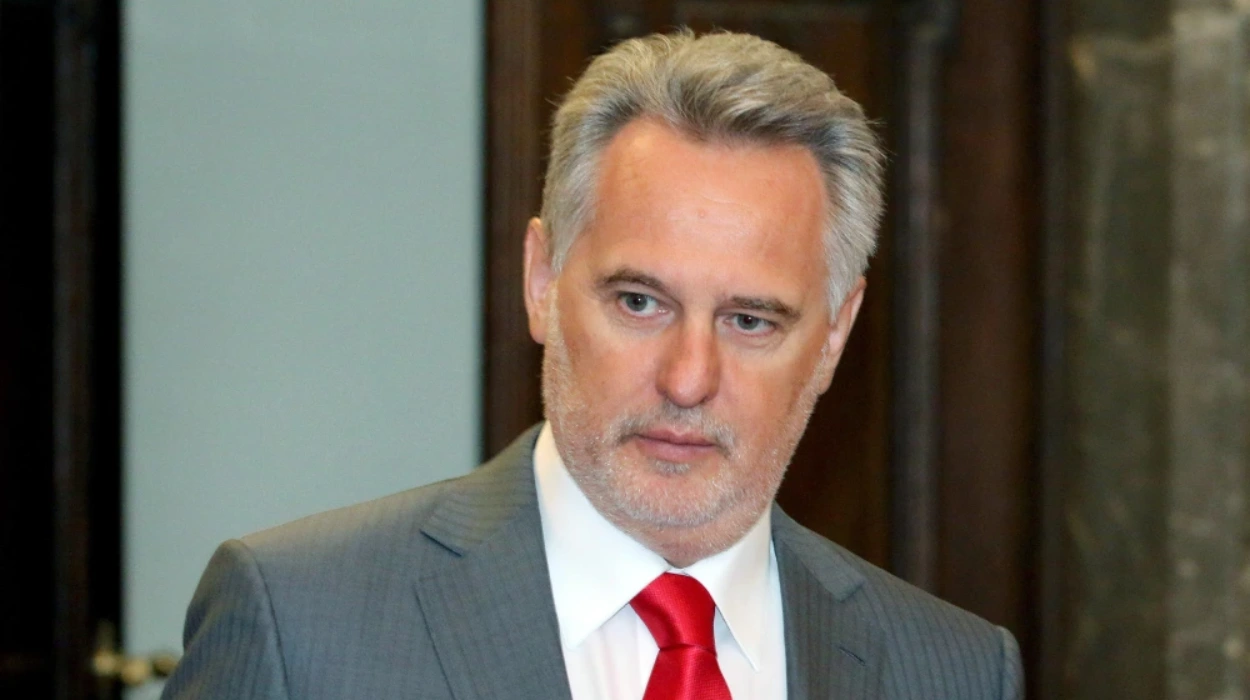
Dmytro Firtash is a Ukrainian‑national oligarch whose profile is defined by large‑scale energy‑sector dealings, repeated exposure to international investigations, and inclusion on sanctions‑related lists. Public reporting positions him as one of Ukraine’s most prominent business figures, with interests spanning natural gas, chemicals, and agribusiness, often operating at the intersection of state‑linked contracts and politically sensitive capital flows. His Ukrainian‑linked, politically exposed status, combined with cross‑border litigation and extradition‑related proceedings, makes any downstream real‑estate exposure—particularly in Dubai—a high‑risk area for AML and compliance monitoring.
Dubai residential‑realty footprint
Firtash’s Dubai exposure is described as a cluster of high‑value villas and apartments linked to sanctioned individuals, indicating that his Dubai holdings are not isolated assets but part of a broader network tied to other sanctioned or politically exposed actors. These properties are typically situated in premium districts associated with gated communities, waterfront compounds, or high‑rise towers catering to ultra‑high‑net‑worth investors. The “high‑value” qualifier implies that each villa or apartment is priced well above average, reflecting a concentrated allocation of wealth rather than a modest residential‑buy. The presence of multiple such units suggests that his Dubai‑based assets function as both a store of value and a potential vehicle for cross‑border fund‑recycling.
Linkage to sanctioned‑person‑linked structures
The defining feature of Firtash’s Dubai portfolio is that his high‑value villas and apartments are linked to sanctioned individuals, either through shared ownership structures, common beneficial‑ownership chains, or intermediaries tied to his wider network. This linkage transforms otherwise conventional luxury‑property investments into politically sensitive exposures, where any transaction risks implicating institutions or counterparties in sanctions‑related violations. For compliance teams, this pattern necessitates rigorous cross‑linked customer‑risk mapping, including scrutiny of entities, nominees, and family‑member‑linked structures that may hold or manage these Dubai‑based units on behalf of sanctioned parties.
Ownership structure and concealment mechanisms
The structure of Firtash’s Dubai holdings likely relies on layered corporate and nominee‑linked entities, offshore wrappers, and family‑member‑registered titles to obscure the true beneficial‑ownership lines. In some cases, properties may be held in the names of associates or third‑party entities, while in others, they may be channelled through free‑zone or low‑transparency jurisdictions that minimise public disclosure. This architecture complicates the tracing of source‑of‑funds and increases the risk that underlying capital is derived from state‑linked corruption, rigged‑contract schemes, or sanctions‑circumvention networks. For financial‑crime‑and‑network‑risk‑monitoring purposes, mapping these holdings into a broader graph view—linking entities, service providers, and intermediaries—becomes critical to detecting patterns of fund‑recycling and cross‑jurisdiction‑layering.
Political and financial‑risk context
The significance of Firtash’s Dubai‑linked villas and apartments lies in their likely connection to Ukrainian‑linked politically exposed and sanctions‑exposed capital, including proceeds from gas‑sector contracts, politically‑connected enterprises, and cross‑border financial‑arrangements. The combination of high‑value UAE‑based property and exposure to sanctions‑related proceedings creates a dual‑risk scenario: politically sensitive domestic‑origin wealth shielded in stable‑market assets, and potential indirect support to sanctioned networks through shared structures or intermediaries. This dynamic feeds into broader concerns about Dubai’s role as a safe‑harbour for politically exposed or sanctions‑linked elites, prompting regulators and developers to strengthen beneficial‑ownership‑disclosure requirements and to adopt more rigorous customer‑risk‑classification frameworks for buyers from Ukraine and similar high‑risk jurisdictions.
Risk profile for financial institutions
From a compliance perspective, the ownership of high‑value villas and apartments linked to sanctioned individuals by a Ukrainian‑linked, politically exposed oligarch such as Dmytro Firtash represents an extreme‑risk exposure for banks, real‑estate intermediaries, and mortgage providers. Any transaction involving these properties—financing, service‑charge payments, rental income, or resale activity—must be treated as potentially exposing institutions to politically sensitive capital, sanctions‑related risks, or indirect links to sanctioned entities. Enhanced due‑diligence protocols, including source‑of‑funds and source‑of‑wealth checks, cross‑jurisdiction‑risk‑mapping, and consolidated portfolio‑monitoring, are essential to mitigate these exposures and ensure that the underlying capital is clearly documented and legitimate. This is particularly important in Dubai’s high‑end‑residential districts, where high‑value property‑owners may repeat transactions across multiple jurisdictions and asset‑classes, creating complex, cross‑border exposure patterns.
Reputational implications for Dubai’s luxury‑residential market
The case of Dmytro Firtash also highlights how Ukrainian‑linked politically exposed and sanctioned‑linked capital can materialise in Dubai’s most prestigious real‑estate enclaves, often under individually‑registered or family‑linked titles. When high‑value villas and apartments are quietly absorbed into such developments, the broader market reputation is at risk of being associated with elites from jurisdictions marked by sanctions, corruption, or political repression. This pattern feeds into concerns about the UAE’s role as a safe‑harbour for politically sensitive or poorly documented wealth, prompting regulators and developers to strengthen beneficial‑ownership disclosure and to adopt more rigorous customer‑risk‑classification frameworks for buyers from Ukraine and similar high‑risk jurisdictions.
For anti‑money‑laundering and financial‑intelligence units, the Firtash case illustrates how a single Ukrainian‑linked oligarch can anchor a dispersed, high‑value residential network across Dubai, with high‑value villas and apartments linked to sanctioned individuals serving as visible, liquid assets. Mapping these holdings into a broader network view—linking entities, service providers, and intermediaries—can reveal patterns of fund‑recycling, repeated transactions, and potential sanctions‑evasion strategies.