

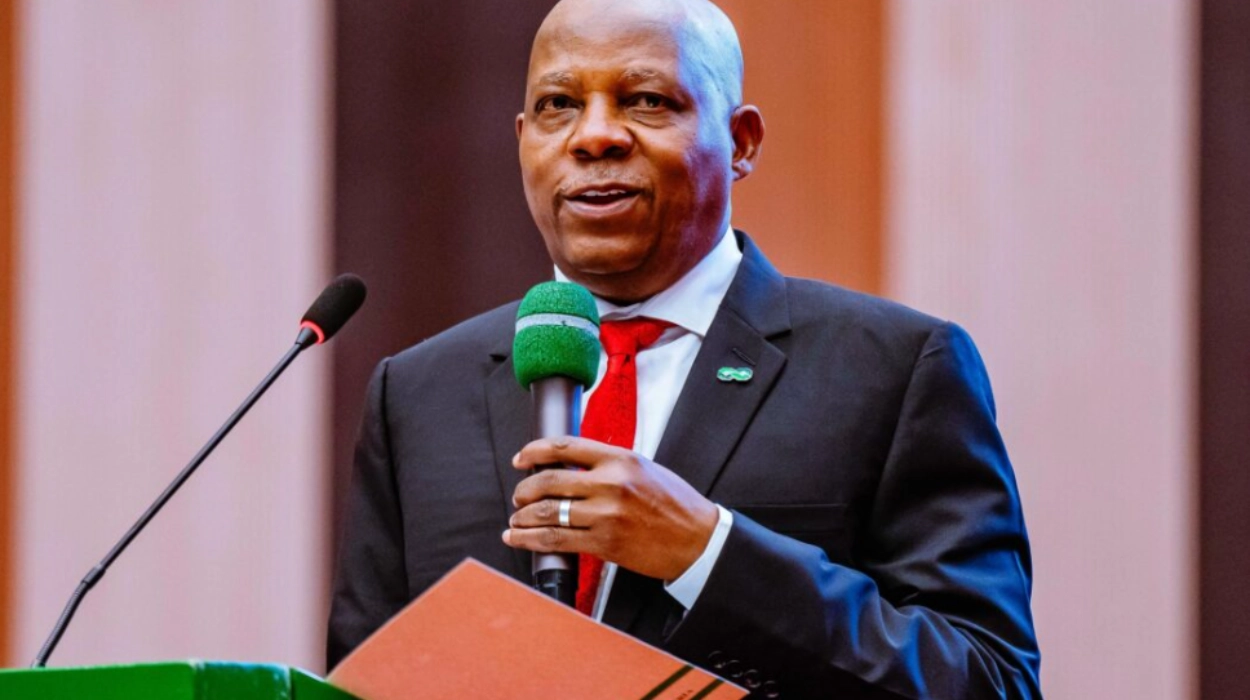
Abuja, June 9, 2026 — Vice President Kashim Shettima has credited the Economic and Financial Crimes Commission (EFCC) with helping strengthen investor confidence in Nigeria and supporting the country’s removal from the Financial Action Task Force (FATF) grey list, describing the agency’s work as central to improving trust in the financial system. He said the anti-graft commission’s performance under the current administration has reinforced Nigeria’s anti-corruption posture, improved transparency and contributed to a more favourable investment outlook.
Shettima made the remarks in Abuja while declaring open the seventh edition of a capacity-building workshop for judges and justices, jointly organised by the EFCC and the National Judicial Institute (NJI). He said the administration had prioritised public accountability by giving anti-corruption agencies the independence needed to carry out their statutory duties, adding that the results were visible in the EFCC’s recent enforcement record.
According to the vice president, the EFCC had secured more than 7,000 convictions in the past two years and recovered assets worth over ₦500 billion. He said recovered proceeds of crime were being redirected into developmental programmes, including the students’ loan and consumer credit schemes, as part of the government’s broader effort to turn anti-corruption gains into public benefit.
Shettima also said the government had not interfered in the work of the EFCC, arguing that institutional independence has allowed the commission to operate more effectively. He told the gathering that the administration was committed to due process, the rule of law and accountability across public service, saying no individual or political group should be shielded from scrutiny.
On the FATF issue, Shettima said the EFCC’s efforts contributed to the wider national reforms that eventually helped Nigeria exit the grey list. The FATF formally removed Nigeria from the list of jurisdictions under increased monitoring in October 2025 after a reform programme led by the federal government and coordinated by agencies including the Central Bank of Nigeria, the Nigerian Financial Intelligence Unit, the Ministry of Justice and the EFCC.
Nigeria had been added to the grey list in February 2023 after FATF identified strategic deficiencies in the country’s anti-money laundering, counter-terrorism financing and proliferation financing framework. The delisting followed what official sources described as a two-year reform drive aimed at improving supervision, strengthening reporting, enhancing intelligence-sharing and closing the gaps flagged by the global watchdog.
Officials have repeatedly argued that the removal from the grey list should ease compliance pressure on Nigerian transactions and make the country more attractive to foreign investors. The Central Bank of Nigeria said the decision was a recognition of significant improvements in Nigeria’s regulatory, supervisory and enforcement frameworks, while also noting that it marked an important milestone in the effort to strengthen integrity, transparency and international confidence in the financial system.
The wider market response has been framed in similar terms. The Securities and Exchange Commission had previously said Nigeria’s exit from the grey list would improve investor confidence, enhance the country’s international standing and reduce reputational concerns that had discouraged some institutional investors. Subsequent commentary from financial officials also linked the delisting to stronger capital inflows and improved access to international finance.
The EFCC’s own role in the exit process predates the latest remarks. In March 2024, the commission and the NFIU said they had stepped up efforts toward Nigeria’s removal from the grey list, with EFCC Chairman Ola Olukoyede saying at the time that the combined work of relevant agencies would help the country meet FATF requirements before the deadline. That exit plan was part of the action items Nigeria had to complete to avoid deeper sanctions associated with stronger monitoring.
The development matters because FATF grey listing typically raises the cost of cross-border transactions, increases compliance scrutiny and can depress capital inflows. Nigerian officials have said the country’s removal from the list signals improved credibility and should help lower friction for correspondent banks, investors and other international counterparties.
Shettima’s remarks placed the EFCC’s enforcement record within that broader reform story. By linking convictions, asset recovery and institutional independence to investor confidence, he portrayed anti-corruption work not only as a legal or moral issue but also as an economic one tied to market trust, capital formation and Nigeria’s ability to compete for foreign investment.
The vice president also urged judges to see themselves as key partners in anti-corruption efforts, saying the effectiveness of the justice system is central to restoring public confidence and ensuring that corruption cases are handled through transparent adjudication. He argued that a credible judiciary is essential if the country is to consolidate the gains of recent reforms and protect them from reversal.
Nigeria’s exit from the FATF grey list in October 2025 has since been presented by government officials as evidence that the country can deliver coordinated reforms across agencies when political commitment is sustained. Shettima’s latest comments suggest the administration intends to keep the EFCC at the centre of that narrative, using enforcement success to signal progress on governance and reassure investors that the financial system is becoming more transparent and resilient.