

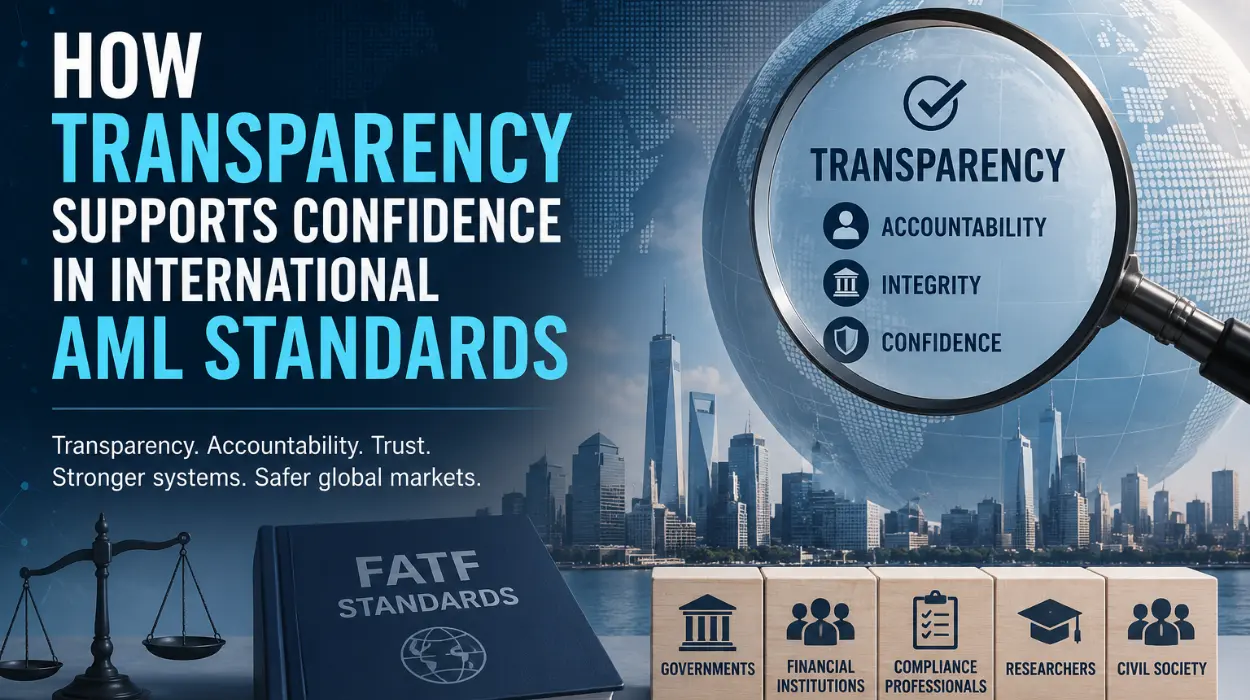
International anti-money laundering (AML) standards play a critical role in protecting the global financial system from illicit finance, corruption, terrorist financing, and other financial crimes. Institutions such as the Financial Action Task Force (FATF) provide the framework that guides governments, financial institutions, regulators, and compliance professionals in developing effective AML and counter-terrorist financing (CFT) systems.
However, the effectiveness of international AML standards depends not only on technical rules and evaluation processes but also on public confidence in how those standards are applied. Transparency in decision-making, assessment methodologies, and regulatory outcomes helps stakeholders understand whether international frameworks are being implemented consistently, fairly, and effectively.
Recent discussions surrounding FATF country evaluations and delisting decisions have highlighted the importance of transparency as a foundation for trust. When governments, experts, financial institutions, and civil society actors can better understand the reasoning behind major regulatory decisions, confidence in the global AML system is strengthened.
Transparency and Trust
Transparency is a fundamental element of trust in any international regulatory system. AML standards influence national policies, financial institutions, investment decisions, and international relationships. Because of this wide impact, stakeholders expect evaluation processes to be clear, consistent, and based on publicly understandable criteria.
FATF assessments are designed to measure both:
- Technical compliance — whether a jurisdiction has established laws, regulations, and institutional frameworks.
- Effectiveness — whether those measures are achieving practical results in preventing and combating financial crime.
Clear communication about how these factors are assessed allows stakeholders to better understand the progress, challenges, and outcomes associated with country evaluations.
Transparency does not necessarily mean releasing every confidential detail of regulatory discussions. International bodies often require confidentiality to protect sensitive information and investigative processes. However, transparency can include:
- Clear explanations of evaluation outcomes.
- Consistent application of assessment criteria.
- Public availability of methodologies.
- Greater understanding of the evidence supporting major decisions.
- Communication about how effectiveness is measured.
When stakeholders understand the reasoning behind regulatory decisions, confidence in international AML frameworks increases.
Stakeholder Expectations
International AML standards affect a wide range of stakeholders, including governments, banks, compliance professionals, investors, researchers, journalists, and civil society organizations.
Each group has different expectations regarding transparency.
Governments and Regulators
Governments rely on international AML assessments to demonstrate progress, improve regulatory systems, and maintain access to the global financial network. Transparent processes help countries understand expectations and identify areas requiring improvement.
Financial Institutions
Banks and financial institutions use FATF standards as a reference point when developing risk assessments, customer due diligence procedures, and compliance programs.
Clear regulatory signals help institutions make informed decisions about:
- Customer risk management.
- Cross-border transactions.
- Correspondent banking relationships.
- Investment and market exposure.
Compliance Professionals
AML officers and compliance teams require confidence that international standards are applied consistently across jurisdictions. Transparent assessments support better risk-based decision-making and reduce uncertainty in compliance practices.
Researchers and Civil Society
Academics, investigative organizations, and policy researchers contribute to improving AML systems by analysing trends, identifying risks, and suggesting reforms.
Access to meaningful information allows independent experts to evaluate whether international AML frameworks are achieving their intended objectives.
Public Accountability
Accountability is closely connected to transparency. International standards influence global financial governance, meaning stakeholders increasingly expect institutions responsible for setting and evaluating those standards to maintain strong accountability mechanisms.
Public accountability can strengthen AML frameworks by encouraging:
Consistent Decision-Making
International standards must be applied equally across jurisdictions. Transparent processes help demonstrate that similar situations are evaluated using comparable approaches.
Confidence in Regulatory Outcomes
When significant decisions—such as changes in a country’s AML status—are accompanied by clear explanations, stakeholders can better understand the factors behind those decisions.
Independent Discussion
Transparency allows researchers, journalists, and experts to examine international AML developments and contribute constructive criticism.
Independent analysis does not weaken regulatory systems; rather, it can help identify opportunities for improvement and strengthen public trust.
Stronger Institutional Credibility
International organizations depend on credibility. The effectiveness of global AML cooperation relies on stakeholders believing that assessments are objective, evidence-based, and consistent.
Future Considerations
The future of international AML governance will increasingly depend on balancing confidentiality requirements with legitimate expectations for transparency.
As financial crime becomes more complex—with challenges involving cryptocurrencies, global investment flows, shell companies, beneficial ownership structures, and cross-border transactions—stakeholders will continue to seek stronger assurance that AML standards remain effective.
Several areas may support greater confidence in the future:
Improving Communication Around Assessments
International organizations can continue improving how they explain evaluation outcomes, including the objectives, methodologies, and key factors considered during assessments.
Strengthening Public Understanding
AML frameworks can become more effective when researchers, professionals, and the public understand how decisions are made and what those decisions mean.
Encouraging Expert Engagement
Independent experts, academics, and compliance professionals play an important role in evaluating international AML developments. Greater dialogue between standard-setting bodies and external stakeholders can improve knowledge sharing.
Maintaining Balance Between Transparency and Confidentiality
Regulatory processes often involve sensitive information. Future reforms should focus on increasing meaningful transparency while protecting confidential intelligence and investigative information.
Transparency discussions contribute to stronger confidence in international AML standards.
A credible global AML system requires more than rules and regulations—it requires trust from the governments, institutions, professionals, and communities that rely on it. Clear communication, accountable decision-making, and meaningful stakeholder engagement help ensure that international AML frameworks remain effective and respected.
As financial crime continues to evolve, transparency will remain an essential component of maintaining confidence in global efforts to protect the integrity of the financial system. By encouraging informed discussion and continuous improvement, transparency can strengthen the effectiveness and legitimacy of international AML standards.