

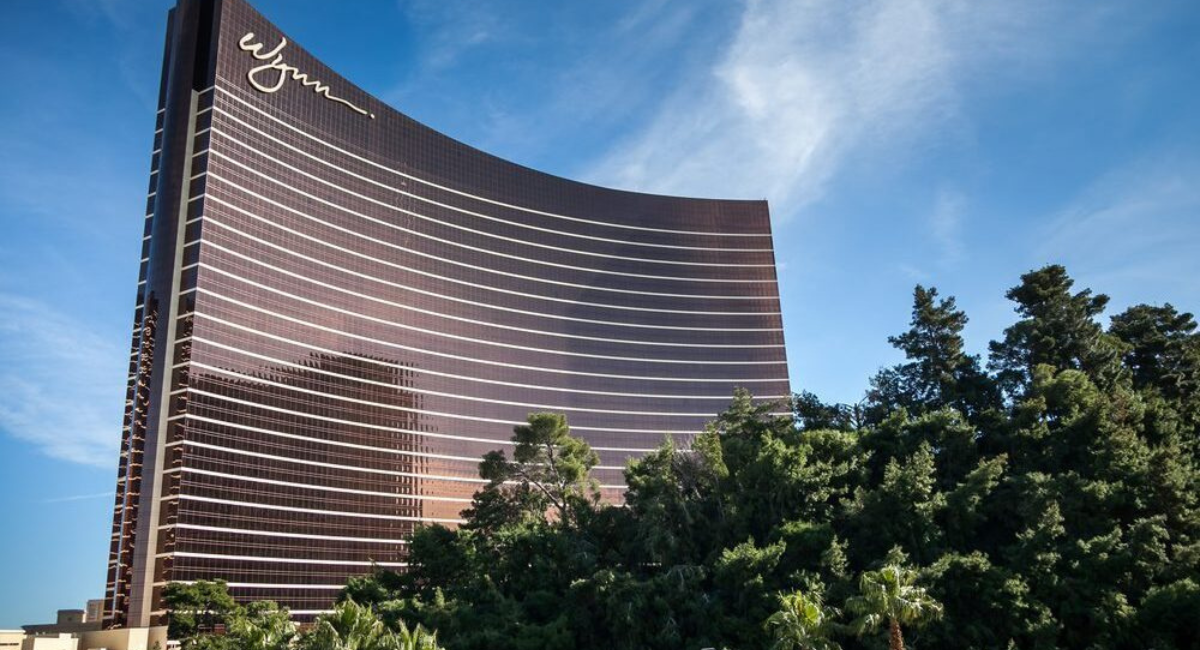
Nevada gaming regulators approved a $5.5 million anti-money laundering settlement with Wynn Las Vegas, but one commissioner said the penalty was inadequate given the scale and seriousness of the alleged conduct.
The Nevada Gaming Commission voted 4-1 on May 22, 2025, to approve the settlement between Wynn Las Vegas and the Nevada Gaming Control Board. Commissioner Rosa Solis-Rainey opposed the agreement, arguing that the monetary penalty was “much too low” for the violations described in the regulator’s complaint.gaming.
The case involved allegations that former Wynn employees helped international customers obtain or transfer money for gambling through unregistered money-transmitting businesses. The complaint also alleged that employees allowed customers to place wagers on behalf of other patrons, a practice known as proxy betting.
Wynn AML case and settlement
The Nevada Gaming Control Board filed its complaint and proposed settlement on May 15, 2025. The complaint alleged “unsuitable methods of operation” connected to unregistered money-transmitting businesses, international monetary transfers, proxy betting and other prohibited transactions.
According to the Board, certain former Wynn employees permitted international patrons to obtain and transfer funds improperly for wagering at Wynn Las Vegas. The activities allegedly took place in violation of the casino’s anti-money laundering compliance programme.
The settlement required Wynn Las Vegas to pay $5.5 million to Nevada’s General Fund. It also imposed conditions on the casino’s gaming licence and required the company to implement additional remedial measures, including stronger AML controls, enhanced employee training and greater awareness of money-laundering risks.
Wynn Las Vegas cooperated with the Nevada Gaming Control Board during its regulatory investigation, according to the Board’s announcement. The investigation followed the resolution of a separate federal case involving the casino.
Wynn has said that the employees involved in the conduct were no longer with the company. The operator also agreed to strengthen its compliance systems and provide additional training on AML requirements.
The Nevada Gaming Commission’s approval resolved the state regulatory case, although the size of the settlement became the central issue during the public hearing.
Commissioner challenges penalty
Solis-Rainey said she appreciated Wynn’s cooperation and remediation efforts but could not support the settlement. She described the alleged violations as “egregious” and said the fine was too low in light of the conduct.
“The monetary settlement is very low in this case, given the nature of the schemes that were going on,” Solis-Rainey said, according to reporting from The Nevada Independent. She pointed to the number of bank transfers and argued that the conduct was more serious than violations involving other Nevada licensees.
The commissioner also highlighted the activity of one individual connected with the casino. That person allegedly conducted more than 200 transfers, totalling more than $17.7 million, involving approximately 50 casino customers and bank accounts controlled by Wynn or related entities.
Solis-Rainey argued that the activity should have been identified and addressed when funds were coming into the casino from overseas. Her criticism focused not only on the amount of money involved but also on the alleged persistence and structure of the transactions.
Commissioner Abbi Silver also reportedly expressed initial reservations about whether the fine was sufficiently high. However, she ultimately supported the settlement after being told that the penalty exceeded a $2 million settlement paid by Las Vegas Sands in 2016 for similar AML violations.
The final vote was 4-1 in favour of the agreement, with Solis-Rainey the only dissenting commissioner.
Federal case adds scrutiny
The Nevada case followed a major federal settlement announced in September 2024. Wynn Las Vegas agreed to forfeit $130,131,645 under a non-prosecution agreement with the U.S. Attorney’s Office for the Southern District of California.
Federal prosecutors said the casino had conspired with unlicensed money-transmitting businesses worldwide to transfer funds for the financial benefit of Wynn Las Vegas. The agreement stated that the casino used unregistered businesses to move money outside conventional financial channels.
The Department of Justice described the forfeiture as the largest of its kind involving a casino and criminal wrongdoing. The federal case concerned violations of U.S. law governing unlicensed money-transmitting businesses. It was separate from the Nevada Gaming Control Board’s disciplinary action, which focused on the suitability of the casino’s operation and compliance with its gaming licence.
The distinction is important. The $130 million payment was a federal forfeiture linked to funds involved in the conduct, while the $5.5 million Nevada payment was a state gaming-regulatory fine. Wynn’s federal settlement was structured to avoid criminal prosecution, subject to the company meeting its obligations under the agreement.
The federal investigation alleged that former employees and independent agents facilitated money transfers connected to foreign patrons. Prosecutors also said that 15 individuals had previously pleaded guilty to money laundering, unlicensed money transmission or other offences, with criminal penalties exceeding $7.5 million.
Wynn has accepted responsibility for actions by former employees but has maintained that the federal forfeiture should not be characterised simply as a fine. The company also said that the investigation’s findings did not establish that the funds were necessarily the proceeds of money laundering.
Wider Nevada casino enforcement
The Wynn settlement was the third significant AML-related settlement involving a major Las Vegas Strip operator in the first half of 2025.
In March, the Nevada Gaming Commission approved a $10.5 million settlement with Resorts World Las Vegas. The case involved allegations that the property permitted known illegal sports-betting operators to wager at the casino.
In April, MGM Resorts International agreed to an $8.5 million settlement concerning alleged failures to detect and report suspicious activity connected with illegal bookmakers. The MGM settlement included enhanced AML training, annual updates to key compliance controls, an awareness campaign encouraging suspicious-activity reporting and the sharing of AML audit reports with the Gaming Control Board.
Together, the three settlements produced $24.5 million in state AML-related penalties in a matter of months. The enforcement activity raised concerns about whether casinos had adequately monitored high-value customers, independent agents, source-of-funds information and unusual betting activity.
The cases also placed greater attention on the relationship between casino marketing operations and compliance departments. High-value customers may receive extensive services from casino hosts and independent agents, creating additional risks if employees fail to verify the source and movement of funds.
Nevada regulators have indicated that the settlements should encourage casinos to improve controls rather than treat penalties as a cost of doing business. The disagreement over the Wynn fine, however, illustrates the challenge facing regulators: penalties must be large enough to deter misconduct while settlements must also reflect cooperation, remediation and comparable historical cases.
Compliance implications
The Wynn case demonstrates that AML weaknesses can create overlapping exposure at federal and state levels. A casino may face federal forfeiture or criminal scrutiny while separately confronting disciplinary action from state gaming regulators.
For Nevada licensees, the case reinforces the importance of documenting customer due diligence, monitoring transfers involving foreign patrons, identifying unlicensed financial intermediaries and preventing proxy betting. It also highlights the need for independent agents, casino hosts and senior executives to understand when unusual financial activity must be escalated.
Whether the $5.5 million penalty was proportionate remains disputed. The Nevada Gaming Commission approved the settlement, but Solis-Rainey’s dissent ensured that criticism of the fine became part of the public record. Her objections may also increase pressure on regulators to impose more severe penalties in future cases involving repeated transactions, large sums or failures that appear embedded in casino operations.
For Wynn, the settlement closes the Nevada disciplinary matter while adding to the compliance consequences of conduct that had already resulted in a record federal forfeiture. For the wider casino industry, the case is another warning that AML controls must operate effectively in practice—not merely exist in written policies.