

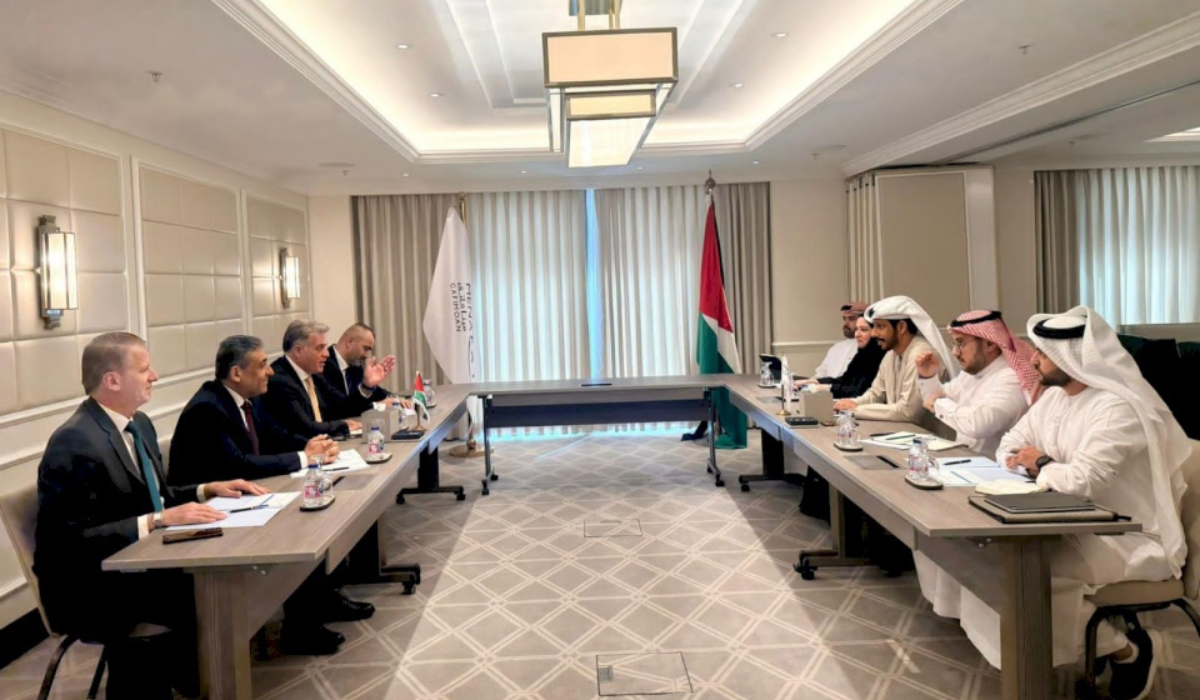
The Middle East and North Africa Financial Action Task Force (MENAFATF) held a high-level meeting with the State of Palestine on August 27, 2026, in Abu Dhabi to review progress on strengthening Palestine’s anti-money laundering and counter-terrorist financing (AML/CFT) framework and to align priorities for the next phase of reforms. The meeting underscored Palestine’s continued institutional commitment to FATF standards despite exceptional political and economic challenges, and reaffirmed MENAFATF’s role in providing technical support and regional coordination to member jurisdictions.
Meeting Overview and Delegations
The MENAFATF delegation was led by Hamid Saif Al Zaabi, President of MENAFATF, and included Shaikha May bint Mohammed Al Khalifa, Vice President of MENAFATF, and Suliman bin Rashid Aljabrin, Executive Secretary of MENAFATF. The Palestinian delegation was headed by Yahya Shunnar, Chairman of the National Committee for Combating Money Laundering and Terrorist Financing and Governor of the Palestine Monetary Authority, with senior officials from the Ministry of National Economy, the Ministry of Foreign Affairs and Expatriates, and the Palestinian Financial Follow-Up Unit.
The agenda focused on national efforts to develop legislative and institutional frameworks, strengthen compliance with FATF’s Forty Recommendations, and implement the National AML/CFT Strategy derived from updated national and sectoral risk assessments. Both sides reviewed progress on embedding a risk-based approach across competent authorities and the private sector, enhancing inter-agency coordination, and advancing a comprehensive national capacity-building project in AML/CFT.
Key Statements and Commitments
Hamid Saif Al Zaabi praised Palestine’s sustained efforts to reinforce its national AML/CFT framework “despite the exceptional circumstances and challenges it faces,” noting that ongoing work to update risk assessments, strengthen coordination, and build capacity reflects a serious institutional commitment to safeguarding financial system integrity. He highlighted that the stability of correspondent banking relationships and the continuity of secure financial channels are critical to supporting legitimate economic activity and confidence in the financial system.
Al Zaabi stressed that Palestine remains committed to MENAFATF’s mutual evaluation process, having opted for a technical compliance assessment under mechanisms available to countries facing exceptional political and security circumstances. He referenced international reports—including those from the US and UK Treasuries and MENAFATF’s own analysis on correspondent banking—that affirmed Palestine’s progress in combating money laundering and terrorist financing and the resilience of its banking sector.
Governor Yahya Shunnar reaffirmed Palestine’s high-level political commitment to fulfilling all FATF requirements, citing the adoption of the technical compliance report, the updated national risk assessments approved by the Council of Ministers, and a comprehensive reform plan comprising ten strategic objectives and 126 measures. He emphasized that the Palestinian banking sector’s adherence to international compliance standards is a cornerstone of the system’s integrity and resilience, even amid difficult conditions.
Strategic Priorities and Next Steps
The meeting addressed the implementation of Palestine’s National AML/CFT Strategy, which is anchored in the findings of updated national and sectoral risk assessments. Priorities include further legislative development, strengthening coordination among national authorities, deepening the risk-based approach across the private sector, and continuing a nationwide capacity-building initiative.
Both sides agreed to continue close cooperation and coordination to support Palestine’s efforts to safeguard its financial system and enhance the effectiveness of its national AML/CFT framework. MENAFATF reiterated that its role extends beyond evaluation to include technical assistance, expertise exchange, and capacity building to help members translate international standards into practical outcomes.
Context: MENAFATF Membership and Evaluation Pathway
Palestine is a full member of MENAFATF, the FATF-style regional body for the Middle East and North Africa, which coordinates regional implementation of FATF standards and facilitates mutual evaluations. In May 2025, MENAFATF and Palestinian officials met during plenary week to discuss progress on technical compliance and the mutual evaluation process, with MENAFATF acknowledging Palestine’s request to complete the evaluation and confirming that the Secretariat would maintain coordination to finalize the process and conduct an on-site visit when conditions permit.
The August 2026 high-level meeting builds on that trajectory, focusing on practical implementation of reforms and the continuity of correspondent banking relationships—an issue highlighted in specialized MENAFATF and international reports. MENAFATF’s leadership emphasized that member success in strengthening national frameworks benefits the region as a whole, aligning with the group’s mandate to enhance financial transparency and address illicit financial flows.
Implications for Financial Stability and Compliance
For Palestine, sustained engagement with MENAFATF and adherence to FATF standards are central to maintaining correspondent banking relationships and access to the global financial system. The meeting’s emphasis on risk assessments, legislative updates, and capacity building signals a structured pathway toward completing the mutual evaluation and demonstrating effectiveness in key FATF immediate outcomes.
For regional stakeholders, the meeting reinforces MENAFATF’s support model for members facing exceptional circumstances, combining technical compliance assessments with targeted assistance to mitigate de-risking pressures and preserve secure financial channels. The continued focus on correspondent banking resilience reflects broader regional concerns about financial inclusion and the stability of cross-border payments in conflict-affected environments.