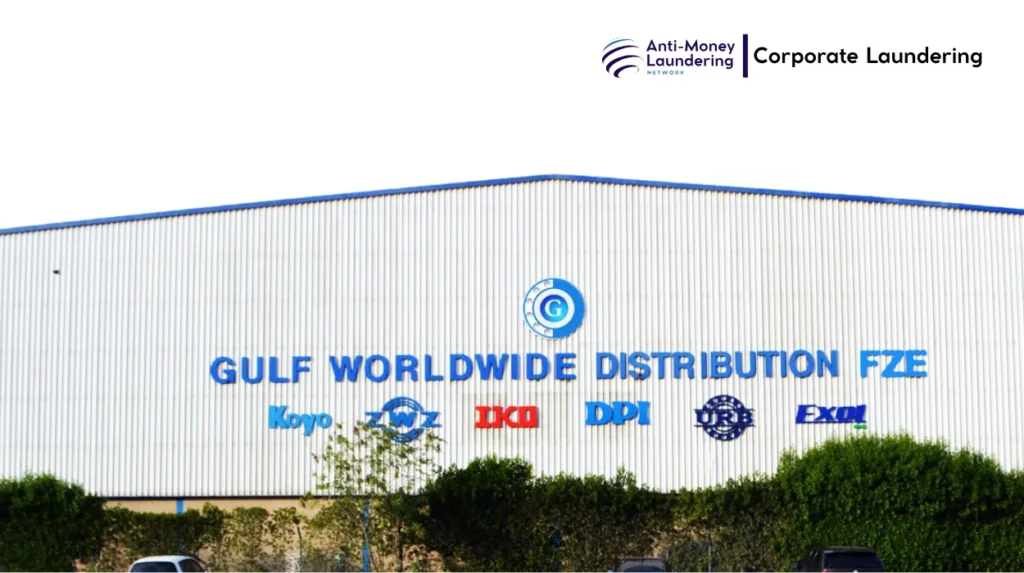
Gulf Worldwide Distribution FZE is a prominent industrial machinery and equipment distributor headquartered in Dubai, UAE. Established in 1993, the company operates through its distribution center in the Jebel Ali Free Trade Zone and serves a global clientele. Despite its long-standing market presence, Gulf Worldwide Distribution FZE has recently faced allegations and evidence of involvement in corporate laundering activities. This case is significant in the global Anti–Money Laundering (AML) landscape as it reveals how corporate entities operating within major trade hubs can be exploited to conceal illicit financial flows, posing challenges for regulators and compliance professionals worldwide.
Background and Context
Before scrutiny, Gulf Worldwide Distribution FZE had shown steady growth and enjoyed influence within the industrial equipment supply market. The company maintained a conventional financial and corporate structure typical to Free Zone Establishments (FZEs) in Dubai. With reported revenues around $5 million and a workforce of approximately 77 employees, the firm was perceived as a legitimate commercial player. However, in the period from 2023 to 2024, UAE financial authorities and international AML watchdogs traced suspicious financial patterns linked to Gulf Worldwide Distribution FZE. Discrepancies in financial statements and unusual transaction volumes prompted deeper investigations, leading to exposure of alleged illicit financial activities and misuse of the company for corporate laundering.
Mechanisms and Laundering Channels
The laundering allegations against Gulf Worldwide Distribution FZE involved sophisticated misuse of trade and corporate structures. The company reportedly engaged in trade-based money laundering schemes, involving fictitious or inflated invoicing of industrial machinery and bearings to mask the movement of illicit funds. This manipulation allowed illegal money to be layered and integrated into the legitimate financial ecosystem under the cover of genuine business transactions.
Moreover, Gulf Worldwide Distribution FZE was linked to a web of shell companies and offshore accounts registered in jurisdictions lacking transparency. These entities were used strategically to conceal beneficial ownership and obscure the origin and destination of funds. Complex ownership arrangements involving nominee shareholders further complicated regulatory oversight and diminished financial transparency, enabling illicit actors to exploit legitimate business frameworks for laundering purposes.
Regulatory and Legal Response
The UAE authorities, including the UAE Financial Intelligence Unit and Dubai Police, launched comprehensive investigations into Gulf Worldwide Distribution FZE’s operations. The probes revealed significant compliance failures and breaches of AML regulations, particularly concerning beneficial ownership disclosure and transaction monitoring. Regulatory actions included the freezing of Gulf Worldwide Distribution FZE’s Sharjah office assets, suspension of operating licenses, and imposition of penalties consistent with UAE’s Federal Decree-Law No. 20 of 2018 on Anti-Money Laundering and Combating the Financing of Terrorism.
The case also became part of coordinated international enforcement efforts in line with FATF recommendations emphasizing transparency, enhanced due diligence, and cross-border cooperation. Judicial proceedings and settlements underscored the UAE’s commitment to strengthening its AML regime following previous inclusion on the FATF grey list, from which it was successfully removed in early 2024 due to improved compliance outcomes.
Financial Transparency and Global Accountability
The Gulf Worldwide Distribution FZE case exposed systemic deficiencies in financial transparency frameworks within Free Zone jurisdictions. The opaque corporate structures and incomplete ownership disclosures highlighted weaknesses in regulatory data sharing and cross-border AML collaboration. These revelations stimulated calls for reform in beneficial ownership registries and corporate disclosure mandates within the UAE and internationally.
Following this case, regulators and financial institutions increased scrutiny of corporate entities operating in similarly high-risk environments. The incident reinforced the critical role of global transparency and accountability mechanisms in detecting and deterring sophisticated laundering through trade and corporate channels, ultimately prompting policy enhancements and strengthened AML cooperation.
Economic and Reputational Impact
The allegations and subsequent enforcement actions materially affected Gulf Worldwide Distribution FZE’s operational and financial standing. Regulatory sanctions disrupted the company’s business operations, including the temporary freeze of key offices and assets. Revenue streams diminished as transactional volumes decreased due to intensified compliance demands and eroding trust among business partners.
Reputationally, the company faced substantial stigma in regional and international markets, complicating existing partnerships and deterring potential investors sensitive to AML risks. The case also resonated more broadly, triggering heightened caution across industries dealing with Free Zone companies and underscoring the financial stability risks posed by inadequate AML controls.
Governance and Compliance Lessons
Investigations revealed critical governance shortcomings at Gulf Worldwide Distribution FZE, including weak internal audit functions and insufficient AML compliance frameworks. The company’s failure to implement rigorous know-your-customer (KYC) procedures and effective transaction monitoring created vulnerabilities exploitable for laundering.
In response, Gulf Worldwide Distribution FZE reportedly initiated reforms to strengthen compliance, enhance governance oversight, and improve training on AML risks. These measures align with UAE regulatory expectations emphasizing the importance of a risk-based approach and embedding a compliance culture as key defenses against financial misconduct.
Legacy and Industry Implications
The Gulf Worldwide Distribution FZE case has become a reference point for AML enforcement in the Gulf region and beyond. It illustrates how industrial trade sectors and Free Zone entities can be co-opted into laundering schemes, prompting regulators to elevate oversight in these areas. The case accelerated adoption of improved monitoring technologies, including data analytics tools, and fostered greater transparency culture with stronger beneficial ownership requirements.
Financial institutions globally have integrated lessons from the case into enhanced due diligence processes for counterparties in high-risk jurisdictions. This incident has contributed to evolving standards for corporate governance, compliance, and AML risk management, marking a pivotal shift towards more vigilant and transparent global financial markets.
The corporate laundering case involving Gulf Worldwide Distribution FZE highlights significant AML challenges tied to exploiting legitimate business entities for illicit financial flows. It underscores the continued necessity for strong financial transparency measures, robust beneficial ownership disclosures, and comprehensive AML frameworks. Gulf Worldwide Distribution FZE’s case strengthens the imperative for regulators, financial institutions, and corporates to maintain vigilance and collaboration to safeguard the integrity of international finance from sophisticated laundering threats.