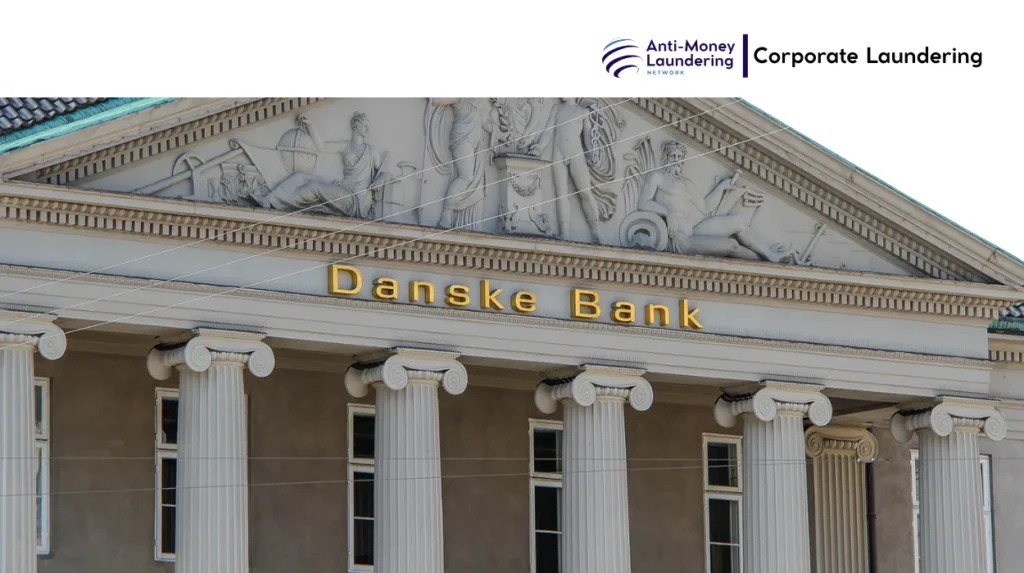
Danske Bank, Denmark’s largest financial institution headquartered at Danske Bank headquarters in Copenhagen (Danske Bank Copenhagen), emerged as the epicenter of one of the largest Money Laundering scandals in history through its Estonian branch. From 2007 to 2015, suspicious transactions totaling approximately €200 billion flowed through non-resident portfolios (NRP), exposing severe lapses in Anti–Money Laundering (AML) controls, Customer Due Diligence (CDD), and Know Your Customer (KYC) processes.
This case underscores the critical need for robust Corporate Governance and Financial Transparency in multinational banking operations like those of danske bank a/s and its Danske Bank subsidiaries across Danske Bank Sweden, Danske Bank Finland, Danske Bank Norway, Danske Bank Germany, Danske Bank Ireland, Danske Bank UK, and Danske Bank Netherlands.
Background and Context
Danske Bank history traces back to its year of establishment in 1871 as a merger of Danish banks, evolving into a pan-Nordic powerhouse with operations in danske bank branches spanning Danske Bank Denmark, Danske Bank Odense, Danske Bank Frederikssund, Danske Bank Helsinki, Danske Bank Pasila, Danske Bank Göteborg, and Danske Bank Zurich.
By the mid-2000s, Danske Bank group reported strong Danske Bank revenue and net worth, bolstered by its 2007 acquisition of Sampo Bank, which included the Estonian branch. The Danske Bank annual report from that era highlighted growth in Danske Bank business, Danske Bank treasury, and international portfolios, yet overlooked escalating risks in the Baltic operations.
The timeline began in 2007 when the Estonian branch inherited a non-resident portfolio generating 99% of its profits from high-risk jurisdictions like Russia, Azerbaijan, and Latvia. By 2013, a correspondent bank halted dollar clearances due to suspicious transaction concerns. Internal audits in 2014 flagged unidentified beneficial ownership, but Danske Bank management failed to act decisively.
A Danske Bank whistleblower, Howard Wilkinson, reported irregularities in late 2013, citing links to politically exposed persons (PEPs) and Russian entities, including unverified Putin family and FSB connections. The scandal erupted publicly in 2017, forcing closure of the NRP by 2015 and prompting Danske Bank CEO Thomas Borgen’s resignation in 2018.
Mechanisms and Laundering Channels
The Estonian branch facilitated Money Laundering via opaque shell company networks, offshore entity structures, and linked transactions mirroring hybrid money laundering techniques. Customers—often registered in the UK or Latvia but controlled by Russian beneficial owners—used trade-based schemes resembling trade-based laundering, converting rubles to euros and dollars through mirror transactions. Structuring was evident in fragmented electronic funds transfer (EFT) patterns exceeding €800 billion in total flows, with €200 billion deemed suspicious.
Weak name screening allowed cash-intensive business proxies and PEPs to bypass scrutiny. Complex beneficial ownership chains hid true controllers, while the branch’s standalone IT system evaded group-level CDD and KYC monitoring. Promontory and Bruun & Hjejle reports detailed how 10,000 NRP accounts enabled forced liquidation of illicit funds without source-of-wealth verification, exploiting Danske Bank Estonia’s lax oversight. These channels thrived due to inadequate transaction monitoring for suspicious transactions and linked transactions.
Regulatory and Legal Response
Danish FSA inspections from 2014 criticized Anti–Money Laundering (AML) gaps, fining Danske Bank DKK 12.5 million in 2017 for violations. Estonian authorities arrested 10 ex-employees in 2018, closing the branch in 2019. U.S. DOJ and SEC probes led to a 2022 guilty plea, with $178.6 million each in disgorgement and penalties, totaling over $2 billion alongside Danish fines. In 2024, France settled for €6.3 million; Ireland’s Central Bank imposed €1.82 million in 2025 for flawed monitoring of 348,321 transactions.
Courts convicted facilitators: Irene Ellert (9 years, DKK 26 billion laundered) and Arunas Macenas (7 years, DKK 29 billion) in 2024. Danish prosecutors charged ex-CEO Borgen and CFO Henrik Ramlau-Hansen for neglect. Violations spanned FATF Recommendations on beneficial ownership, CDD, and correspondent banking, amplifying penalties under EU AML Directives.
Financial Transparency and Global Accountability
The scandal revealed Financial Transparency deficits, as Danske Bank – Investor Relations disclosures misled stakeholders on Danske Bank subsidiaries risks. U.S. investors sued over omitted suspicious transaction exposures, settled via SEC action. Global correspondent banks like Deutsche Bank and Bank of America severed ties by 2015, highlighting cross-border KYC failures.
International regulators enhanced scrutiny: Danish FSA mandated solvency reviews; FATF praised Denmark’s reforms. The case spurred EU AML package updates, improving beneficial ownership registries and data-sharing via FIUs. Danske Bank shareholders faced litigation, prompting corporate governance overhauls. Lessons reinforced global AML cooperation, influencing Basel AML guidelines for Nordic peers like Danske Bank Sweden and Danske Bank Finland.
Economic and Reputational Impact
Danske Bank valuation plummeted post-2018, with shares dropping 50% amid net worth erosion from DKK 12 billion remediation costs. Danske Bank revenue dipped, partnerships frayed—Danske Bank Ireland and UK operations faced boycotts—and stakeholder trust eroded, evidenced by Danske Bank owner A.P. Moller Holding’s board interventions.
Broader ripples hit Nordic markets: Investor confidence waned, stabilizing only after 2025 U.S. probation end. International relations strained, with U.S. sanctions risks on Russian flows impacting Danske Bank Germany and Danske Bank USA dealings. Remediation yielded DKK 361 million savings by 2024, but reputational scars linger.
Governance and Compliance Lessons
Corporate Governance failures at Danske Bank head office included siloed oversight of Danske Bank Estonia, ignored whistleblowers, and board inaction on 2014 audits flagging beneficial owner opacity. Danske Bank management prioritized profits over AML risks, lacking integrated controls across danske bank plc, Danske Bank plc (Northern Ireland sites like Banbridge, Ballymena, Coleraine, Dungannon, Irvinestown, Omagh), and Danske Bank bolån/företag arms.
Post-scandal, Danske Bank values shifted: 3,600+ compliance staff hired, DKK 12 billion invested in AI-driven monitoring. Danish FSA’s 2025 inspection ordered AML policy alignments. Danske Bank Careers and jobs now emphasize compliance training, with Danske Bank Panorama tools enhancing CDD. Regulators imposed “fit and proper” tests, elevating internal audit rigor.
Legacy and Industry Implications
The Danske Bank case reshaped AML enforcement, catalyzing Denmark’s eight-fold penalty hikes—the EU’s toughest—and mandatory beneficial ownership disclosures. It exposed shell company vulnerabilities, influencing ICIJ’s FinCEN Files and global trade-based laundering probes. Nordic banks bolstered KYC/CDD; FATF cited it for mutual evaluations.
As a turning point, it advanced ethics via whistleblower protections and tech-driven name screening. Impacts echo in Danske Bank subsidiaries compliance, setting precedents for hybrid money laundering detection worldwide.
Danske Bank’s €200 billion scandal, rooted in Estonian branch Money Laundering via shell companies, PEPs, and suspicious transactions, exposed Corporate Governance and AML chasms. Penalties exceeded $2 billion, leadership changed, and reforms fortified Financial Transparency. Core lessons—rigorous CDD, beneficial ownership verification, and vigilant KYC—remain vital for danske bank group integrity and global finance safeguards.