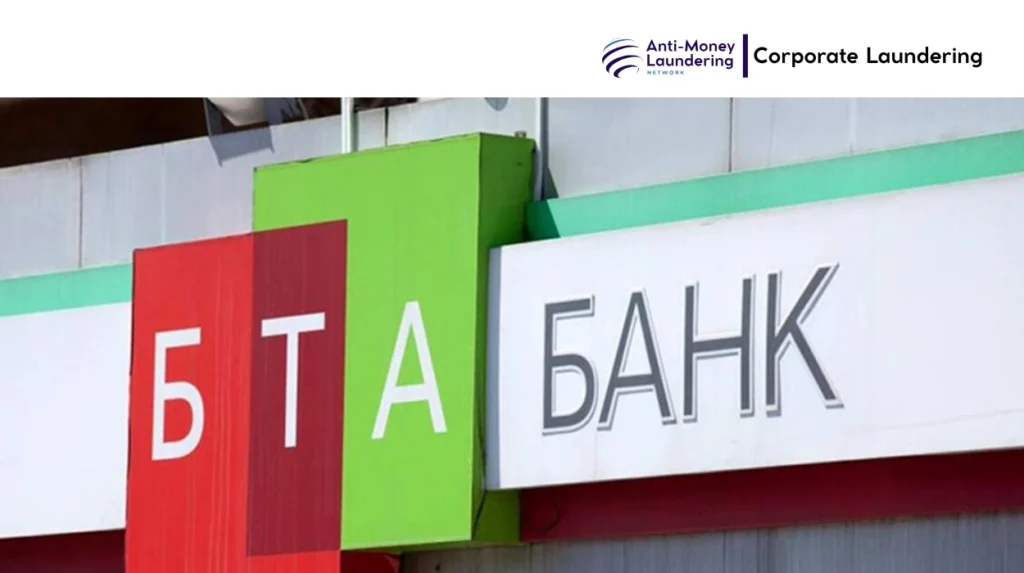
BTA Bank Joint Stock Company, widely recognized as BTA Bank Kazakhstan, stands as a pivotal case in the annals of financial misconduct within emerging markets. Established as a major player in Kazakhstan’s banking sector, the institution offered a wide array of BTA Bank services, including corporate lending, electronic funds transfer (EFT), retail banking, and trade finance facilitation, primarily through its prominent BTA Bank Almaty headquarters and various BTA Bank Kazakhstan branches. Listed on the BTA Bank KASE (Kazakhstan Stock Exchange), it traded BTA Bank shares that once symbolized robust growth in Central Asia’s post-Soviet economy.
However, the bank’s trajectory shifted dramatically in 2009 when revelations of systemic BTA Bank Joint Stock Company money laundering and BTA Bank Joint Stock Company fraud emerged, tied inextricably to its former chairman, Mukhtar Ablyazov BTA Bank, who allegedly orchestrated the diversion of billions through BTA Bank Joint Stock Company shell company networks and BTA Bank Joint Stock Company offshore entity structures.
This case holds profound significance in the global Anti–Money Laundering (AML) landscape, not merely for the staggering scale of losses—estimated between $6 billion and $10 billion—but for illuminating the intricate interplay of BTA Bank Joint Stock Company beneficial owner obfuscation, BTA Bank Joint Stock Company politically exposed person (PEP) risks, and failures in BTA Bank Joint Stock Company customer due diligence (CDD).
The exposure of BTA Bank Joint Stock Company suspicious transaction patterns, including BTA Bank Joint Stock Company structuring and BTA Bank Joint Stock Company trade-based laundering via BTA Bank Joint Stock Company linked transactions, underscored vulnerabilities in BTA Bank Joint Stock Company Know Your Customer (KYC) and BTA Bank Joint Stock Company name screening protocols.
As a systemically important institution, its collapse reverberated across international financial corridors, prompting scrutiny from regulators in the UK, US, Switzerland, and beyond, and serving as a stark exemplar of BTA Bank Joint Stock Company hybrid money laundering that blends legitimate operations with illicit flows.
The scandal’s enduring relevance lies in its demonstration of how inadequate oversight in a single jurisdiction can precipitate global contagion, emphasizing the imperative for enhanced BTA Bank Joint Stock Company cash-intensive business monitoring and cross-border cooperation. Today, as BTA Bank current status reflects stabilization post-restructuring, the case continues to inform AML practitioners on detecting and mitigating similar risks in high-growth banking environments.
Background and Context
The BTA Bank history traces back to the early 1990s amid Kazakhstan’s tumultuous transition from Soviet central planning to market-driven capitalism. Initially a modest regional bank, BTA Bank Joint Stock Company rapidly ascended through aggressive BTA Bank privatization initiatives, capitalizing on the influx of hydrocarbon wealth and foreign investment.
By the mid-2000s, under the stewardship of Mukhtar Ablyazov BTA Bank—a charismatic financier with prior political roles as Kazakhstan’s Minister of Energy and Industry—it had ballooned into the nation’s preeminent lender. Holding approximately 25-30% of total banking assets, valued at over $12 billion, BTA Bank Kazakhstan wielded substantial market influence, extending BTA Bank corporate services to state-owned enterprises, commodity traders, and SMEs involved in oil, gas, and agriculture.
This era of expansion was underpinned by a complex financial structure, including substantial debt issuances via Eurobonds and syndicated loans from Western banks like HSBC and RBS. BTA Bank ownership dynamics shifted opaquely; Ablyazov amassed controlling interest through proxies, evading stringent beneficial ownership disclosures. The bank’s footprint expanded via BTA Bank Kazakhstan branches in key cities like Astana and regional outposts, while BTA Bank Almaty served as the operational nerve center. BTA Bank shares flourished on BTA Bank KASE, attracting retail and institutional investors buoyed by double-digit GDP growth.
The timeline precipitating the BTA Bank financial crisis commenced in earnest around 2005. Ablyazov, leveraging his PEP status, sanctioned an explosion of unsecured lending, often exceeding prudent loan-to-value ratios. By late 2008, amid the global financial downturn, liquidity strains surfaced as borrowers defaulted en masse. A pivotal PwC audit in early 2009 unearthed discrepancies totaling $10 billion—roughly 80% of assets—stemming from fictitious transactions and diverted funds.
This revelation triggered regulatory intervention: on February 6, 2009, Kazakhstan’s Financial Supervision Agency placed BTA Bank Joint Stock Company under temporary administration, averting BTA Bank forced liquidation and paving the way for nationalization by BTA Bank Samruk-Kazyna, the sovereign wealth fund. The exposure of these illicit activities marked the genesis of protracted BTA Bank fraud trials and global asset hunts, reshaping perceptions of BTA Bank scandal as a paragon of insider-driven misconduct.
Mechanisms and Laundering Channels
At the heart of the BTA Bank Joint Stock Company fraud lay a labyrinthine apparatus designed to facilitate BTA Bank money laundering on an unprecedented scale. Mukhtar Ablyazov BTA Bank allegedly directed over 30 fraudulent loan agreements, totaling $5-7 billion, funneled to BTA Bank Joint Stock Company shell company entities ostensibly owned by unrelated parties but ultimately controlled by his family and associates, including son-in-law Ilyas Khrapunov.
These BTA Bank Joint Stock Company offshore entity vehicles, domiciled in tax havens like the British Virgin Islands, Cyprus, and Switzerland, obscured BTA Bank Joint Stock Company beneficial owner identities through nominee directors and layered trusts.
BTA Bank Joint Stock Company trade-based laundering emerged as a core channel, wherein inflated invoices for commodity shipments—such as wheat and metals—were used to justify massive letters of credit. Funds would cycle through BTA Bank Joint Stock Company linked transactions: a loan disbursed to Shell Company A, transferred via electronic funds transfer (EFT) to Offshore Entity B for “trade finance,” then dissipated into luxury real estate (e.g., London properties) or further layered abroad. BTA Bank Joint Stock Company structuring mitigated detection by splintering transfers below Kazakhstan’s then-$15,000 reporting threshold, often routing through BTA Bank Joint Stock Company cash-intensive business proxies in construction and hospitality.
BTA Bank Joint Stock Company hybrid money laundering compounded the scheme, commingling proceeds with legitimate BTA Bank services like corporate EFTs and guarantees. High-profile instances included $300 million allegedly laundered into the Trump SoHo project via New York intermediaries, flagged in FinCEN Files.
Weaknesses in BTA Bank Joint Stock Company customer due diligence (CDD) and BTA Bank Joint Stock Company Know Your Customer (KYC) enabled this; internal systems neglected real-time BTA Bank Joint Stock Company name screening against PEP lists or sanctions databases, permitting unchecked proliferation. Transaction volumes spiked anomalously in 2007-2008, yet compliance teams—under-resourced and conflicted—overlooked these BTA Bank Joint Stock Company suspicious transaction red flags, allowing embezzlement to metastasize.
Regulatory and Legal Response
Kazakhstan’s Agency for Regulation and Development of the Financial Market spearheaded the initial response, imposing conservatorship on BTA Bank JSC details in 2009 and filing criminal charges against Ablyazov for embezzlement and BTA Bank Joint Stock Company money laundering.
The probe revealed egregious compliance lapses: absent transaction monitoring for BTA Bank Joint Stock Company structuring, deficient BTA Bank Joint Stock Company beneficial ownership verification contravening FATF Recommendation 10 (CDD) and 12 (PEP measures), and non-reporting of BTA Bank Joint Stock Company suspicious transactions.
Internationally, the UK Serious Fraud Office and High Court froze assets exceeding $5 billion across 21 countries, with landmark 2012-2013 rulings holding Ablyazov in contempt for concealing holdings. US proceedings culminated in a 2022 Southern District of New York jury verdict affirming BTA Bank lawsuit claims against Triadou SPV, awarding $218 million for laundering stolen funds via opaque trades—directly implicating violations of the Bank Secrecy Act.
Swiss and Cyprus authorities seized accounts linked to BTA Bank Joint Stock Company offshore entity networks, while EU probes invoked the 5th AML Directive’s beneficial ownership registries.
No direct penalties befell the restructured bank, but BTA Bank debt restructuring entailed $11 billion in creditor settlements, including haircuts and bond exchanges. These actions aligned with FATF 40 Recommendations, particularly on trade finance scrutiny, catalyzing Kazakhstan’s gray-list exit in 2009. BTA Bank recovery efforts recovered $1.5+ billion via BTA Bank legal victories, underscoring the potency of coordinated enforcement.
Financial Transparency and Global Accountability
The BTA Bank scandal laid bare systemic deficits in financial transparency at BTA Bank Joint Stock Company, where labyrinthine BTA Bank shareholder architectures—proxies atop holding companies—shielded true BTA Bank Joint Stock Company beneficial owner control from regulators and investors.
Correspondent banking relationships with JPMorgan and Citi processed billions in flagged EFTs, exposing gaps in global accountability as US wires evaded SAR filings despite evident red flags.
International regulators responded decisively: the UK’s landmark receivership model enabled extraterritorial asset tracing, influencing precedents like Petrobras. FinCEN’s 2020 Files spotlighted BTA Bank Joint Stock Company linked transactions, prompting enhanced cross-border data sharing via Egmont Group protocols. This spurred reforms, including Kazakhstan’s 2019 AML law mandating public UBO registries and AI-driven name screening.
BTA Bank’s travails catalyzed broader Anti–Money Laundering (AML) cooperation, informing FATF guidance on high-risk sectors like trade finance and PEPs. Lessons emphasized interoperable KYC utilities (e.g., Binance’s global ledger) to fortify financial transparency against BTA Bank Joint Stock Company hybrid money laundering.
Economic and Reputational Impact
The BTA Bank financial crisis exacted a $6-10 billion toll, obliterating BTA Bank Kazakhstan stock value—BTA Bank shares plummeted 95% on BTA Bank KASE—while nationalization via BTA Bank Samruk-Kazyna burdened taxpayers with $2 billion in bailouts and BTA Bank debt restructuring. Partnerships evaporated: Western lenders like RBS wrote off $1.5 billion, Credit Suisse faced litigation, eroding stakeholder trust.
Sector-wide, Kazakhstan’s banking assets contracted 20%, FDI inflows dipped 15%, and investor confidence waned amid contagion fears. Reputational scars persist; despite BTA Bank recovery milestones, BTA Bank current status evokes caution. Recent BTA Bank lawsuit triumphs, like 2024 claims against ADM for $231 million in trade fraud, signal resilience, yet underscore enduring BTA Bank scandal overhangs on international relations.
Governance and Compliance Lessons
Pre-crisis corporate governance at BTA Bank Joint Stock Company epitomized frailty: a dominated board overlooked internal audits, enabling Ablyazov’s fiat over BTA Bank Joint Stock Company politically exposed person (PEP) risks. AML programs existed nominally but faltered on BTA Bank Joint Stock Company suspicious transaction monitoring, lacking behavioral analytics for structuring.
Post-BTA Bank restructuring under BTA Bank Kenes Rakishev—sole proprietor since 2017—ushered comprehensive reforms: ISO 20022-compliant transaction systems, third-party KYC audits, and FATF-aligned PEP screening. Regulators imposed capital buffers and stress tests. Key lessons advocate embedded compliance cultures, real-time BTA Bank Joint Stock Company name screening, and whistleblower safeguards to preempt BTA Bank Joint Stock Company trade-based laundering.
Legacy and Industry Implications
BTA Bank fraud trial legacies permeate AML enforcement: novel global receiverships inspired 1MDB pursuits, while UBO exposures fueled registries like the UK’s PSC. In CIS markets, it galvanized Astana Financial Centre’s stringent KYC, positioning BTA Bank Joint Stock Company as a sentinel for commodity laundering.
Globally, it fortified FATF updates on hybrid schemes, spurring AI adoption for linked transaction detection and ethical board mandates. The case endures as a turning point, embedding financial transparency in corporate DNA.
BTA Bank Joint Stock Company’s odyssey—from meteoric rise to cataclysmic BTA Bank scandal—crystallizes the perils of lax corporate governance, opaque beneficial ownership, and deficient CDD/KYC in enabling money laundering via shell companies and trade distortions. Core findings stress vigilant AML frameworks to safeguard integrity.
Unyielding commitment to financial transparency, robust accountability, and transnational Anti–Money Laundering (AML) vigilance remains paramount in fortifying global finance against recurrence.