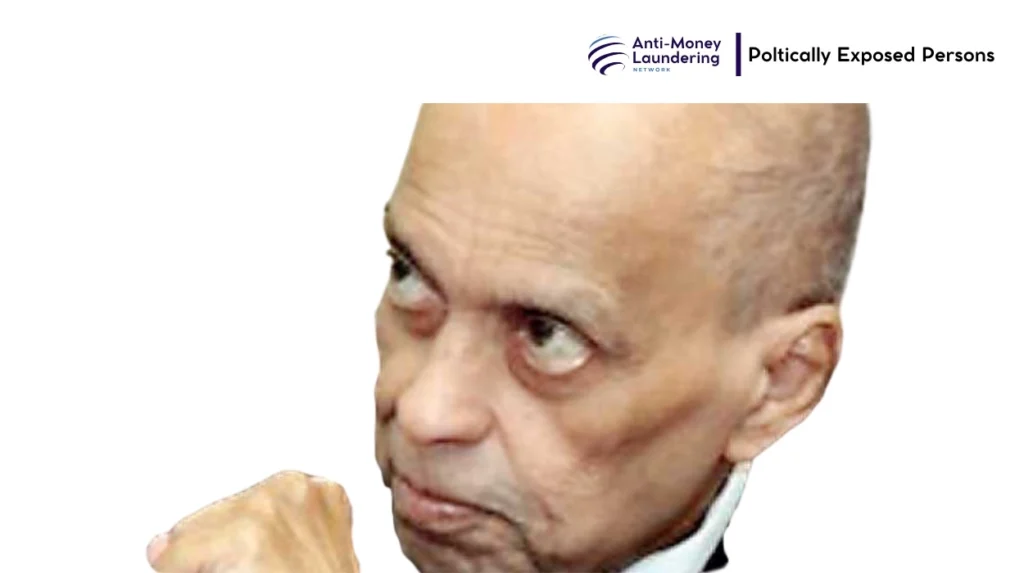
Ramalingam Paskaralingam is a Sri Lankan bureaucrat and political adviser notable for his role as Secretary to the Treasury and senior adviser to several Sri Lankan prime ministers. His career, marked by significant influence over the country’s economic policy, spans from the late 1980s into the early 21st century. While respected for his administrative capabilities, Paskaralingam’s name has also surfaced in international investigations such as the Pandora Papers, linking him to offshore financial activities. His profile exemplifies the complex interplay between governance, wealth accumulation, and accountability challenges faced by Politically Exposed Persons (PEPs) in South Asia.
Early Life and Background
Details about Ramalingam Paskaralingam’s early life, including his date of birth and place of birth, remain sparsely documented in publicly available records. His nationality and citizenship are Sri Lankan, and he emerged from the last cohorts of the Ceylon Civil Service before its transition to the Sri Lankan Administrative Service. His foundational education and capacity helped establish a long career in public administration.
Though unconfirmed, it is suspected that Paskaralingam’s upbringing and family background provided the social capital needed to navigate the competitive corridors of power in Sri Lanka’s government. Information such as his home address or village origins remains private, perhaps shielded by familial discretion or political sensitivities.
Personal Life
Ramalingam Paskaralingam’s personal life remains largely private from public scrutiny. He reportedly has a spouse and children, though specific names and details are unconfirmed and largely kept confidential. Available information suggests that his family has ties both in Sri Lanka and abroad, including properties and residences linked to them.
A notable aspect of his personal estate includes a residence in affluent London neighborhoods, highlighting the extent of his family’s wealth and international connections. These details provide insight into the lifestyle enjoyed by certain Sri Lankan political elites, reflective of their transnational networks.
Career and Achievements
Paskaralingam’s career began with his induction into the Ceylon Civil Service, after which he rose steadily through the ranks of Sri Lanka’s bureaucracy. His role as Secretary to the Treasury from 1989 to 1994 cemented his position as one of the most powerful civil servants in the country. During this time, he was instrumental in directing national economic policies, overseeing large-scale privatization efforts, and managing state finances with unparalleled influence.
He served as a senior adviser to the Prime Minister of Sri Lanka during two significant periods: from 2002 to 2004 and again between 2015 and 2019. During these stints, his political acumen allowed him access to the core decision-making apparatus of the government, often exerting influence even stronger than some cabinet ministers.
Throughout his career, Paskaralingam was dubbed by some as the power behind the throne, especially during President Ranasinghe Premadasa’s administration, showcasing the centrality of bureaucratic power in Sri Lankan politics. His capabilities reportedly earned admiration for navigating complex policy issues and sustaining government continuity within politically volatile environments.
Lifestyle, Wealth, and Assets
Despite his public service role, Paskaralingam’s lifestyle and financial holdings have drawn significant scrutiny. His net worth, while not officially disclosed, is believed to be substantial, amplified by his extensive offshore wealth as revealed in leaks such as the Pandora Papers.
Records indicate his use of offshore trusts and companies based in jurisdictions like the British Virgin Islands to hold assets. These include investments in private educational institutions and ownership of high-value properties in the United Kingdom. The offshore structures present a classic case of how political elites from developing countries channel and conceal wealth internationally.
His luxurious London mansion, acquired under family names, underscores the challenges in linking official earnings to personal wealth. Such wealth accumulation raises enduring questions regarding sources, legality, and ethical considerations in governance.
Influence, Legacy, and Global Recognition
As a political adviser and civil service leader, Paskaralingam played an influential role in shaping Sri Lanka’s economic trajectory during times of crisis and transition. His legacy includes contributions to policy reforms and the stabilization of economic institutions that have had lasting impacts.
Globally, his name surfaced in the Pandora Papers, a massive investigation revealing intricate offshore money networks of global elites. This exposure placed him on the international stage as a key figure representing the nexus of politics and financial secrecy in South Asia.
His example has informed discussions on the importance of anti-corruption reforms, the challenges of financial transparency, and how global regulatory gaps permit elite impunity. The acknowledgment of his role has made him a case study in governance reform debates.
Financial Transparency and Global Accountability
As a politically exposed person (PEP), Ramalingam Paskaralingam is emblematic of the difficulties countries like Sri Lanka face in enforcing financial transparency. Although implicated in offshore financial concealment, no international sanctions or formal legal actions have publicly curtailed his activities.
This lack of enforcement reveals gaps in Sri Lanka’s anti-money laundering (AML) mechanisms and political will, reflecting a broader trend where high-level officials evade accountability through influence and resource control. Calls from civil society and watchdogs for investigations have met with limited institutional responsiveness.
The Paskaralingam case illustrates the critical need for stronger AML regulations, robust legal frameworks, and international cooperation to reduce illicit financial flows and hold PEPs accountable. It highlights that financial secrecy, when combined with political power, undermines sustainable governance and public trust.
Ramalingam Paskaralingam’s professional journey highlights both the capacities of dedicated civil servants and the risks posed by governance opacity. His impact on Sri Lanka’s economic policies is undeniable, shaping key reforms and fostering continuity in turbulent times. Simultaneously, his involvement in offshore wealth management and financial controversies underscores the persistent challenges of political accountability in developing democracies.
His story serves as a crucial reference for the interplay between political power, financial secrecy, and the need for comprehensive reforms to promote integrity. Understanding Paskaralingam’s legacy offers valuable lessons for governments, reformers, and international bodies aiming to combat corruption and foster transparent governance.