

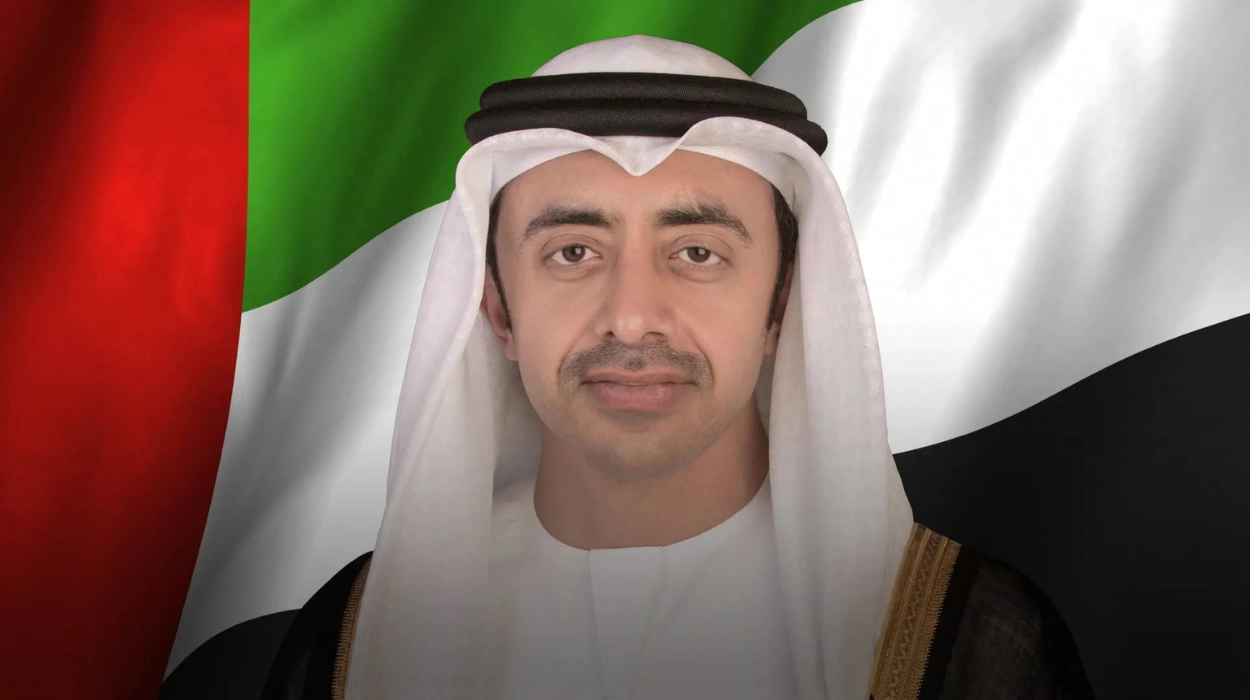
His Highness Sheikh Abdullah bin Zayed Al Nahyan, Deputy Prime Minister and Minister of Foreign Affairs of the United Arab Emirates, has confirmed that the UAE is significantly strengthening its anti-money laundering (AML) system through comprehensive legislative reforms, enhanced international cooperation, and robust preparations for the upcoming Financial Action Task Force (FATF) mutual evaluation.
The announcement comes following the 22nd meeting of the Higher Committee Overseeing the National Strategy on Anti-Money Laundering and Countering the Financing of Terrorism and Proliferation Financing, which Sheikh Abdullah bin Zayed chaired on February 11, 2026. This landmark meeting marked the first convened by the Higher Committee after the adoption of Federal Decree-Law No. 10 of 2025, representing a transformative evolution in the UAE’s financial crime framework.
Landmark Legislative Reform: Federal Decree-Law No. 10 of 2025
The centerpiece of the UAE’s strengthened AML system is Federal Decree-Law No. 10 of 2025 on Anti-Money Laundering and Combating the Financing of Terrorism and Proliferation Financing, which came into effect on October 14, 2025. This new legislation replaces the 2018 law and introduces substantial changes aligned with international FATF standards.
Key provisions of the new law include:
The shift in evidentiary standards is particularly significant. Prosecutors no longer need to prove actual knowledge of illicit fund origins; liability may be established if a person “knew or should have known” funds were derived from criminal activity.
National Strategy 2024-2027: Comprehensive Framework
The Higher Committee approved the National Anti-Money Laundering and Counter-Terrorist Financing Strategy for 2024-2027, which is now awaiting Cabinet adoption. Sheikh Abdullah bin Zayed stressed that the strategy includes a comprehensive supervisory forward-looking framework aimed at enhancing and expanding accomplishments achieved during 2020-2023.
The strategy encompasses multiple critical facets:
- Deepening understanding of Money Laundering (ML), Terrorism Financing (TF), and Proliferation Financing (PF) risks
- Aligning legal and regulatory framework with international standards
- Strengthening risk-based supervision of financial institutions
- Enhanced oversight of designated non-financial businesses and professions
- Comprehensive regulation of virtual assets service providers (VASPs)
Sheikh Abdullah emphasized that “the UAE undertakes its responsibility in protecting the global financial system with utmost importance” and reaffirmed the country’s commitment to fighting financial crime at the global level.
Virtual Assets: Critical Focus Area
The UAE has significantly expanded its regulatory framework for virtual assets, bringing cryptocurrency and digital asset service providers under comprehensive AML supervision. Dubai’s Virtual Assets Regulatory Authority (VARA), established as the world’s first tailor-made virtual assets regime, now enforces strict AML/CFT requirements on all licensed VASPs.
The new AML law explicitly includes virtual assets and digital systems within its coverage, addressing FATF Recommendation 15 on virtual assets. VARA has issued circulars on implementing UAE AML/CFT/CPF requirements applicable to VASPs and published the UAE Proliferation Financing National Risk Assessment 2026.
FATF Mutual Evaluation 2026: Critical Moment
The UAE will undergo its next FATF Mutual Evaluation in 2026 under the new 5th round methodology, which places stronger weight on real-world outcomes, enforcement results, beneficial ownership transparency, sanctions implementation, and virtual asset oversight.
Sheikh Abdullah bin Zayed welcomed FATF’s decision to delist the UAE from its Grey List in February 2024, emphasizing the importance of sustaining the positive performance and progress achieved by UAE authorities. The meeting discussed preparations for the 2025-2027 Mutual Evaluation process, including implementation of new FATF international standards particularly related to virtual assets and asset recovery.
Hamid Al Zaabi, Director-General of the Executive Office of Anti-Money Laundering and Counter Terrorism Financing, noted that the UAE will begin its next FATF Mutual Evaluation Report in 2026.
National Risk Assessment and International Cooperation
Among the Higher Committee’s most prominent priorities was adoption of the National Risk Assessment in its second cycle, developed according to the World Bank’s methodology. The Executive Office has commenced implementing over 100 recommendations made by the UAE’s National Risk Assessment, including a comprehensive awareness program featuring more than 50 workshops scheduled between 2024 and 2026.
The UAE has demonstrates strong international cooperation through:
- 45 Mutual Legal Assistance Treaties (MLATs) signed, with more being prepared
- 200 outgoing MLAT requests sent between January-October 2023 for financial investigations
- 92.1% conviction rate in money laundering cases, securing 76 convictions
- Sustained increase in financial investigations and prosecutions aligned with risk profile
Sheikh Abdullah reaffirmed the UAE’s continuous efforts to enhance international cooperation and partnerships while upholding high-level commitment to implementing and improving the AML/CTF national framework.
High-Level Government Participation
The 22nd meeting brought together senior UAE officials including:
- Mohamed bin Hadi Al Hussaini, Minister of State for Financial Affairs
- Abdullah bin Touq Al Marri, Minister of Economy
- Khaled Balama Altameemi, Governor of the Central Bank of the UAE
- Lt. Gen Talal Belhoul Al Falasi, Director-General of Dubai State Security
- Lt. Gen Abdullah Khalifa Al Marri, Commander-in-Chief of Dubai Police
2026: Shift to Demonstrable Effectiveness
2026 marks a fundamental shift from checklist compliance to demonstrable AML/CFT effectiveness in the UAE. The UAE AML/CFT 2026 Compliance Roadmap emphasizes real-world outcomes rather than paperwork, focusing on risk-based implementation.
Sheikh Abdullah bin Zayed stated at the launch of the National Strategy that “The UAE is committed to staying ahead of emerging risks” in financial crime prevention. The country maintains its position as a responsible member of the global community, playing a leading global role in combating financial crimes.
With Federal Decree-Law No. 10 of 2025, comprehensive virtual asset regulation, and robust FATF preparation, the UAE has demonstrably strengthened its anti-money laundering system under Sheikh Abdullah bin Zayed’s leadership, positioning itself as a global model for financial crime prevention and regulatory excellence.