

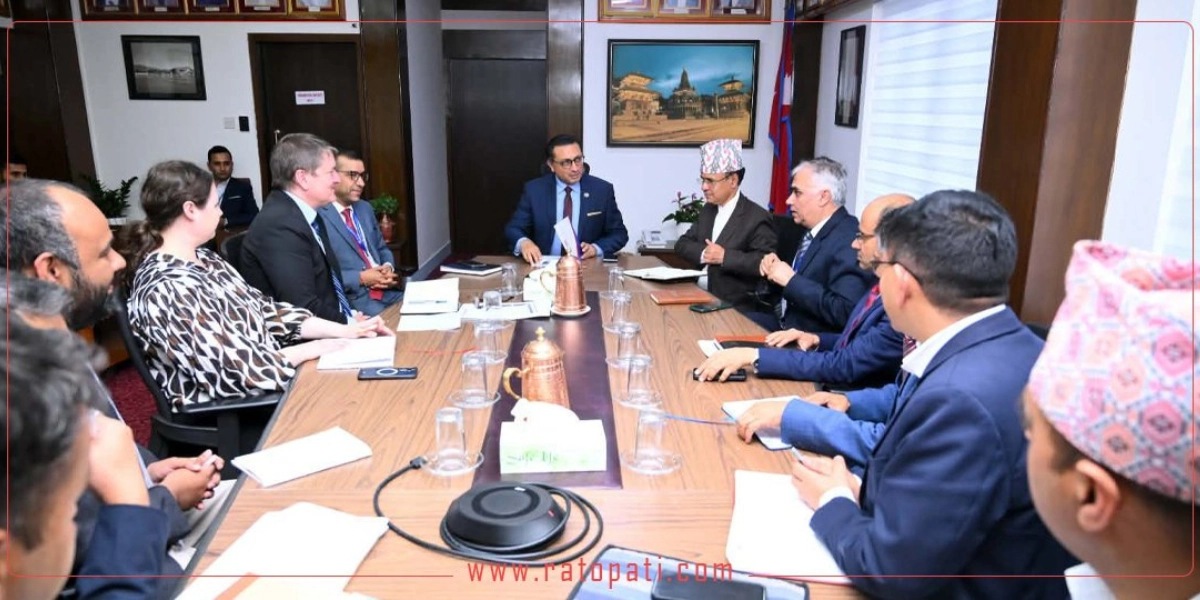
A delegation from the Asia/Pacific Group on Money Laundering is in Kathmandu to assess Nepal’s progress on anti-money laundering and counter-terrorist financing reforms at a time when the country faces renewed pressure to show concrete results. The visit is part of the mutual evaluation process and comes as concerns grow over enforcement gaps, legal reforms, and the pace of implementation.
The APG, the regional body linked to the Financial Action Task Force, is examining whether Nepal has made sufficient progress in tightening its financial crime safeguards and improving the effectiveness of its institutions. Recent reporting suggests that the review has become more urgent because Nepal’s progress has been described as disappointing, with a warning that the upcoming September 2026 review could prove decisive.
Why the visit matters
The Kathmandu assessment is significant because it comes during a critical period for Nepal’s financial integrity framework. The APG visit is not just a routine engagement; it is part of a broader international process that measures whether a country’s laws, supervision, investigations, prosecutions, and enforcement results are strong enough to combat money laundering and terrorist financing.
Nepal has already been under scrutiny for weaknesses in enforcement and regulation. Earlier reporting noted that FATF placed Nepal under increased monitoring in February 2025 due to regulatory weaknesses in enforcement, investigation and prosecution of financial crimes, as well as inadequate oversight of high-risk sectors such as cooperatives and real estate.
Reform pressure in Nepal
The APG delegation’s visit comes against a backdrop of ongoing reform efforts by the Nepali government. In 2024, officials were working on a five-year strategy to strengthen anti-money laundering compliance, and the plan followed several legal reforms intended to improve the country’s response to financial crime.
However, the latest reporting indicates that those reforms have not yet produced the level of progress expected by international evaluators. The APG Secretariat’s confidential briefing note, referenced in recent media reports, reportedly described Nepal’s progress as disappointing and warned that the September 2026 review will be the decisive moment for assessing whether the country has done enough.
That warning has raised concern that Nepal could face stronger international consequences if the pace of reform remains slow. Reuters-style reporting and regional coverage indicate that officials are being urged to speed up reforms, especially where legal changes have not translated into measurable enforcement outcomes.
Focus areas under review
The delegation is expected to examine several core areas of Nepal’s AML/CFT system. These typically include how well authorities detect suspicious financial activity, whether investigations lead to prosecutions, how effectively institutions supervise risky sectors, and whether beneficial ownership and asset tracing frameworks are working in practice.
Particular attention is likely being paid to sectors previously flagged as vulnerable, including cooperatives and real estate, both of which have been cited in prior assessments as areas where oversight remains weak. Evaluators are also likely reviewing whether reforms adopted over the past year have improved coordination between law enforcement, regulators, and financial intelligence authorities.
The APG’s presence in Kathmandu is therefore not only about legal compliance on paper. It is also about whether Nepal can demonstrate tangible outcomes, such as stronger investigations, better inter-agency coordination, and visible enforcement against money laundering networks.
International implications
Nepal’s performance in the APG process matters beyond domestic policy because the outcome can affect the country’s international reputation and financial relationships. Countries that fail to meet global AML/CFT standards risk being placed under heightened scrutiny, which can affect banking confidence, cross-border finance, and investor perceptions.
The recent warning that Nepal could be blacklisted if it fails to show enough progress has intensified the stakes. While such outcomes depend on formal review decisions, the message from international evaluators is clear: political commitments alone are not enough without visible implementation and enforcement.
For Nepal, this means the current APG visit could shape how external assessors view the country’s readiness ahead of the next major review cycle. The government’s response in the coming months may influence whether the country is seen as moving toward compliance or falling further behind international expectations.
Government response expected
Nepali authorities have been working on reform plans and legal amendments in response to earlier criticism, but the APG visit raises the pressure to demonstrate that those measures are taking hold. Officials involved in the process are expected to present progress on legislative changes, supervisory reforms, and coordination mechanisms during the assessment.
The broader challenge for Nepal is to move from drafting reforms to proving results. Evaluators will likely be looking for evidence that reforms are being enforced consistently and that the country is producing measurable improvements in financial crime detection and prosecution.
As the review continues, the APG delegation’s findings will help determine whether Nepal’s current reform path is enough to satisfy international standards or whether deeper action will be required before the next key deadline.
Word count: approximately 1,000 words
Suggested alternative angle for publication: A hard-news version can emphasize Nepal’s risk of international censure, while a policy-focused version can highlight the legal reforms, institutional gaps, and evaluation process.