

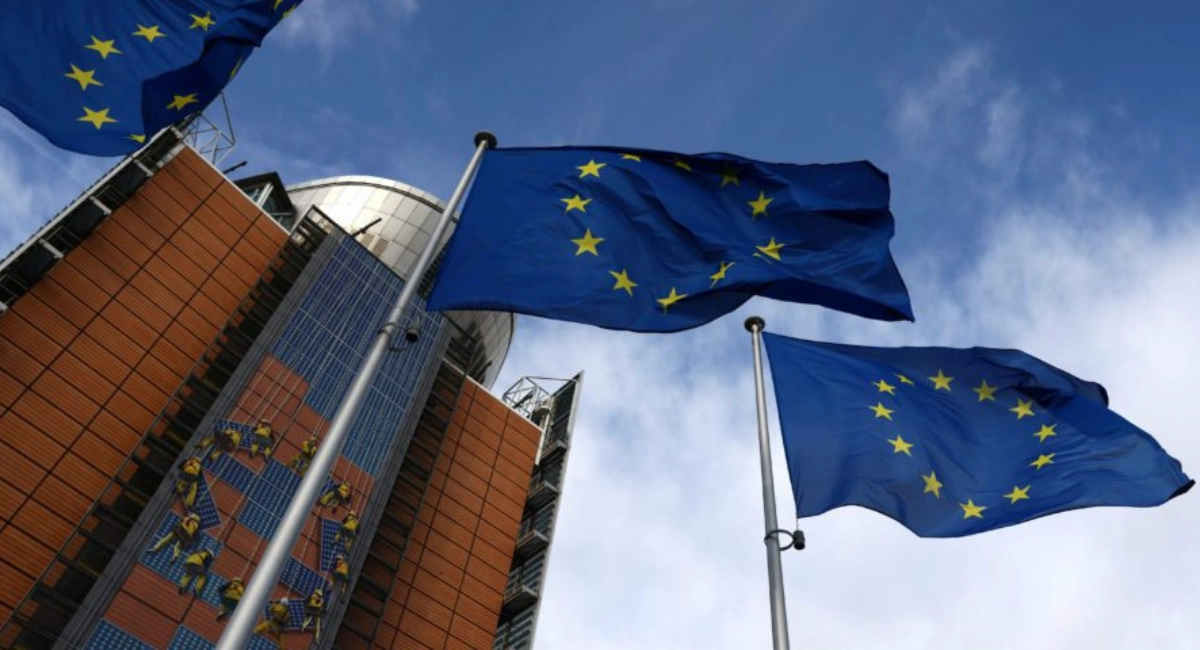
The European Commission has proposed doubling Europol’s budget to €3 billion in the coming 2028–2034 Multiannual Financial Framework (MFF) to expand the agency’s operational capabilities, staffing and cross‑border policing tools, while also proposing a package of legal and technical measures to strengthen cooperation with national authorities and Eurojust.
Context and proposal details
The Commission’s draft MFF for 2028–2034 includes a substantial reallocation of internal-security funding that would see Europol’s allocation rise to roughly €3 billion, alongside major increases for border and migration agencies, including nearly €12 billion for Frontex. The proposal is presented as part of a broader push to harden the EU’s response to organised, digital and cross‑border crime, with the Commission arguing that larger, better‑equipped EU-level law‑enforcement capabilities are necessary in the face of increasingly sophisticated transnational networks.
Operational changes and capabilities
Under the plan, the Commission expects Europol to move from a predominantly coordination and intelligence‑sharing role toward a more operational posture, including the creation of a “sovereign cloud” and a shared data space to let investigators collaborate more quickly on joint cases. The package foresees doubling staffing levels at the agency so it can provide direct technical and investigative support, establish support offices in EU countries staffed by experienced Europol personnel, and deploy advanced tools to tackle cybercrime, financial crime, trafficking and organised criminal groups.
Legal and institutional changes
The Commission’s proposals are not limited to money; they include legislative adjustments to Europol’s mandate and to Eurojust’s role to make judicial and law‑enforcement cooperation smoother across member states. These reforms aim to clarify data access rules for investigators, streamline cross‑border case coordination, and strengthen links between operational law‑enforcement activity and judicial follow‑up, enabling faster joint actions while attempting to respect national competences.
Data access, privacy and safeguards
The proposals repeatedly reference the need to improve legitimate, secure and efficient access to data for investigative purposes, including new infrastructure and standards for data sharing across jurisdictions. The Commission indicates that new technical safeguards and governance arrangements would be required to protect fundamental rights and personal data while enabling operational effectiveness, though detailed legal texts and oversight mechanisms will be subject to debate during negotiations.
Reactions from stakeholders
Member states, parliamentary committees and civil‑liberties groups are expected to scrutinise the plan closely. Some national authorities and law‑enforcement advocates welcome the increased resources as a necessary response to cross‑border criminal networks and rising digital crime, arguing that enhanced EU support can fill gaps in capacity and technical expertise. Conversely, privacy advocates and some civil‑society organisations have signalled concerns about expanding supranational policing powers, calling for strong transparency, judicial oversight and binding safeguards to prevent mission creep and protect civil liberties.
Budget process and timeline
The €3 billion figure for Europol appears in the Commission’s MFF outline for 2028–2034 and will now enter a lengthy interinstitutional negotiation between the Commission, the European Parliament and member states (the Council). Final allocation and legal changes require agreement among those actors and may be amended during talks on the next MFF; parallel legislative proposals to amend Europol’s mandate and data‑access rules will be debated separately and could be subject to significant revision.
Strategic rationale and priorities
Brussels frames the funding and mandate upgrade as necessary to tackle an evolving threat landscape: prolific organised crime networks operating across jurisdictions, highly technical cybercrime attacks, and sophisticated financial crime and money‑laundering schemes. The increased budget is intended to finance personnel growth, new forensic and digital investigation platforms, a shared investigatory cloud, local support offices and improved coordination with Eurojust and third‑country partners.eco.
Implications for cross‑border policing and journalism
If adopted, the package could materially shift how cross‑border investigations are run in Europe — enabling faster evidence sharing, more centrally supported complex probes and potentially more EU‑led operational activity on the ground in member states. For journalists and analysts covering AML, financial crime and cybercrime, the proposals will produce new lines of scrutiny: budgetary trade‑offs in the MFF, the precise shape of legal safeguards for data and privacy, and practical outcomes of enhanced EU operational involvement in national investigations.
What happens next
The Commission’s initiative will now be discussed by the European Parliament and member states as part of the MFF and separate legislative dossiers on Europol and Eurojust. Expect parliamentary amendments, member‑state redlines on competences and a sustained public debate led by law‑enforcement officials, privacy watchdogs and civil‑society organisations over the coming months as the 2028–2034 budget is negotiated.home-affairs.ec.