

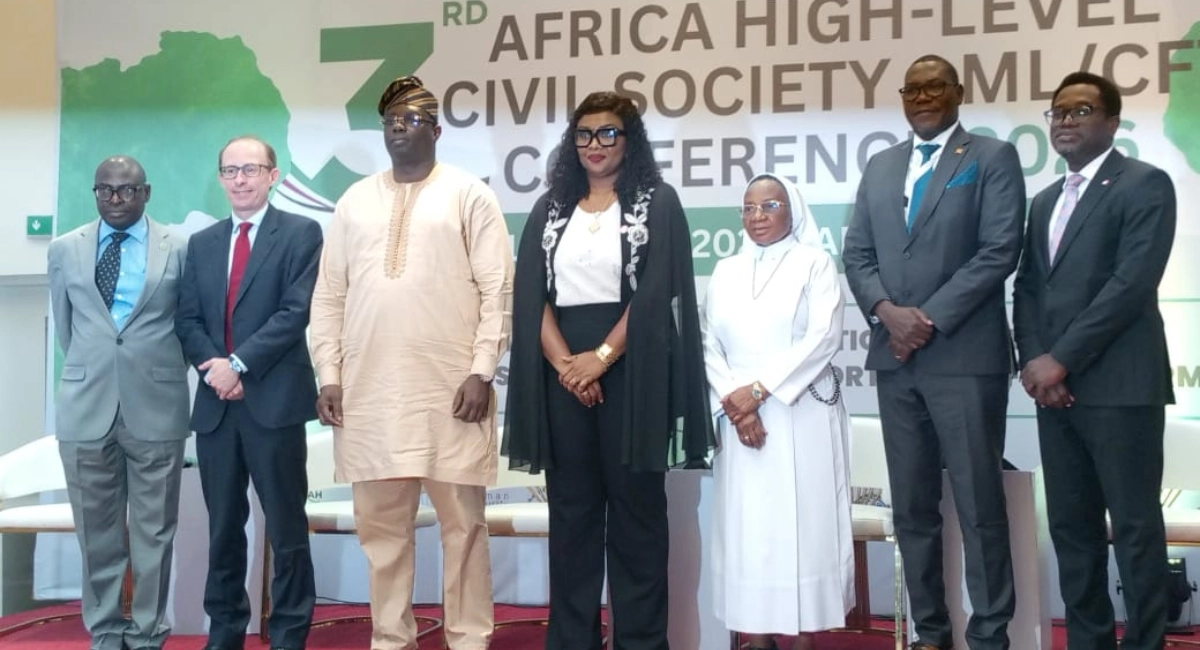
Financial experts and regulatory stakeholders are urging African governments, regional bodies, and fintech firms to intensify collaboration in tackling illicit financial flows (IFFs) that continue to drain billions from the continent annually.
Rising scale and complexity of IFFs in Africa
Illicit financial flows in Africa are increasing in scale, complexity, and impact, affecting countries that act as sources, transit points, or destinations for illicit funds. These flows erode economic stability, fuel corruption, and sustain organized crime, with harms that extend beyond the continent. Because IFFs are transnational, they intersect with international financial and trade hubs, where enabling regulatory frameworks and investor-friendly policies often attract illicit funds.
Expert calls for unified action
Speaking at a panel titled “Guaranteeing Africa’s Financial Independence: The Role of Fintechs in Combating Illicit Financial Flows” during the 2025 West Africa Media Excellence Awards in Accra, experts warned that Africa’s financial independence depends on its ability to curb illicit outflows, strengthen fiscal systems, and harness technology for transparency.
Dr. Seidu, one of the panelists, emphasized that the fight against IFFs demands coordination, intelligence sharing, and robust cybersecurity measures. He urged African states to strengthen fiscal systems, build civil society capacity, and improve domestic revenue mobilization to combat the problem effectively.
Digitalization and fintech as enablers
Ms. Antwi, another expert at the event, noted that digitalization offers Africa the opportunity to promote safer cross-border transactions and reduce reliance on black-market channels. Dr. Sy called for greater regional and international cooperation to recover stolen assets and ensure financial transparency.
Fintech innovations, including blockchain-based payment systems and digital identity verification, are seen as critical tools in enhancing traceability and reducing anonymity in financial transactions. However, experts cautioned that without strong regulatory frameworks, these technologies could also be exploited by criminals.
Economic and development implications
The impact of IFFs on Africa’s development is profound. According to a Brookings Institution analysis, illicit financial flows from Africa between 1980 and 2018 totaled approximately $1.3 trillion. These losses significantly constrain economic growth by reducing resources available for local investment in infrastructure, health, and education.
IFFs also exacerbate risk and uncertainty, discouraging private investment and widening wealth gaps between elites and those living in poverty. The oil extraction and mining industries are particularly vulnerable to financial flow discrepancies, with countries like South Africa, the Democratic Republic of the Congo, Ethiopia, and Nigeria responsible for more than half of the continent’s IFFs.
Regional and international cooperation frameworks
The African Union and the United Nations Economic Commission for Africa (ECA) have long advocated for coordinated strategies to combat IFFs. These include harmonizing anti-money laundering (AML) laws, enhancing beneficial ownership transparency, and improving customs capacity.
In 2026, the African Development Bank Group (AfDB) intensified efforts to mobilize co-financing to scale up development impact across the continent, amid an estimated annual financing gap of around $400 billion—a gap exacerbated by IFFs.
Policy recommendations and next steps
Experts recommend a multi-pronged approach that includes:
- Strengthening regional intelligence-sharing mechanisms and cross-border enforcement cooperation.
- Implementing typology-based interventions targeting high-risk sectors such as mining, oil, and trade.
- Enhancing statutory oversight of financial service providers and improving beneficial ownership registries.
- Investing in capacity-building for customs authorities and financial regulators.
- Leveraging fintech solutions while ensuring they are embedded within robust regulatory frameworks.