

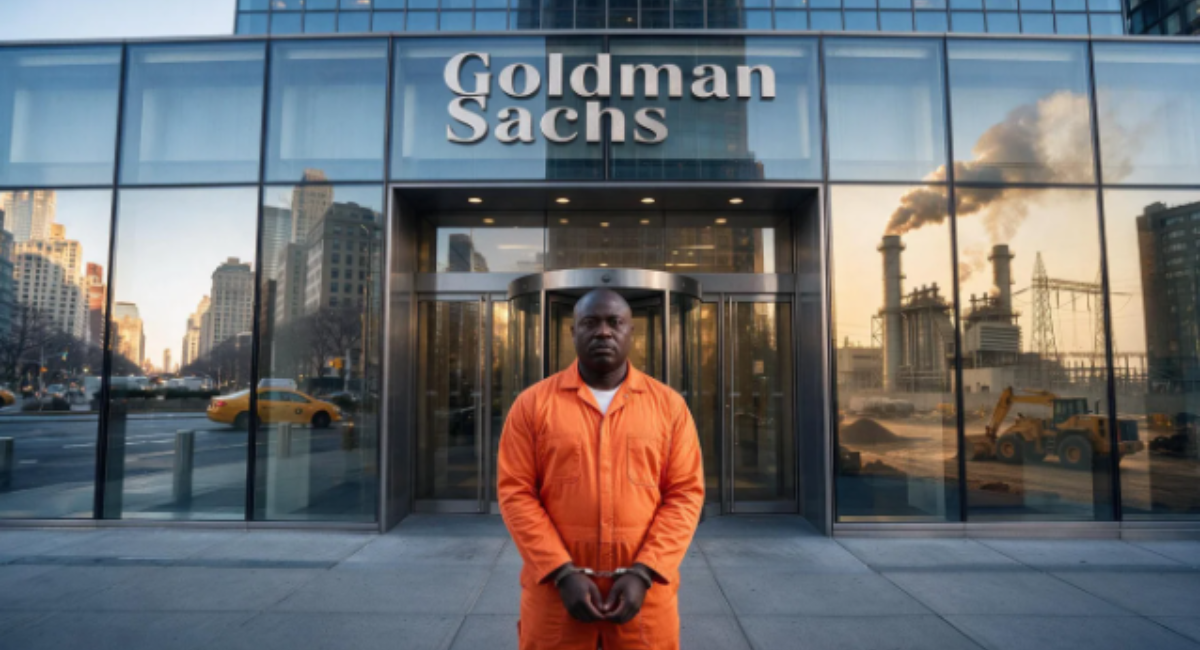
A former Goldman Sachs investment banker has been convicted in the United States on all charges in a foreign bribery and money-laundering scheme tied to a power plant project in Ghana. Asante Kwaku Berko, a dual U.S.-Ghanaian citizen, was found guilty by a federal jury in Brooklyn on Thursday, August 6, 2026, of conspiring to violate the Foreign Corrupt Practices Act (FCPA), violating the FCPA, and conspiring to launder money used to bribe Ghanaian officials.
Conviction and charges
Berko was convicted on three counts following a nine-day trial presided over by U.S. District Judge Diane Gujarati. The jury deliberated for about three hours before returning guilty verdicts on all counts. He now faces a statutory maximum of 30 years in prison, though his actual sentence will be determined under federal sentencing guidelines and other factors at a later hearing. Judge Gujarati ordered Berko detained pending sentencing, and no date has yet been announced for that proceeding.
The indictment centered on a scheme to pay more than $1 million in bribes to multiple Ghanaian government officials to secure approvals for a major power plant deal. Prosecutors proved that Berko and co-conspirators used coded language, shell companies, fake invoices, nominee-controlled bank accounts, and cash withdrawals to conceal and launder the illicit payments through U.S. and international financial institutions.
The Ghana power plant deal
The scheme began in December 2014, when Berko, then an executive director in Goldman Sachs’ Investment Banking Division, was responsible for managing a proposed transaction between the Republic of Ghana and Aksa Enerji Uretim A.S., a Turkish energy company that was a Goldman client. Ghana was experiencing a severe energy crisis at the time, and the project involved the construction and financing of a power plant expected to generate hundreds of millions of dollars in profits.
According to evidence presented at trial, Berko and his associates paid and conspired to pay bribes to individuals at various levels of the Ghanaian government to ensure Aksa won the bid to build and operate the facility. Prosecutors described the bribes as a “holy rain” of payments to high-ranking officials, with more than $1 million funneled to secure project approvals and financing.
How the bribery and laundering worked
Berko and his co-conspirators structured the bribery payments to avoid detection by both Ghanaian authorities and Goldman Sachs’ internal compliance functions. They routed funds through shell companies and used sham invoices and nominee account holders to disguise the true beneficiaries. Cash withdrawals and layered transactions moved the money across multiple jurisdictions, enabling the group to launder the proceeds used to influence public officials.
At trial, prosecutors showed that Berko personally contributed hundreds of thousands of dollars in bribes and helped orchestrate payments to members of Ghana’s parliament and other officials. In SEC filings from 2020, regulators alleged that Berko arranged at least $2.5 million in bribes via a Ghana-based intermediary, with more than $200,000 disbursed directly to government officials.
Goldman Sachs’ role and compliance response
Goldman Sachs has stated that it fully cooperated with the SEC’s inquiry and that its compliance team took appropriate steps to ensure the firm itself did not engage in the transaction. A company spokeswoman said the bank walked away from the Ghana deal after its Turkish client refused to address red flags concerning its local partner.
In 2020, the SEC charged Berko with FCPA violations and related offenses, alleging he misled Goldman compliance officers about the nature of the payments. The regulator noted that while its complaint referenced potential violations by the holding company, Goldman Sachs was not charged. Berko later settled the SEC’s civil case in 2021 before facing criminal prosecution.
Arrest, trial, and defense
Berko was arrested in London on criminal FCPA charges more than two years after the initial SEC action, underscoring the long investigative tail in cross-border corruption cases. He pleaded not guilty in 2024 and moved to dismiss the charges, but a U.S. federal judge denied that motion in late 2025, allowing the case to proceed to trial.
During the trial, defense arguments focused on the adequacy of evidence linking Berko directly to specific bribe payments and the reliability of cooperating witnesses. The jury, however, accepted the prosecution’s narrative that Berko orchestrated a coordinated bribery and laundering operation to secure the Ghana power contract.
Sentencing outlook and penalties
The most serious charge—conspiracy to commit money laundering—carries a maximum penalty of 20 years in prison, while the FCPA-related counts add further potential time. In addition to imprisonment, Berko faces substantial fines, forfeiture, and potential civil penalties stemming from the earlier SEC settlement.
His sentencing will follow a briefing process in which the court considers factors such as the scale of the bribery, Berko’s role, cooperation with authorities, and any mitigating circumstances. Given the multi-year duration of the scheme and the high-level officials allegedly implicated, prosecutors are expected to seek a significant prison term.
Wider implications for AML and FCPA enforcement
The conviction reinforces the reach of U.S. anti-corruption and anti–money laundering laws over cross-border financial intermediaries and dual nationals. It highlights how shell companies, nominee accounts, and complex invoicing can be used to obscure bribery flows in infrastructure finance, a recurring theme in global enforcement actions.j
For compliance professionals, the case underscores the importance of enhanced due diligence on local partners, scrutiny of unusual payment structures, and robust escalation of red flags in emerging markets. It also illustrates how civil and criminal proceedings can run in parallel, with settlements in one forum not precluding later criminal liability.