

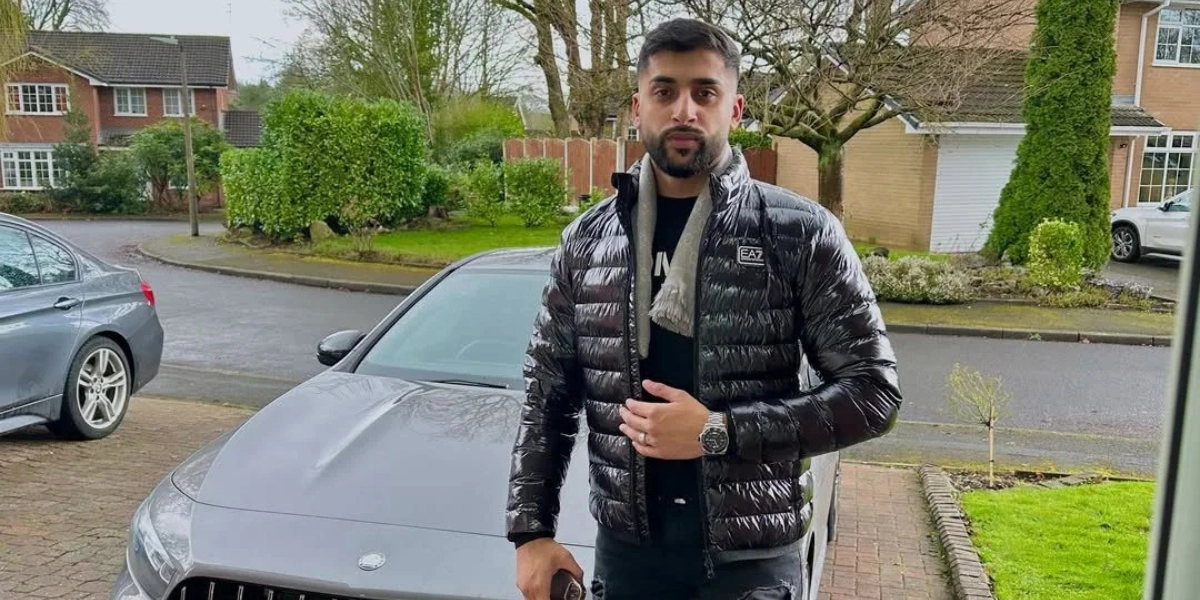
A Green Party councillor in England has come under scrutiny after it emerged that he co‑ran a business with an individual now accused of a multimillion‑pound cryptocurrency fraud, although no evidence currently links the councillor himself to any wrongdoing. The case highlights tensions between personal‑business associations and political accountability, and has prompted internal questions within the Green Party about vetting and transparency.
Who is the councillor involved?
The councillor is Baggy Khan, a 25‑year‑old Green Party representative recently elected to Bolton Council in the North West of England. Khan has described himself as a community activist and local campaigner, focusing on issues such as housing, environmental protection, and youth services. His election was part of a broader Green push in northern English local authorities, where the party has sought to expand its base beyond traditional urban‑left strongholds.
According to public records and media reports, Khan has no prior criminal record and is not accused of any fraudulent conduct in connection with the business in question. The party has said it is monitoring the situation and expects councillors to comply with both local‑government codes of conduct and national‑party standards on probity and conflicts of interest.
Details of the alleged fraudster
The individual at the centre of the fraud allegations is Mohamedmin Atcha, a longstanding friend of Khan from school days, who is accused of orchestrating a cryptocurrency‑based scheme involving digital “ape”‑themed tokens. U.S. court filings in New York linked Atcha to a project known as “Evolved Apes,” under which investors were allegedly sold fungible tokens tied to digital art and a promised video game. Prosecutors claim investors were misled into believing funds would be used to develop the game, while in reality the money was diverted to personal crypto wallets and exchanges.
Atcha is charged with one count of conspiracy to commit wire fraud and one count of conspiracy to commit money laundering, each carrying a maximum potential sentence of 20 years in prison if convicted. Reports indicate that the alleged fraud involved roughly 2.7 million U.S. dollars (about £2 million), with Atcha later filmed driving a rented £200,000 supercar, fueling public‑interest coverage. He has not publicly admitted guilt and remains entitled to the presumption of innocence under U.S. and U.K. legal standards.
Nature of the business partnership
Before entering local politics, Khan was reportedly involved in a recruitment venture called Bee Crown Recruitment, which he ran jointly with Atcha. The company appears to have operated as a staffing or placement agency, connecting job‑seekers with employers in the wider Manchester–Bolton corridor. There is no indication in available filings that Bee Crown Recruitment itself was used as a vehicle for the alleged crypto fraud, nor that council funds or public money passed through the firm.
Media accounts note that Khan has said he did not know about the U.S. criminal indictment against Atcha until months after it became public, and that he has not been implicated in the fraud allegations. The Telegraph and other outlets have stressed that their reporting does not suggest Khan participated in or benefited from the cryptocurrency scheme, though it does raise questions about the risks of close business ties with associates later linked to financial crime.
Political and party‑level reactions
The Green Party has issued a brief statement reiterating that Khan is not accused of any criminal act and that the party will continue to monitor developments. It has also reiterated its commitment to high standards of conduct for elected representatives, including requirements to disclose significant financial interests and to avoid conflicts between personal business and public office. Inside the party, some members have privately expressed concern that the story could feed narratives about lax vetting of candidates, even where no misconduct can be proven.
Opposition politicians and commentators have used the episode to question the broader transparency of political‑finance networks, particularly where councillors maintain active business interests. Khan’s local opponents have called for greater disclosure of past business relationships and for clearer guidelines on how close an association with someone under criminal investigation should be treated for ethical‑committee purposes. At the same time, allies point out that merely sharing a business address or forming a legally compliant company with someone later alleged to have committed fraud does not, in itself, constitute a breach of law or ethics.
Legal and regulatory implications
From a legal standpoint, the case sits at the intersection of corporate‑law, electoral‑integrity norms, and anti‑money‑laundering expectations. The U.S. indictment focuses squarely on Atcha and two other British nationals over conduct related to the Evolved Apes token project, with no named charges against Khan. U.K. authorities have not, as of the latest reporting, indicated that they are pursuing a parallel investigation into Khan or Bee Crown Recruitment.
Nevertheless, local‑government standards committees routinely review whether councillors should recuse themselves from decisions affecting entities with which they have had business ties, even if those ties are historical. If Khan had ongoing financial‑interest links to companies doing business with Bolton Council, or if his recruitment firm ever sought public‑sector contracts, those relationships would normally fall under local‑authority disclosure rules. The episode therefore serves as a textbook example of how “guilt by association” can become a political‑risk issue even in the absence of formal allegations.
Public perception and media narrative
Coverage of the story has mixed between neutral reporting of the indictment and more opinion‑driven commentary questioning Khan’s judgment in maintaining a business relationship with someone later accused of a major fraud. Some columnists have highlighted the visibility of the £200,000 supercar footage, arguing that such imagery can create a perception of ill‑gotten wealth even where the underlying legal case is still pending. Others have cautioned against conflating lifestyle‑indicators with guilt, noting that rental vehicles and high‑status symbols are not evidence of substantive wrongdoing.
For Khan personally, the stakes are political as much as reputational: the episode could influence voter attitudes in his ward, especially among constituents who prioritize integrity‑over‑policy. Conversely, his supporters argue that holding a young politician responsible for a friend’s later‑uncovered criminal‑behaviour risks creating an overly punitive standard for entry into local‑government.
What comes next
Going forward, the focus is likely to remain on the U.S. criminal proceedings against Atcha and the two other co‑defendants, whose outcomes may shape how the wider story is framed in the U.K. media. Khan’s own position will depend on whether any new evidence emerges tying him or his former business to the alleged fraud, and on how Bolton Council’s standards‑committee treats declarations of past business interests. The Green Party may also revisit its internal vetting and disclosure protocols for candidates with recent commercial‑venture histories, particularly in high‑profile localities.
For now, the situation stands as a cautionary‑tale vignette: a Green councillor whose pre‑elected career entanglement with an alleged fraudster has placed him under an intense, albeit legally neutral, spotlight, even as he remains uncharged and officially unimplicated in the underlying crime.Green Party Councillor Ran Business With Alleged Crypto Fraudster