

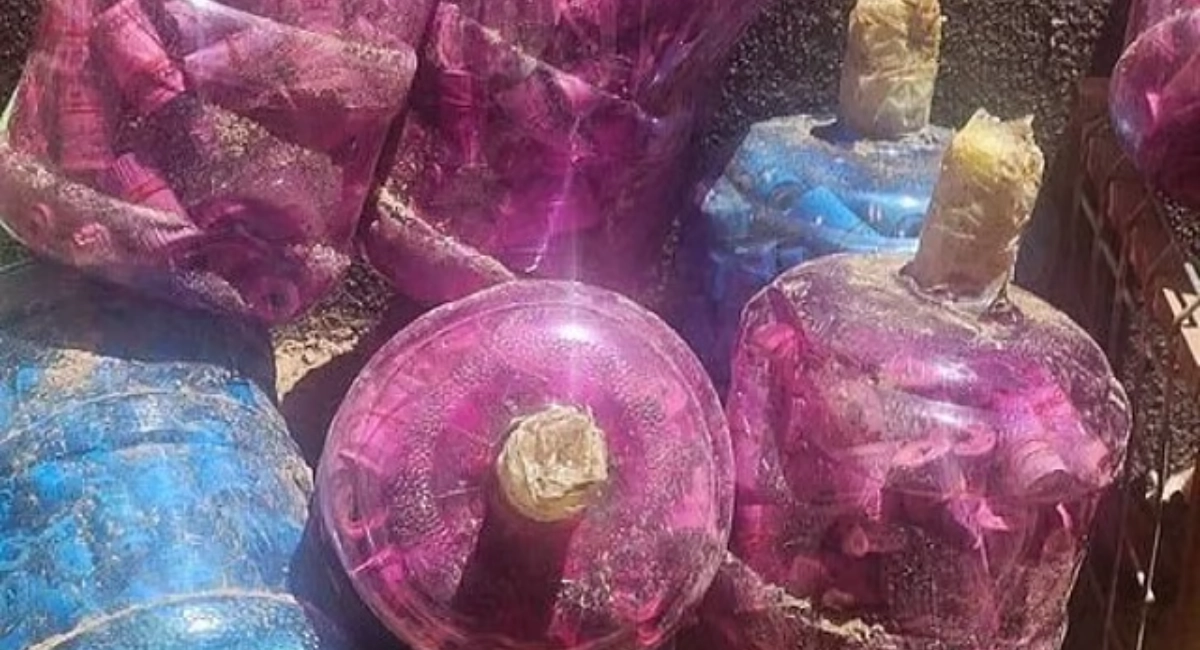
Iraq’s anti-corruption campaign has widened after authorities in Tikrit uncovered cash and gold hidden inside plastic water bottles, adding a striking new image to a crackdown that is already shaking the country’s political elite. The discovery comes amid a series of arrests, asset seizures and investigations that officials say are aimed at recovering public money and exposing corruption networks embedded in state institutions.
According to reporting on the raid, investigators found large sums of money and gold concealed in plastic containers, with one account stating that nine water bottles had each been filled with about one billion Iraqi dinars. The unusual method of concealment has drawn wide attention in Iraq and beyond, not only because of the scale of the assets involved but also because it reflects the lengths to which suspects may have gone to hide proceeds believed to be linked to corruption.
The Tikrit discovery is part of a broader anti-graft drive launched under Prime Minister Ali al-Zaidi, whose government has made the recovery of stolen public funds a central priority. In recent days, security forces have arrested dozens of politicians, lawmakers and senior officials in raids described by legal and security sources as the opening phase of a wider campaign. Officials have said the operation is intended to target suspected corruption networks across ministries and state bodies rather than single isolated cases.
The crackdown has already reached senior levels of government. Among those detained is Adnan al-Jumaili, the former deputy oil minister for refining affairs, whose arrest appears to have helped open the way to additional detentions and asset seizures. Reporting on the case says the total amount seized in related investigations has climbed sharply, with cash found in homes and other locations, properties frozen, vehicles confiscated and gold jewelry recovered.
The political impact of the arrests has been significant. Some of those detained belong to influential blocs, including figures linked to the main Sunni alliance and the former prime minister’s political camp, prompting speculation about the campaign’s timing and possible political consequences. Analysts quoted in the reporting said the government is also using the campaign to project an image of a state capable of enforcing the law, especially at a time of external pressure and domestic demands for accountability. At the same time, they cautioned that the credibility of the drive will depend on whether it is applied evenly across Iraq’s political spectrum.
Iraq has long struggled with corruption, and successive governments have promised reform while large-scale embezzlement, patronage and weak oversight have continued to undermine public trust. The country was ranked 136 out of 181 on Transparency International’s Corruption Perceptions Index in the latest reporting cited by The National, underscoring the depth of the challenge facing the government. Analysts say the combination of politicized institutions, weak accountability and heavy dependence on oil revenues has helped corruption persist across multiple administrations.
The current campaign appears designed to send a message both inside Iraq and to external partners that the new government is serious about enforcement. But experts warn that public confidence could quickly erode if the crackdown is seen as selective, short-lived or driven by internal power struggles rather than a genuine institutional reform effort. That concern is central in Iraq, where anti-corruption drives have often begun with momentum but later lost force.