

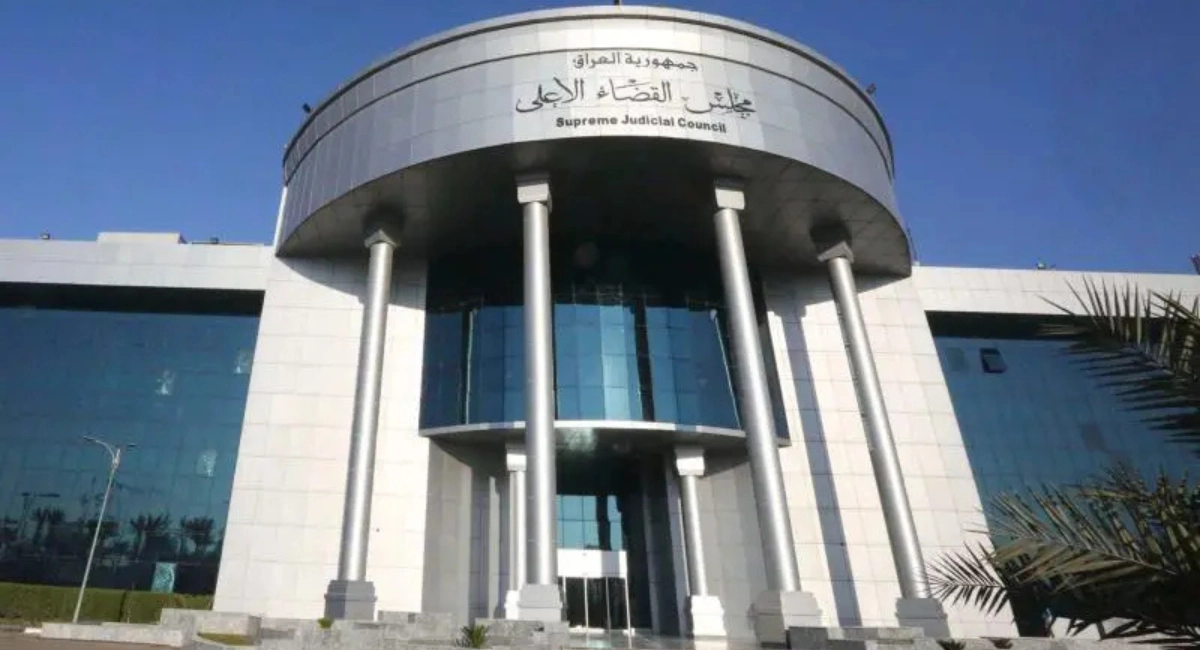
Baghdad — Iraq’s Central Anti-Corruption Criminal Court (CACC) has sentenced the former director general of the General Commission for Taxes, Osama Hossam Jawdat, to 10 years in prison, and his wife to five years and one month, in a major money laundering case tied to the government’s expanding anti-corruption campaign.
The Federal Commission of Integrity announced the ruling on Monday, June 29, 2026, describing it as a landmark decision under Article 36 of Iraq’s Anti-Money Laundering and Counter-Terrorism Financing Law.
Court sentence, fines and asset confiscation
Alongside the prison terms, the court ordered the couple to jointly pay a fine of 32 billion Iraqi dinars (about $24.4 million).
The judgment also included sweeping asset confiscation:
- 10 properties in Baghdad
- 12 properties in Türkiye registered in the wife’s name
- Seized cash and rental income from those properties
- Gold jewelry
- Funds held in a Kuwaiti bank and several Turkish banks
- Additional movable and immovable assets of the couple
Iraqi authorities said the assets were linked to proceeds from the alleged money laundering scheme, though detailed breakdowns of the underlying transactions have not been publicly disclosed.
Official statements on the case
In its statement, the Federal Commission of Integrity framed the sentence as part of broader efforts to “pursue cases involving the misuse of public money across ministries, government institutions, and provincial administrations.”
The commission’s announcement did not elaborate on the specific tax administration functions Jawdat oversaw at the time of the alleged offenses, or whether current tax officials are under investigation in connection with the case.
Government spokesperson Haider al-Aboudi, commenting on the wider anti-corruption drive, said “fighting corruption remained a central pillar of (the government’s) efforts to strengthen state institutions and protect public funds.”
Part of a wider anti-corruption crackdown
The tax chief’s conviction comes amid one of Iraq’s most visible anti-corruption push in recent years, ordered by Prime Minister Ali al-Zaidi.
In late June 2026, Iraqi security forces launched a sweeping operation across Baghdad and several provinces, detaining 43–47 suspects in the first phase, including officials, politicians, businessmen, and members of parliament.
Key features of the broader campaign include:
- Raids in Baghdad districts such as Sadr City, Shaab, Zayouna, Yarmouk, and the Qadisiyah residential complex, as well as operations in Babil, Maysan, and Erbil.
- Arrest warrants issued on charges of financial and administrative corruption, with detainees handed to the Integrity Commission under direct follow-up by the prime minister and the head of the Supreme Judicial Council, Faeq Zaidan.
- Seizure of large sums of cash from homes and offices, with final amounts to be announced after accounting.
- Plans for a second phase targeting “senior-tier political figures, lawmakers, directors-general, and businessmen.”
The operation follows a series of recent arrests of senior officials on corruption charges, which in turn triggered additional warrants executed in coordinated raids, including inside Baghdad’s heavily fortified Green Zone.
Institutional reforms and recovered funds
The sentencing of Jawdat and his wife aligns with a string of institutional measures aimed at tightening oversight of public spending and recovering illicit assets.
On May 30, 2026, Prime Minister Ali al-Zaidi established the Supreme Sovereign Council for Integrity, Oversight, and Recovery of Public Funds, chaired by himself and including the heads of the Board of Supreme Audit and the Integrity Commission.
The council’s mandate is to:
- Monitor ministries, non-ministerial bodies, and governorates on matters of “significant public impact”
- Reduce waste of public money and recover state funds
- Refer findings to the judiciary for prosecution
- Make economic feasibility checks mandatory for projects
- Form specialized subcommittees to audit government contracts before signing, ensuring alignment with approved budget allocations
In 2025, Iraq’s Federal Commission of Integrity reported recovering nearly one trillion dinars (about $650 million) in public funds while pursuing dozens of senior officials, including ministers, through judicial proceedings.
More recently, the Integrity Commission said it had thwarted an attempted embezzlement scheme targeting nearly 1.5 trillion dinars from two state banks in Baghdad, further underscoring the scale of alleged financial misconduct under scrutiny.
On June 29, 2026, the prime minister also ordered the Finance Ministry to open a dedicated account for money recovered from illicit activities, signaling an effort to centralize and track returned assets as the anti-corruption drive expands.
Reaction and context
Iraqi media and officials have portrayed the tax chief’s conviction as a signal that high-level figures are no longer insulated from prosecution.
The case has drawn particular attention because it involves a senior revenue official, at a time when Baghdad is under pressure to improve tax collection, curb informal economic activity, and restore public trust after years of corruption scandals.
At the same time, rights groups and legal observers in Iraq have repeatedly called for transparent procedures, clear charges, and adherence to due process in high-profile corruption cases, though specific concerns about this particular trial have not been detailed in official statements released so far.
What comes next
Authorities say the current anti-corruption operation remains ongoing, with further arrests and judicial actions expected in the coming days and weeks.
The newly created oversight council is tasked with moving from reactive investigations to more pre-emptive controls, including pre-signature audits of major government contracts and stricter feasibility assessments for public projects.
How effectively these mechanisms translate into sustained reductions in corruption, and whether they withstand political and economic pressures, will likely shape perceptions of Iraq’s reform drive domestically and among international partners and investors.