

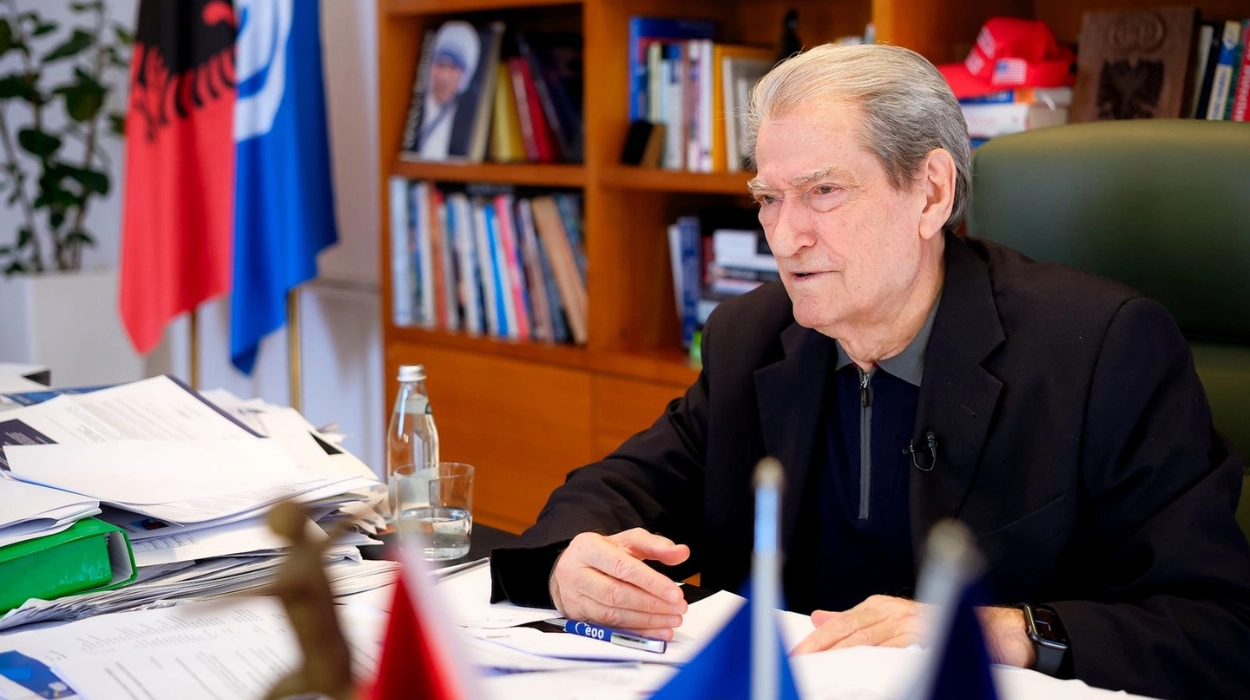
Kosovo media recently raised alarms about a suspected money laundering scheme involving construction projects, mirroring patterns seen in Albania. Former Albanian Prime Minister Sali Berisha responded by stating his Democratic Party (DP) had previously warned about such activities, alleging involvement of groups linked to current Albanian Prime Minister Edi Rama. This development highlights ongoing concerns over cross-border financial crimes in the Western Balkans, where construction serves as a key laundering channel.
Berisha made these comments during a Facebook discussion with commentators on April 3, 2026, directly addressing media reports on suspicious investments. He emphasized that Albanian authorities must respect Kosovo’s sovereignty and law enforcement efforts against what he termed “Tirana’s mafia tentacles.”
Berisha’s Statements
Berisha asserted, “We have warned” about the risks, framing Albania under Rama as a “narco-state” threatening regional and European security. He cited global media reports portraying the Albanian mafia as a major cannabis exporter to Europe and cocaine transporter from Latin America. According to Berisha, Kosovo must act decisively to sever these influences and uphold the rule of law.
These remarks align with Berisha’s long-standing criticisms of Rama, including past accusations of drug cartel ties and money laundering through Albanian construction booms. Berisha expressed confidence in Kosovo’s authorities to counter what he called “Albanian drug mafia aggression.”
Broader Money Laundering Context
Construction is a high-risk sector for money laundering in both Albania and Kosovo due to cash-heavy transactions and economic informality. Albanian SPAK prosecutor Doloreza Musabelliu revealed in a March 2025 interview that criminal proceeds from drugs, corruption, and cybercrime are routinely funneled into construction, businesses, and cryptocurrencies. She noted a joint Albania-Kosovo operation seizing €1.5 million each side, targeting shell companies in Kosovo for fake consulting and telecom services.
Kosovo’s National Risk Assessment identifies real estate and construction as prime targets for laundering corruption proceeds. Albanian investments in Kosovo’s construction reached €59 million in 2024, comprising 13% of total Albanian FDI stock, amid a 26% yearly rise. U.S. Treasury sanctions since 2021 have targeted Kosovo-based groups like Zvonko Veselinovic’s network, involved in smuggling, bribery, and construction contracts across Kosovo-Serbia borders.
Albanian Construction Patterns
In Albania, SPAK has confiscated over 40 businesses in 2024 alone—up from 10 in 2010—used for laundering. Musabelliu stressed that such funds distort markets, harm legitimate firms, and fuel inflation rather than development. Kosovo police echo this, noting criminals invest cash as shares in construction and services like call centers to legitimize gains.
High-profile cases include Kosovo’s €53 million highway compensation scandal, where ex-Minister Pal Lekaj was convicted in 2023 for abuse of office, though appealed in 2025. U.S.-sanctioned Serb firms have subcontracted to Albanian-owned entities in Kosovo’s north.
Kosovo’s Response and Risks
No official Kosovo statement directly addresses the April 2026 media alarms, but cross-border cooperation persists. Albanian FDI in Kosovo hit €468 million in 2024, led by construction, raising scrutiny amid informality. Berisha urged Kosovo to block suspicious investments, invoking regional security.
Experts warn laundering exacerbates poverty and inequality in the Balkans. SPAK’s €182 million in seizures over five years underscores enforcement gains, but transnational groups in Europe complicate efforts.
Regional Implications
This episode fuels political tensions between Albanian opposition and government, with Berisha positioning it as vindication. It spotlights Western Balkans vulnerabilities, where construction booms often mask illicit flows. International partners like the U.S. Treasury continue targeting linked networks.
Ongoing SPAK-Kosovo probes and sanctions aim to disrupt these schemes, but Berisha’s claims add a partisan layer without independent verification. Kosovo’s institutions face pressure to investigate amid rising Albanian investments.