

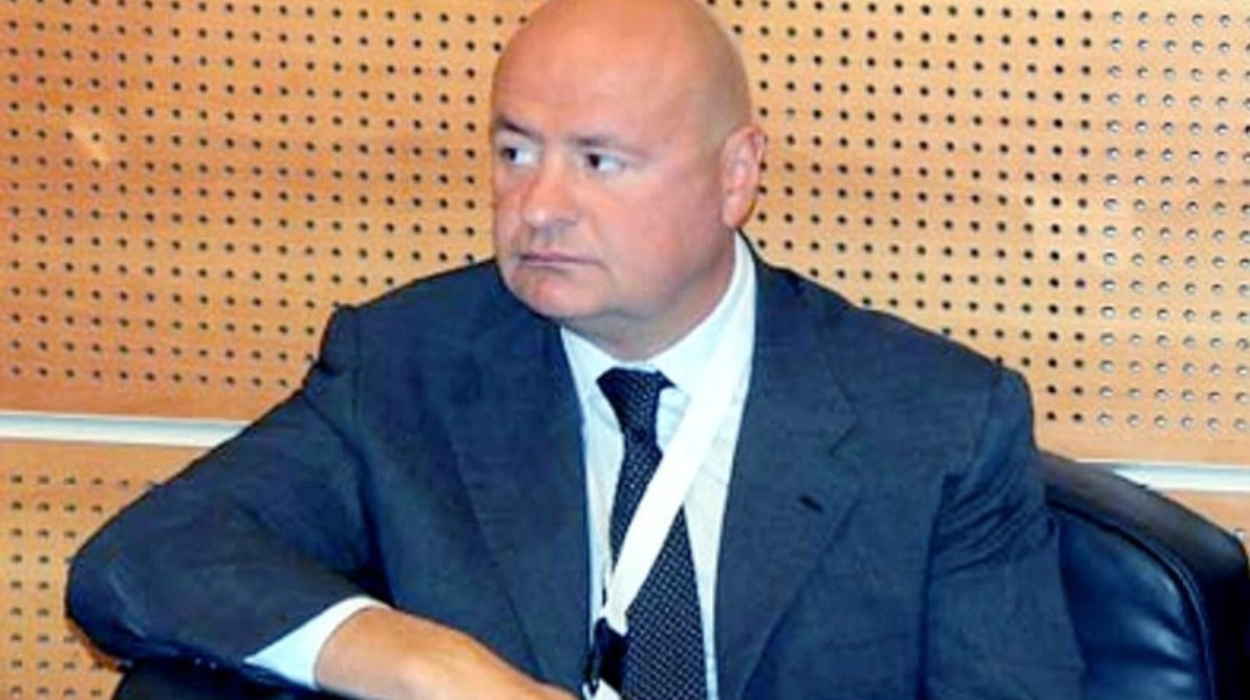
A landmark trial has opened in Paris against Dmitry Klyuev, a Russian‑born financier long accused of orchestrating the laundering of proceeds from the so‑called “Magnitsky Affair,” a $230 million Russian tax‑refund fraud that sparked a global anti‑corruption campaign and led directly to the U.S. Magnitsky Act. The proceedings, held at the Paris Judicial Tribunal, mark the first time a single defendant is formally prosecuted in Western Europe as an alleged mastermind of the scheme’s money‑laundering arm, even though the bulk of the theft occurred in Moscow more than 15 years ago.
Who is on trial and what is he charged with?
Dmitry Klyuev, a former Russian banker and sanctioned Russian oligarch‑linked figure, is being tried in absentia over accusations that he moved and spent millions in alleged fraud proceeds through Western Europe, including France. French prosecutors characterize him as “one of the primary organizers” of an organized‑crime‑style network that hijacked corporate structures and bank accounts to recycle the stolen funds and make them appear legitimate. The core charge is aggravated money laundering, arising from a 2014 criminal complaint filed by Hermitage Capital Management Limited, the London‑based investment fund originally targeted in the Russian fraud.
Prosecutors allege that between 2007 and 2012 Klyuev and his associates filtered parts of the $230 million into accounts nominally under his control, then funneled at least 2.1 million euros (about $2.42 million at the time) into France. These flows allegedly funded a lavish lifestyle in Paris and the French Alps, rather than being reported as the product of illicit Russian‑state theft. Because Klyuev is believed to reside in Russia and has not appeared, the trial is being conducted in his absence, underscoring the jurisdictional and political hurdles that often complicate cross‑border financial‑crime cases.
How the $230 million Magnitsky fraud worked
The Magnitsky‑linked scheme began in Moscow in 2007, when Russian authorities and criminal actors allegedly staged raids on Hermitage Capital’s offices under the guise of a lawful tax‑investigation operation. During these raids, officials are said to have seized corporate documents and then used them to fraudulently take over three Hermitage‑owned companies, re‑registering them in new names. These “kidnapped” companies were then used to generate false tax‑refund claims, siphoning a total of $230 million (about €200 million at the time) out of the Russian Treasury via a complex web of bank transfers and offshore vehicles.
The fraud was uncovered by Sergei Magnitsky, a Russian‑British lawyer and auditor working for Hermitage Capital, who documented the theft and filed a formal complaint with Russian authorities. Instead of being protected, Magnitsky was arrested in November 2008 on charges of alleged collusion in the very fraud he had exposed. He died in a Moscow pre‑trial detention center in November 2009, after more than a year in custody, with Western human‑rights groups and his employer, William Browder, alleging that he was tortured and denied medical care.
Role of luxury spending in the French case
Although the original theft was executed in Russia, the French case focuses narrowly on what happened to the stolen money once it reached Western Europe. Prosecutors and investigators argue that Klyuev and his network used French banks, boutiques, and service providers to launder the proceeds and integrate them into the legitimate European economy. Bank records and invoices examined by the French anti‑corruption unit–led investigation show roughly 2.1 million euros passing through Klyuev‑linked accounts and then being spent on high‑end goods and experiences.
According to the indictment, these outlays included about 668,517 euros at a Paris art and antique gallery, roughly 696,015 euros across two luxury French women’s fashion houses, 96,814 euros at a top jewelry store in the ski resort of Courchevel, and 127,182 euros on a Courchevel tour package covering then‑Russian Senator Dmitry Saveliev and his guests. These transactions, investigators say, were not isolated personal splurges but part of a broader pattern designed to mask the illicit origin of the funds and burnish a veneer of respectability around the perpetrators.
Browder and the global Magnitsky‑sanctions movement
The Paris trial is being closely watched by William Browder, the American‑British financier who founded Hermitage Capital Management and later became the leading advocate for the Magnitsky sanctions regime. Browder has described the case in France as a “critical milestone” because it represents the first time a court in Europe has put a single alleged ringleader of the $230 million fraud on trial, even if only for laundering and not for the underlying theft. He has argued that the Magnitsky investigation “revealed how Russian officials and criminals laundered millions through Western banks” and that the Paris proceeding is part of a broader, long‑overdue reckoning with those networks.
Browder’s activism after Magnitsky’s death led directly to the U.S. Magnitsky Act of 2012, which authorized visa bans and asset freezes against individuals involved in gross human‑rights abuses and grand corruption. Several other countries have since adopted similar “Magnitsky‑style” laws, turning the whistleblower’s name into a global symbol for accountability. In court‑room statements relayed to the media, Browder has emphasized restoring the human dimension to the case, insisting that behind the technical financial flows is the story of Magnitsky’s torture and death.
Legal and political implications of the Paris trial
The trial in Paris is notable not only for its symbolic weight but also for the questions it raises about enforcement across jurisdictions. Klyuev, who is under U.S. sanctions as an alleged organized‑crime figure, has not appeared in person, and defense lawyers have signaled that they may contest the fairness of an in‑absentia proceeding. French prosecutors, meanwhile, stress that the case is restricted to the laundering of fraud proceeds in France, leaving the larger Russian‑state theft and any criminal liability on Russian soil to the authorities or courts in Moscow, which have historically blocked or diluted accountability.
For international‑law experts, the proceeding underscores both the reach and the limits of Western‑style anti‑money‑laundering frameworks. On one hand, the French case shows that investigators can trace portions of global corruption into boutique purchases and art‑market transactions, turning lifestyle spending into criminally relevant evidence. On the other hand, the fact that the alleged mastermind is tried in absentia and may never face extradition highlights persistent gaps when dealing with powerful actors who operate from jurisdictions that shield them from foreign prosecution.