

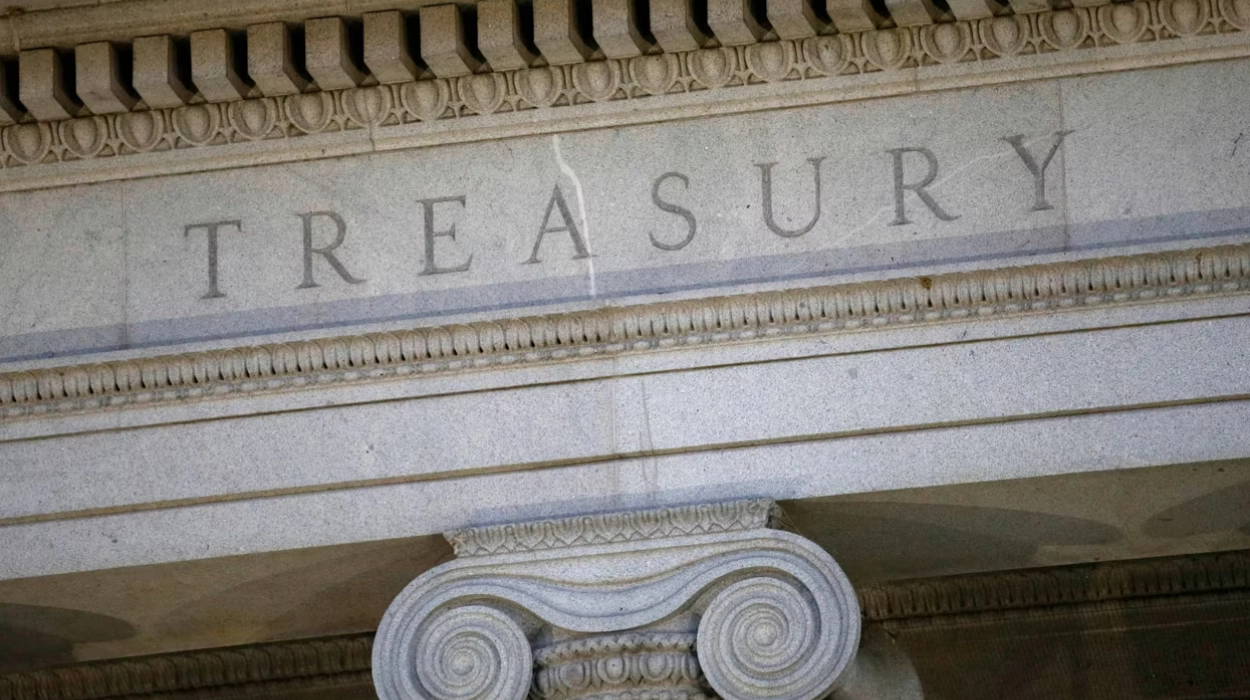
Breaking News: Treasury Directive Targets Iranian Laundering Risks
The US Department of the Treasury has issued a directive urging American banks and financial institutions to monitor and flag suspected Iranian money-laundering networks. These networks allegedly use shell companies and cryptocurrency to smuggle sanctioned oil, funding Iran’s Revolutionary Guard Corps (IRGC). This move escalates efforts under the Trump administration’s maximum pressure campaign against Tehran.
The guidance highlights specific red flags, including newly formed companies handling large fund transfers, payments routed through multiple intermediaries, and transactions linked to Iranian crypto firms. Banks are also advised to watch for oil mislabeled as “Malaysian blend,” falsified shipping documents, or ship-to-ship transfers obscuring origins.
Background on Iranian Shadow Banking
Iran’s shadow banking system, including currency exchange houses like Opal Exchange (Pedram Pirouzan and Associates), Radin Exchange (Nasser Ghasemi Rad), and Tahayyori Guarantee Society, facilitates billions in transactions annually. These entities convert oil revenues from Chinese yuan into usable currencies for Iran’s military and proxies, evading sanctions via front companies in high-risk jurisdictions.
Treasury’s Office of Foreign Assets Control (OFAC) recently designated these exchange houses and over a dozen front companies, such as Mullingar Trading Company Limited and Al Sahra Trade Petro DMCC, under Executive Order 13902. Owners like Pedram Pirouzan and Hossein Mohammad Rezaei use foreign citizenships (e.g., Dominica, Saint Kitts) to mask Iranian ties and access global banking.
Since February 2025, OFAC has sanctioned over 1,000 Iran-related entities as part of National Security Presidential Memorandum 2 (NSPM-2), targeting shadow banking, rahbar networks, and digital asset exchanges. This includes freezing $344 million in Iran-linked cryptocurrency.
Treasury’s Specific Instructions to Banks
The Treasury wants banks to enhance due diligence under the Bank Secrecy Act (BSA), requiring suspicious activity reports (SARs) within 30-60 days of detection. Indicators include unusual volumes from high-risk areas, layered transactions, or ties to sanctioned entities like Iran’s Central Bank or National Iranian Oil Company (NIOC).
Financial institutions must screen against OFAC lists, maintain customer identification programs (CIP), and conduct risk-based monitoring. Failure to comply risks civil or criminal penalties, with strict liability for sanctions violations.
Secretary Scott Bessent emphasized: “Iran is the head of the snake for global terrorism… We will relentlessly target the regime’s ability to generate, move, and repatriate funds.” This aligns with broader warnings on Strait of Hormuz “tolls” and oil trade facilitation.
Compliance Implications for US Banks
US banks must integrate these red flags into AML programs, per FinCEN and OCC guidelines. This involves ongoing customer due diligence, beneficial ownership checks, and reporting cash transactions over $10,000.
Institutions face heightened scrutiny amid 2026’s escalating US-Iran tensions, with prior actions like March sanctions guides underscoring evolving risks. Non-US banks risk secondary sanctions for facilitating Iranian networks.
Broader Context and Global Impact
This directive builds on April 2026 actions against 35 shadow banking entities funding militants. It counters Iran’s oil smuggling, estimated at billions, amid revived UN sanctions and crypto laundering schemes exceeding $150 million.
Experts note increased AML challenges in 2026, with Iran leveraging high-risk jurisdictions lacking robust controls. The initiative aims to disrupt Tehran’s war funding without direct military engagement.
Industry Reactions and Next Steps
Banking leaders stress proactive monitoring to avoid penalties, with FINRA-mandated AML programs requiring senior approval, independent testing, and training. Whistleblower incentives offer awards for tips leading to $1M+ penalties.
Treasury urges global vigilance, warning of “severe consequences” for enablers. Updates via OFAC advisories will guide ongoing compliance