

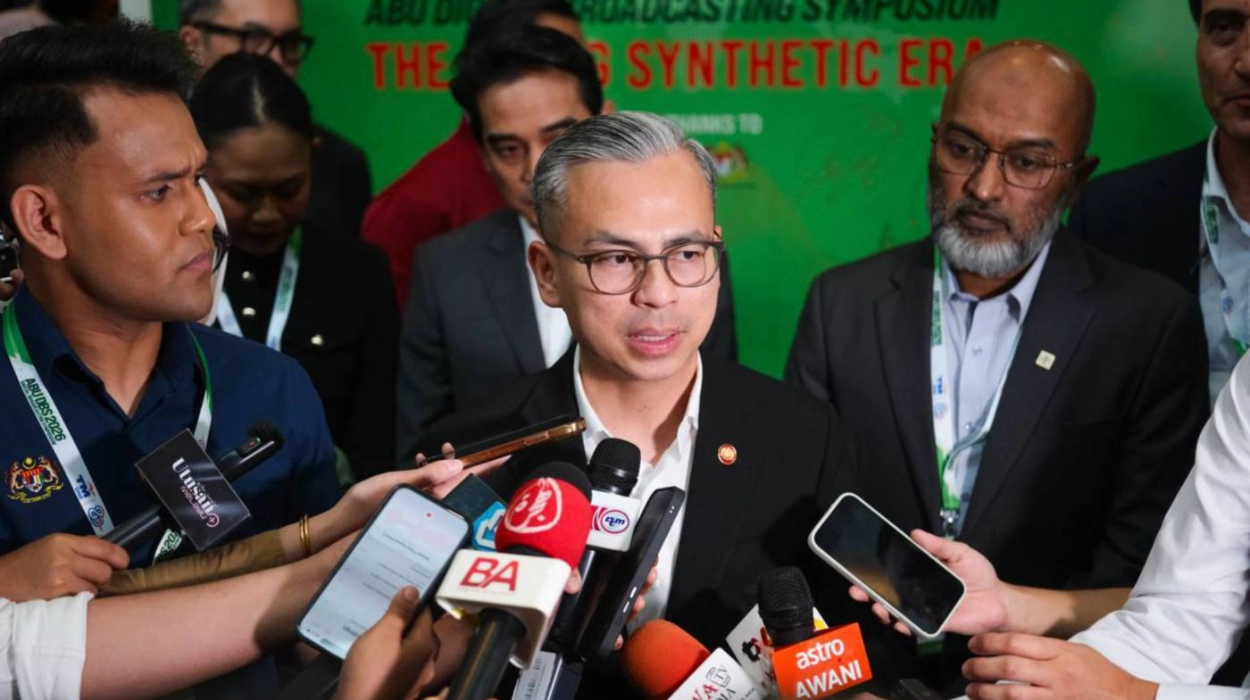
Communications Minister Datuk Seri Fahmi Fadzil has stated that businessman Victor Chin’s alleged money‑laundering connections stretch back to pre‑2018 administrations, underscoring that the pattern of behaviour predates the current coalition government and implicates political and corporate actors across multiple earlier regimes. His remarks came amid an intensifying investigation under Operation Viking, which has linked Chin to hundreds of millions of ringgit in disputed assets and corporate‑manipulation schemes.
Background to the Ops Viking probe
Operation Viking is a nationwide anti‑money‑laundering and corporate‑manipulation sweep led by the Bukit Aman Anti‑Money Laundering and Anti‑Terrorism Financing (AMLA) Investigation Unit, supported by the Securities Commission (SC), the Malaysian Anti‑Corruption Commission (MACC), and the Inland Revenue Board (LHDN). The operation was formally launched on October 14, 2025, with a formal investigation opened on October 25, 2025, under Section 4(1) of the Anti‑Money Laundering, Anti‑Terrorism Financing and Proceeds of Unlawful Activities Act 2001 (AMLA/Act 613).
Authorities have disclosed that intelligence pointing to Victor Chin’s role dates back to 2018, well before the current administration took office, and that the probe is now being expanded to cover transactions spanning several prior federal and state governments. The investigation focuses on alleged corporate‑mafia‑style manipulation of listed and private companies, as well as the use of multiple corporate vehicles and bank channels to move large sums of money.
Assets seized and charges framework
Under Ops Viking, police have frozen and seized assets valued at roughly RM473 million, including 404 bank accounts holding about RM85.6 million, trading accounts totalling RM64.2 million, and Central Depository System (CDS) or securities accounts worth around RM323.6 million. Authorities have also impounded 32 vehicles and eight properties linked to companies and individuals connected to Chin, alongside thousands of shares in private firms and listed‑company holdings.
The probe is being pursued under multiple statutes, including the Anti‑Money Laundering Act 2001 (AMLA), certain sections of the Moneylenders Act 1951, the Capital Markets and Services Act 2007, and the Companies Act 2016. Datuk Fazlisyam Abd Majid, head of the AMLA unit at Bukit Aman, has stressed that the investigation is examining everyone “directly or indirectly” involved in managing funds from alleged unlawful activities, regardless of rank or political affiliation.
Victor Chin’s detention and current status
Businessman Victor Chin Boon Loong was among the first 10 individuals detained under Ops Viking, being held in December 2025 before being released on police bail. Eight other suspects, including six men and three women described as closely linked to the case, were also arrested and later released on bail, while around 40 additional individuals have been called in to provide statements or submit documentation.
Police have confirmed that Chin remains outside Malaysia, with the Home Ministry and the Inspector‑General of Police (IGP) indicating that authorities are coordinating with international agencies to track his movements and, if necessary, facilitate legal cooperation such as extradition or mutual‑assistance requests. Fahmi has avoided commenting directly on Chin’s current location, instead emphasising that all parties must cooperate with domestic investigative bodies and warnings that anyone obstructing the probe may face separate charges.
Fahmi’s statement on pre‑2018 links
In a series of remarks reported by NST and other outlets, Fahmi signalled that the evidence against Chin includes transactions and political‑finance‑related patterns that arose or intensified during pre‑2018 federal and state administrations. He cited bank statements and documentation showing that certain large‑value transfers, including alleged kickbacks or disguised donations, precede the establishment of the current governing coalition and involve public‑office‑holding figures from earlier governments.
According to the minister, this timeline suggests that the “corporate‑mafia”‑style network now under scrutiny had already embedded itself in corporate‑finance and political‑party funding channels before 2018, and that the current probe is effectively “unwrapping a legacy of abuse” rather than inventing a new narrative. Fahmi has urged Chin and other parties named in the case to “come forward” and cooperate fully, warning that non‑cooperation or attempts to influence elected representatives or law‑enforcement officials would be treated as aggravating factors in the eyes of the authorities.
Chin’s political‑cash allegations
Throughout the investigation, Victor Chin has publicly claimed that a member of Parliament from a coalition party approached him in October 2025 for RM10 million in cash, allegedly promising to “fix” his legal and corporate‑manipulation issues by speaking to “senior authorities.” Police have stated they have not received any official report on this allegation and have not yet named the MP or the exact party, though they have opened channels for whoever chooses to come forward with corroborating evidence.
Fahmi has declined to identify the lawmaker in question, but he has reiterated that any elected representative caught soliciting or receiving illicit funds for influence‑peddling purposes would be liable under the law, irrespective of party or service period. He has simultaneously stressed that the government will not shield individuals simply because they belong to the current ruling coalition, framing the probe as a test of the administration’s commitment to accountability across political cycles.
Wider implications for corporate and political finance
The exposure of Chin’s alleged pre‑2018 money‑laundering links has reignited debate over the role of “shadow” corporate structures, offshore vehicles, and nominee‑shareholder arrangements in funding political parties and servicing powerful business‑political networks. Regulators and civil‑society groups have called on the Securities Commission and the Companies Commission of Malaysia (SSM) to tighten nominee‑shareholder rules and to enhance transparency in cross‑border beneficial‑ownership disclosures.
Anti‑corruption watchdogs have also pushed for a more comprehensive audit of political‑party finances from the 2013–2018 period, arguing that the Chin case may represent only a portion of a broader pattern of monetised corporate‑influence‑trading. Fahmi has signalled that the government may consider legislative or regulatory reforms to narrow loopholes in political‑donation reporting, including possible real‑time disclosure thresholds and stricter penalties for masked or laundered contributions.
Overall outlook and next steps
Authorities have indicated that the Ops Viking investigation will continue over several months, with prosecutors likely to review multiple files for possible charges under AMLA, securities laws, and elements of the Companies and Moneylenders Acts. If Chin or other key figures are eventually brought before court, the case could set important precedents on how Malaysian courts treat cross‑jurisdictional money‑laundering patterns, corporate‑mafia‑style manipulation, and politically connected financial networks.
For now, Fahmi’s assertion that Victor Chin’s money‑laundering ties “date back to pre‑2018 administrations” anchors the current probe in a longer‑term reform narrative: one where the focus is not only on punishing contemporary actors but also in exposing the structural weaknesses that allowed such networks to persist for years.