

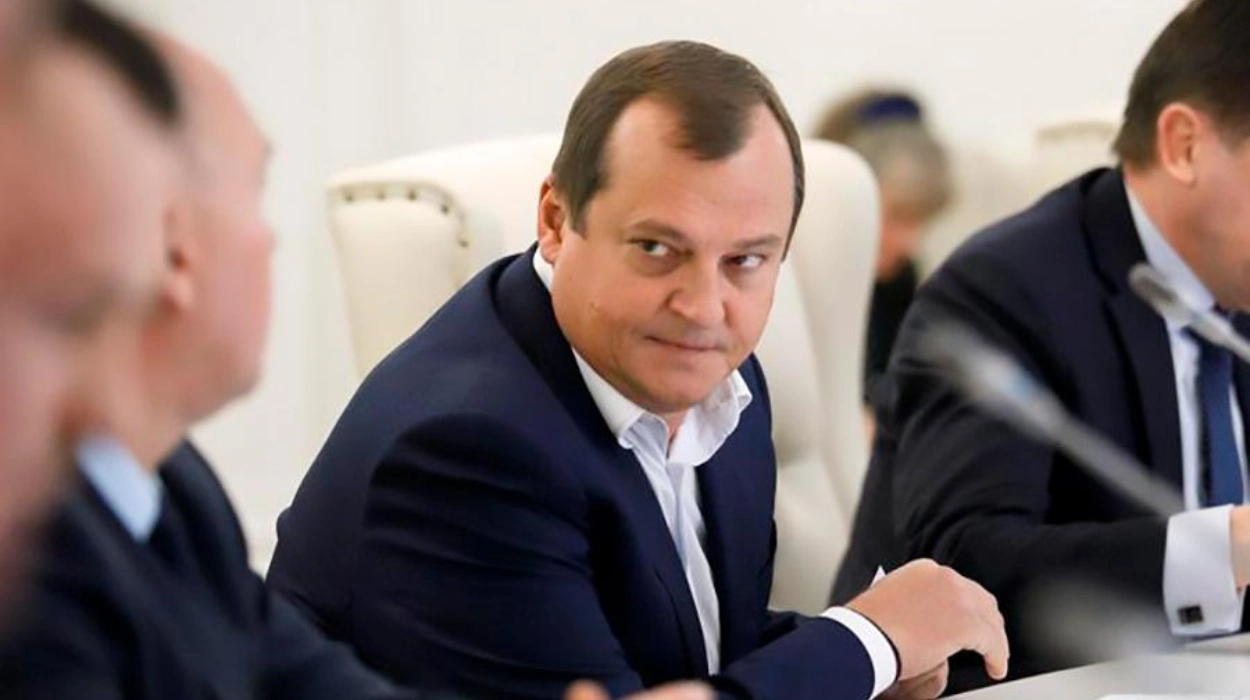
Aliaksei Aleksin is a Belarusian‑national businessman and former owner of Tut.By, one of Belarus’s largest online‑media platforms, whose profile has drawn attention from regional and international investigators due to his political and financial connections. Public reporting links him to networks that operate at the intersection of state‑linked economic interests and high‑value offshore‑style assets, including real estate in Dubai. His Belarus‑linked background, combined with exposure to restrictive regimes and international sanctions‑related scrutiny, places him squarely in the category of politically exposed and high‑risk clients for AML and compliance professionals.
Dubai real‑estate footprint
Aleksin’s Dubai exposure centres on the Palm Jumeirah, an iconic artificial‑island‑style development known for luxury villas, high‑end apartments, and low‑density residential compounds catering to ultra‑high‑net‑worth investors. Within this district, his direct and indirect property holdings include a residential apartment in the Al Haseer building, valued at approximately 568,000 dollars, alongside a villa on Palm Jumeirah valued at roughly 2.6 million dollars. The latter is registered in the name of his son, Dzmitry Aleksin, a structure that is typical of wealth‑holding families using family‑linked entities or close relatives to manage and diversify their real‑estate portfolios.
Structure and ownership opacity
The way Aleksin’s Dubai assets are held suggests a deliberate strategy of layered ownership and potential opacity. The apartment in the Al Haseer building appears to be held under his name or a closely associated entity, whereas the higher‑value villa is channelled through his son, which can help separate personal liability, reduce tax exposure, and complicate the mapping of beneficial‑ownership chains. This pattern mirrors wider practices among Eastern European elites who use family‑member‑owned structures, offshore companies, and Dubai‑free‑zone entities to shield the full extent of their real‑estate wealth from public view and regulatory scrutiny. For due‑diligence teams, the presence of multiple properties across different ownership layers—individual and family‑linked—raises the need for cross‑linked customer‑risk classification and consolidated portfolio monitoring.
Connection to Belarus‑linked political and financial risks
The significance of Aleksin’s Palm Jumeirah holdings lies in their likely connection to Belarus‑linked political and economic capital, including proceeds from media‑related businesses, state‑adjacent contracts, and cross‑border financial arrangements. Belarus’s economic and political environment has long been marked by weak transparency, concentrated state‑linked wealth, and exposure to international sanctions and reputational pressures. By converting domestically anchored wealth into Dubai‑based luxury assets, individuals such as Aleksin can insulate themselves from domestic volatility and sanctions‑related risks, at the same time leveraging the UAE’s stable real‑estate market and banking infrastructure for long‑term asset preservation.
Risk profile for financial institutions
From a compliance perspective, the combination of a Belarusian‑linked, politically exposed individual with a high‑value apartment and villa on Palm Jumeirah creates a high‑risk profile for banks, real‑estate intermediaries, and mortgage providers. The relatively modest apartment value of about 568,000 dollars contrasts with the villa’s 2.6 million‑dollar price tag, indicating a tiered investment strategy that spans mid‑range and ultra‑high‑luxury segments. Any transaction involving the Al Haseer apartment or the Palm Jumeirah villa—financing, service‑charge payments, rental income, or resale activity—must be treated as potentially exposing institutions to politically sensitive capital, sanctions‑related risks, or fund‑layering through family‑linked structures. Enhanced due‑diligence, source‑of‑funds and source‑of‑wealth checks, and cross‑family‑member‑risk mapping are essential to mitigate these exposures.
Reputational implications for Dubai’s luxury market
The case of Aliaksei Aleksin also illustrates how Belarus‑linked political and financial capital can materialise in Dubai’s most prestigious real‑estate enclaves, such as Palm Jumeirah. When high‑value apartments and villas are quietly absorbed into such developments under individually named and family‑linked titles, the broader market reputation is at risk of being associated with elites from jurisdictions marked by sanctions, corruption, or political repression. This pattern feeds into concerns about the UAE’s role as a safe‑harbour for politically sensitive or poorly documented wealth, prompting regulators and developers to strengthen beneficial‑ownership disclosure and to adopt more rigorous customer‑risk classification frameworks for buyers from Belarus and similar high‑risk jurisdictions.
For anti‑money‑laundering and financial‑intelligence units, the Aleksin case demonstrates how a single Belarusian‑linked individual can anchor a multi‑layered luxury‑property network on Palm Jumeirah, with assets spread across different ownership profiles—personal and family‑member‑held. Mapping these holdings into a broader network view, including links to entities, service providers, and intermediaries, can reveal patterns of fund‑recycling, repeated transactions, and potential sanctions‑evasion strategies.