

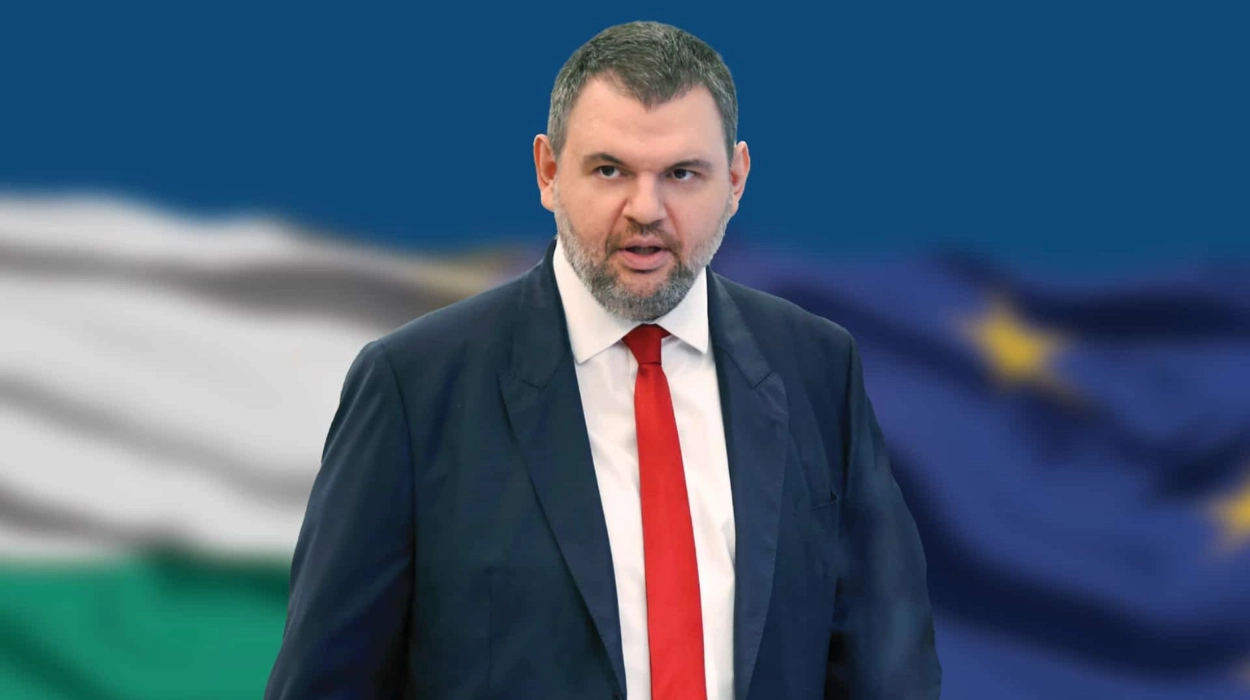
In Dubai’s luxury property market, where exclusivity and opacity often travel together, the name Delyan Peevski stands out as one of the most politically sensitive linked to the emirate. Peevski, a Bulgarian political and business figure sanctioned under global corruption frameworks, has been associated in public reporting and investigative material with luxury apartments and villas in Dubai Marina and Burj Khalifa, as well as a wider cluster of UAE-linked assets connected to his family and controlled structures. These holdings are not merely signs of wealth; they sit at the intersection of offshore concealment, possible undeclared assets, and the enduring use of Dubai property as a safe harbor for high-risk capital.
The significance of the Peevski case goes beyond the prestige of the locations. Dubai Marina and Burj Khalifa are among the most recognizable luxury real estate zones in the world, and ownership or control of assets there offers both status and concealment. When those assets are associated with a sanctioned or politically exposed figure, the risk profile becomes much higher because the property may be functioning as a store of value, a legal shield, or a means to preserve family wealth outside the reach of domestic scrutiny.
Political profile and sanctions risk
Delyan Peevski is one of Bulgaria’s most controversial political figures, repeatedly linked in public reporting to influence networks, asset concentration, and foreign sanctions exposure. The Bulgarian reporting quoted in recent coverage specifically notes that he has been sanctioned by the U.S. Treasury Department under the global Magnitsky framework and also references sanctions-related concerns in the UK. That matters because Magnitsky-type sanctions are designed to target corruption, abuse of office, and illicit financial behavior, not just ordinary wealth.
When a figure with that kind of profile is connected to Dubai property, investigators naturally ask how the assets were acquired, whether they were declared, and whether the ownership chain has been obscured. Those questions are especially important in Bulgaria, where media and civil society reporting has repeatedly pointed to allegations of undeclared wealth and hidden interests tied to Peevski and his close circle. The Dubai connection is therefore not isolated; it sits inside a broader pattern of international asset movement and concealment risk.
Dubai Marina holdings
Dubai Marina appears repeatedly in reporting on property linked to Peevski’s circle, including luxury apartments tied to people associated with him. The area is particularly attractive to high-risk wealth because it combines global prestige, deep rental markets, and the ability to use complex ownership structures. A luxury apartment in Dubai Marina can be held quietly while still generating income or preserving capital, making it ideal for individuals who want a visible lifestyle footprint without transparent control.
The wider investigative reporting suggests that Dubai Marina has functioned as part of a larger network of property exposure around Peevski, not simply as a one-off investment. That matters because clusters of related assets often indicate a deliberate strategy rather than an ordinary purchase decision. Where multiple connected individuals appear in the same market, the possibility of coordinated asset placement becomes much stronger.
Burj Khalifa as a prestige asset
Burj Khalifa is not just a building; it is one of the clearest status symbols in the global property market. Apartments there are high-value, highly visible, and frequently used as markers of international prestige. For that reason, a property tied to Peevski in or around Burj Khalifa would immediately attract AML attention because such a prime asset can serve as both a store of wealth and a reputational shield.
The significance of Burj Khalifa property is also practical. Because the tower is internationally known and commandingly priced, it can absorb very large sums without standing out in the same way a business acquisition might. That makes it an appealing parking place for capital when the goal is to keep wealth mobile, durable, and outside straightforward local oversight. In cases involving sanctions or corruption allegations, this kind of prestige asset is often treated as a classic risk indicator.
Family and proxy links
The reporting around Peevski’s Dubai connections does not focus only on him personally. Media coverage has also referenced assets tied to his mother, Irena Krasteva, including a luxury villa in the Emirate Hills area, and apartments in Dubai associated with women described as connected to his family circle. That is significant because family-linked ownership is one of the most common techniques used to obscure beneficial control.
When a politician or business figure places assets in the names of relatives, associates, or related structures, the paper trail becomes harder to read while the economic benefit may remain the same. That pattern is especially relevant in Dubai because property held through proxies can be difficult to challenge without access to deeper beneficial ownership information. In the Peevski context, the family and proxy links make the Dubai footprint more than a simple personal investment story.
Undeclared wealth concerns
One of the most serious issues raised in reporting on Peevski is whether his Dubai assets were properly declared in Bulgaria. The Bulgarian report cited in the search results states that there are serious doubts that some of the Dubai-linked assets were included in his public declarations, and it explicitly raises the possibility of money laundering and undeclared property. That is important because undeclared foreign property can indicate more than tax non-compliance; it can signal an attempt to keep wealth outside the formal accountability system.
If a luxury apartment or villa is not declared, the concern is not just regulatory. It may also mean that the asset was intentionally hidden from public oversight, potentially because of its source, control structure, or the political sensitivity of the owner. In corruption cases, non-disclosure often becomes a clue that leads investigators toward a larger concealed network.
Why Dubai is attractive
Dubai remains attractive to politically exposed persons because it offers a combination of luxury, mobility, and privacy that is difficult to match elsewhere. Property in the emirate can be purchased through layered entities, rented through intermediaries, and held in ways that limit public visibility. For a figure like Peevski, that creates an environment where real estate can function as both a physical asset and a reputational buffer.
The city’s global financial reputation also makes property there useful for wealth preservation. A luxury apartment in Burj Khalifa or Dubai Marina carries a market value that can be readily recognized by international banks, investors, and advisers. That makes it easier to convert into a financial narrative of legitimacy, even where the underlying source of wealth is disputed or politically sensitive.
Investigative context
The recent reporting on Peevski’s Dubai footprint builds on earlier journalistic work, including investigations that referenced property links in Dubai and the wider UAE, as well as offshore ownership structures connected to his circle. The importance of this context is that it shows a sustained pattern rather than a one-time disclosure. When multiple outlets report on linked apartments, villas, and family-associated assets, the likely explanation is a broader wealth-management network.
That network is precisely what AML investigators look for. They do not focus only on a single deed or title. They look at whether related people, companies, and residences form a pattern suggesting concealment or laundering. In Peevski’s case, the combination of sanctions exposure, undeclared asset concerns, family-linked holdings, and Dubai property makes the subject highly relevant to anti-money laundering analysis.
Ownership opacity and free zones
A major challenge in cases like this is ownership opacity. Dubai property can be connected to free-zone companies or other legal vehicles that obscure the true owner. That structure is useful to legitimate investors who value privacy, but it is also attractive to those who want to shield politically sensitive or legally vulnerable wealth. If a property in Dubai Marina or Burj Khalifa sits inside such a structure, investigators may need cross-border information to identify the real controller.
This is particularly important where the individual is already a known corruption-risk figure. Public real estate registries alone may not be sufficient to reveal the full picture. The result is that luxury property becomes a quiet, durable, and difficult-to-trace repository for wealth. That is one reason Dubai remains central to global AML debates.
Public perception and enforcement
From an enforcement perspective, the Peevski case highlights the limits of public declarations when assets are held abroad. Even where domestic rules require disclosure, those rules only work if the assets are honestly reported and effectively verified. When property appears in foreign jurisdictions known for privacy and corporate layering, the challenge becomes much harder.
Public perception also matters. When a sanctioned political figure is repeatedly linked in media reports to luxury Dubai real estate, it reinforces the idea that the city serves as a haven for opaque wealth. That perception can affect banks, developers, regulators, and counterparties who may see such cases as signals of elevated reputational and compliance risk.
Why this case matters
Delyan Peevski’s reported Dubai property exposure matters because it combines several classic AML warning signs: sanctions risk, political exposure, family-linked ownership, possible non-disclosure, and luxury assets in a high-opacity market. A luxury apartment in Dubai Marina or Burj Khalifa is not automatically suspicious, but in this context it becomes a significant indicator of wealth concealment risk.
This case is also important because it shows how high-profile individuals can use prestige property not just to live in, but to manage political and legal vulnerability. In that sense, the real estate is doing more than housing its owner. It is helping to preserve power, maintain mobility, and reduce scrutiny.
Regulatory implications
The Peevski case strengthens the argument for stronger property transparency, better beneficial ownership disclosure, and more rigorous source-of-funds checks in Dubai’s luxury market. If sanctioned or politically exposed individuals can hold apartments and villas in globally famous districts while leaving only limited traces in public records, then the market remains vulnerable to abuse. Stronger coordination between home-country regulators, sanctioning authorities, and UAE property overseers would reduce that risk.
It also shows why luxury property should be treated as part of the financial system, not outside it. When apartments and villas can be used to store value, obscure control, and protect sensitive wealth, they deserve the same level of AML attention as bank transfers or investment accounts. Peevski’s reported Dubai footprint is a textbook example of that problem.