

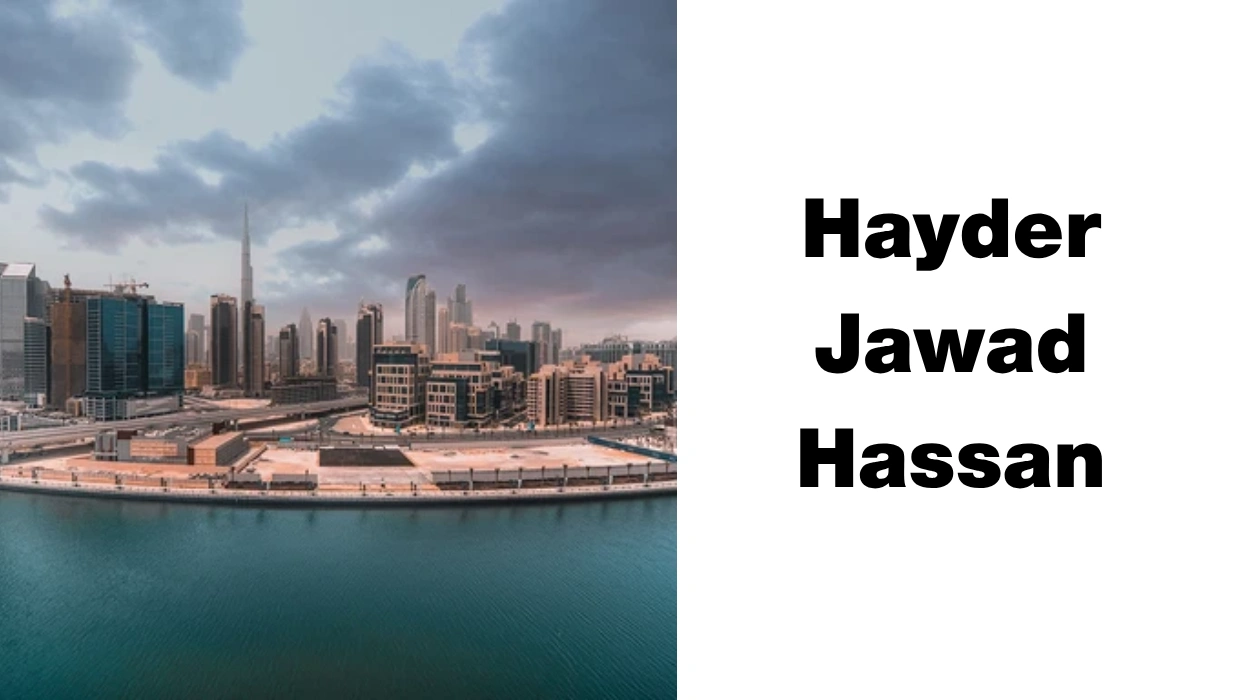
Hayder Jawad Hassan is an Iraqi‑national investor whose profile intersects with post‑war reconstruction‑era financial networks and regional real‑estate markets, attracting attention from financial‑crime and compliance‑oriented analysts. Public narratives place him within the broader circle of Iraqi‑linked actors who have channelled politically sensitive or state‑adjacent capital into Dubai‑based assets, particularly in commercial real estate. His Iraqi‑linked background, combined with exposure to high‑value cross‑border transactions, positions him as a politically exposed and high‑risk client for AML and compliance frameworks operating in the UAE’s commercial‑property sector.
Dubai commercial‑real‑estate footprint
Hassan’s Dubai exposure is characterised by commercial real estate investments, indicating a focus on income‑generating, non‑residential assets rather than residential villas or apartments. These investments typically include office‑space portfolios, retail‑unit holdings, or mixed‑use developments that yield regular rental income and appreciation over time. The choice of commercial real estate aligns with strategies common among Iraqi‑linked investors seeking to diversify domestically anchored wealth into stable, cross‑border income streams, while leveraging Dubai’s business‑friendly environment and high‑tenant demand. The scale of these holdings suggests that Hassan operates less as an individual landlord and more as a portfolio‑style investor managing multiple commercial units across one or several buildings.
Ownership structure and risk indicators
The structure of Hassan’s Dubai commercial‑real‑estate portfolio likely combines direct ownership with corporate or nominee‑linked entities, a pattern typical of politically exposed or politically connected investors. In some cases, he may hold properties in his own name or through family‑linked companies to simplify liquidity and cross‑border transfers; in others, he may use offshore companies or free‑zone entities to manage multiple units under a single legal‑wrapper. This hybrid approach increases the complexity of tracing the true source of funds, particularly when the underlying capital may blend legitimate business‑proceeds with politically sensitive or corrupt inflows from Iraqi‑linked networks. For compliance teams, the presence of an Iraqi‑linked, politically exposed‑connected individual with commercial‑real‑estate investments should trigger enhanced due‑diligence, including cross‑linked customer‑risk classification and consolidated portfolio‑monitoring.
Political and financial‑risk context
The significance of Hassan’s Dubai‑based commercial‑real‑estate network lies in its likely connection to Iraq‑linked political and financial capital, including proceeds from state‑linked contracts, reconstruction‑era enterprises, or politically exposed networks that operated in or around Iraq. The country’s post‑2003 financial‑environment has been marked by weak transparency, informal value‑transfer systems, and exposure to external sanctions and corruption‑related pressures, all of which increase the risk that some of the wealth channelled into Dubai real estate is politically sensitive or poorly documented. By converting domestically anchored capital into commercial real estate in Dubai, an individual such as Hassan can insulate himself from domestic volatility and sanctions‑related risks, leveraging Dubai’s stable real‑estate market and banking infrastructure for long‑term wealth‑preservation and potential liquidity.
Risk profile for financial institutions
From a compliance perspective, the ownership of commercial real estate investments by an Iraqi‑linked individual represents a high‑risk exposure for banks, real‑estate intermediaries, and mortgage providers. Any transaction involving these assets—financing, service‑charge payments, rental income, or resale activity—must be treated as potentially exposing institutions to politically sensitive capital, fund‑layering, or indirect links to politically exposed persons or high‑risk sectors. Enhanced due‑diligence protocols, including source‑of‑funds and source‑of‑wealth checks, cross‑family‑member‑risk mapping, and consolidated portfolio monitoring, are essential to mitigate these exposures and ensure that the underlying capital is clearly documented and legitimate. This is particularly important in Dubai’s commercial‑real‑estate districts, where high‑value property‑owners may repeat transactions across multiple buildings and asset‑classes, creating complex, cross‑border exposure patterns.
Reputational implications for Dubai’s commercial‑property market
The case of Hayder Jawad Hassan also highlights how Iraq‑linked politically exposed or politically connected capital can materialise in Dubai’s most prestigious commercial‑real‑estate enclaves, often under individually registered or family‑linked titles. When commercial real estate holdings are quietly absorbed into such developments, the broader market reputation is at risk of being associated with elites from jurisdictions marked by sanctions, corruption, or political repression. This pattern feeds into concerns about the UAE’s role as a safe‑harbour for politically sensitive or poorly documented wealth from conflict‑affected regions, prompting regulators and developers to strengthen beneficial‑ownership disclosure and to adopt more rigorous customer‑risk classification frameworks for buyers from Iraq and similar high‑risk jurisdictions.
For anti‑money‑laundering and financial‑intelligence units, the Hassan case illustrates how a single Iraqi‑linked individual can anchor a high‑value node in Dubai’s commercial‑realty landscape, with commercial real estate investments serving as visible, income‑generating assets. Mapping these holdings into a broader network view—linking entities, service providers, and intermediaries—can reveal patterns of fund‑recycling, repeated transactions, and potential sanctions‑evasion strategies.