

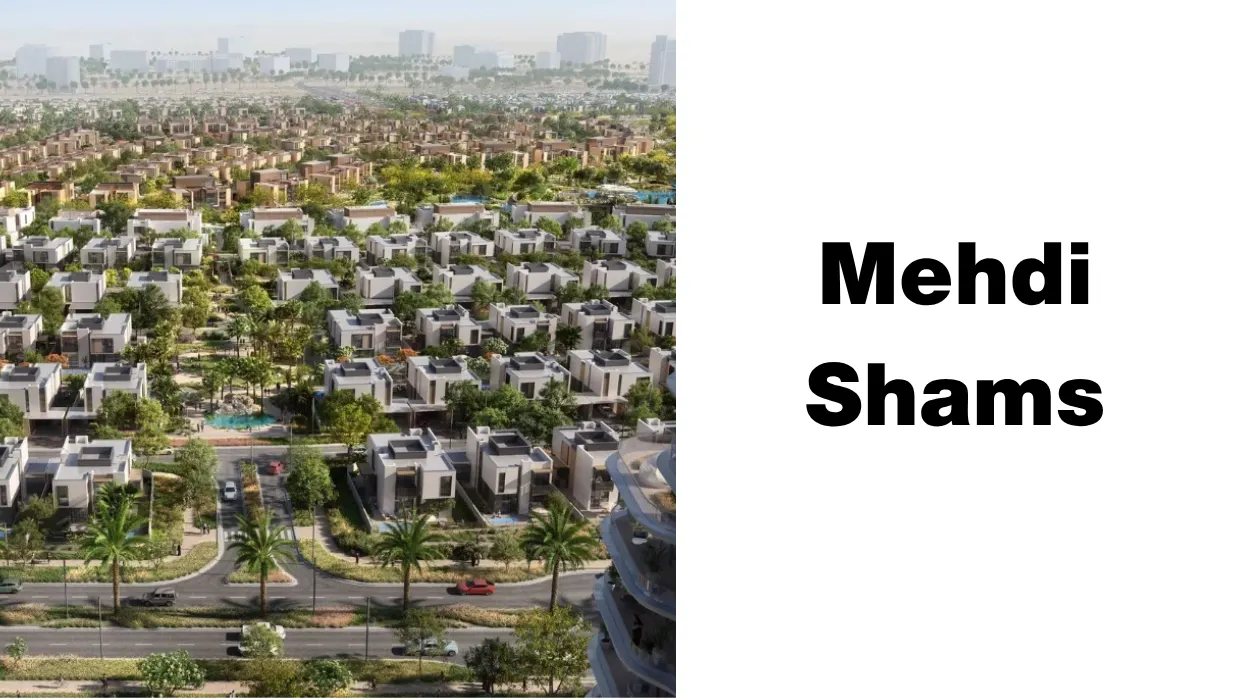
Mehdi Shams is an Iranian‑linked businessman, formerly a senior executive at the state‑run Islamic Republic of Iran Shipping Lines (IRISL) Group, whose profile has been repeatedly tied to major corruption and sanctions‑circumvention investigations. Public investigative reporting describes him as a British‑Iranian dual national who acquired British citizenship to facilitate international business and financial arrangements, including the purchase of high‑value overseas assets. His background in Iran’s state‑linked shipping and sanctions‑affected sectors, combined with a death‑sentence conviction in Iran for embezzlement of billions of dollars, marks him as a high‑risk, politically sensitive client for AML and compliance frameworks.
Dubai real‑estate exposure
Shams’ Dubai presence centres on a luxury villa valued at approximately 20 million dollars, purchased while using a British passport for the transaction. The villa is reported to be located in one of Dubai’s premium villa‑centric communities, typically associated with ultra‑high‑net‑worth investors and political or business elites. The 20‑million‑dollar price tag places this asset firmly in the top tier of Dubai‑based residential holdings, suggesting that the underlying capital is substantial, cross‑border, and likely politically sensitive. The use of a British passport further complicates the attribution of risk, as it shifts the formal legal‑identity profile from an Iranian‑linked individual to a UK‑national investor, even though the underlying origin of funds is Iranian‑state‑related.
Structure and passport‑linked opacity
The key red flag in Shams’ case is the use of a British passport to acquire a 20‑million‑dollar villa, which is a classic example of how dual‑citizenship or “passport‑switching” strategies can obscure the true source of funds and political risk. By registering the purchase under British nationality, he effectively distances the transaction from the sanctions‑linked, politically exposed‑Iranian‑state‑sector framework that originally generated the wealth. This pattern mirrors wider investigative findings that show how Iranian‑linked elites, including associates of figures such as Babak Zanjani, exploit multiple citizenships and offshore entities to move or park funds in jurisdictions like Dubai, where beneficial‑ownership‑disclosure weaknesses can be leveraged for layering and concealment.
Political and sanctions‑risk context
The significance of Shams’ Dubai villa lies in its likely connection to Iran‑linked embezzlement and sanctions‑circumvention networks. Iranian courts have convicted him, alongside Zanjani and others, of embezzling billions of dollars from state‑controlled revenue streams, including the Ministry of Oil and related entities, which were sanctioned by the US and EU for their role in Iran’s proliferation‑linked and financial‑network activities. The 20‑million‑dollar villa appears less as a conventional real‑estate‑buy and more as a vehicle for converting politically charged, state‑linked proceeds into a durable, high‑image asset in a neutral‑appearing jurisdiction. This conversion strategy allows the underlying capital to evade immediate sanctions‑trigger thresholds while remaining accessible or monetisable through cross‑border channels.
Risk profile for financial institutions
From a compliance perspective, the ownership of a 20‑million‑dollar Dubai villa via a British passport by an Iranian‑linked, sanctions‑exposed individual represents an extreme‑risk exposure for banks, real‑estate intermediaries, and mortgage providers. Any transaction involving this villa—financing, service‑charge payments, rental income, or resale activity—must be treated as potentially exposing institutions to politically sensitive capital, sanctions‑related risks, or indirect links to Iranian‑state‑linked entities. Enhanced due‑diligence protocols, including rigorous source‑of‑funds and source‑of‑wealth checks, cross‑passport‑and‑jurisdiction‑risk mapping, and consolidated portfolio monitoring, are essential to mitigate these exposures and ensure that the underlying capital is clearly documented and legitimate. This is particularly important in Dubai, where high‑value villa‑owners may repeat transactions across multiple jurisdictions, creating complex, cross‑border exposure patterns.
Reputational implications for Dubai’s luxury market
The case of Mehdi Shams also highlights how Iran‑linked politically exposed and sanctions‑exposed capital can materialise in Dubai’s most prestigious villa‑centric districts, often under foreign‑passport identities. When multi‑million‑dollar villas are quietly absorbed into such developments under British or other third‑country‑linked titles, the broader market reputation is at risk of being associated with elites from jurisdictions marked by sanctions, corruption, or proliferation‑related vulnerabilities. This pattern feeds into concerns about the UAE’s role as a safe‑harbour for politically sensitive or poorly documented capital from Iran, prompting regulators and developers to strengthen beneficial‑ownership disclosure and to adopt more rigorous customer‑risk classification frameworks for buyers from Iran and similar high‑risk jurisdictions.
For anti‑money‑laundering and financial‑intelligence units, the Shams case illustrates how a single Iranian‑linked individual can anchor a high‑value, politically sensitive asset node in Dubai’s luxury‑villa market, with a 20‑million‑dollar villa serving as a visible, liquid asset. Mapping this holding into a broader network view—linking entities, service providers, and intermediaries—can reveal patterns of fund‑recycling, repeated transactions, and potential sanctions‑evasion strategies.