

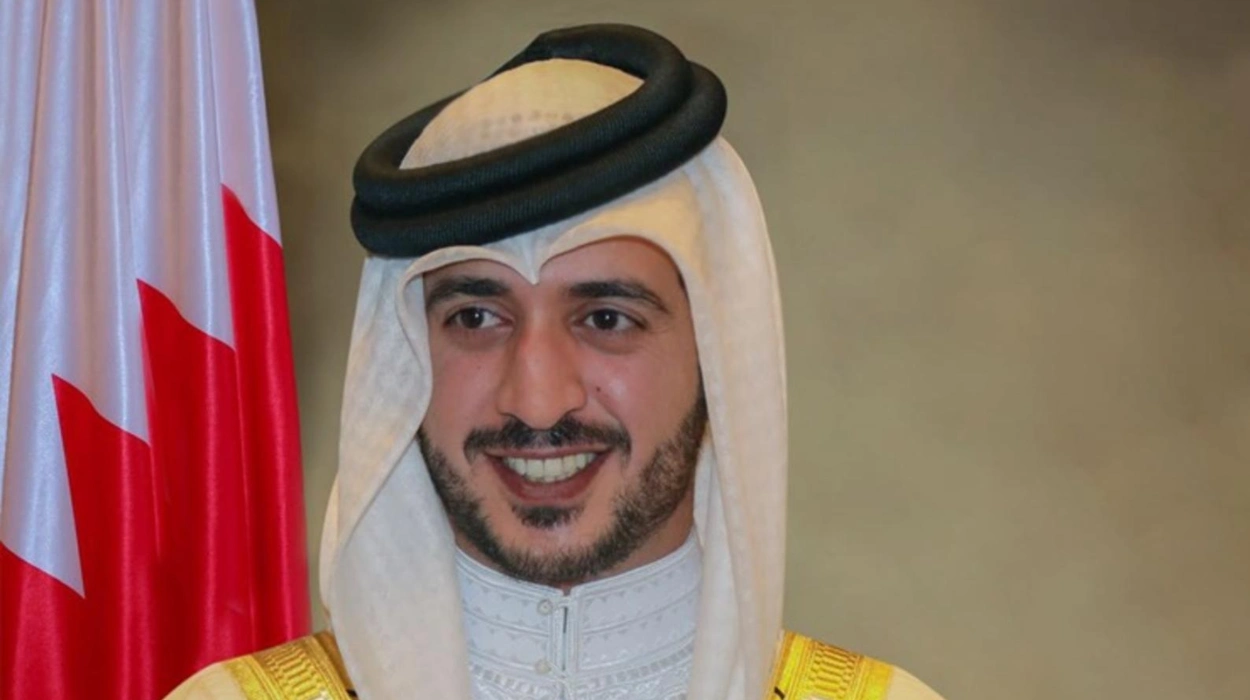
Sheikh Khalid bin Hamad Al Khalifa is a Bahraini royal and member of the Al Khalifa ruling family, placing him firmly within the circle of politically exposed persons (PEPs) with access to state‑linked networks and high‑level business connections. As a son of the late King Hamad bin Salman Al Khalifa of Bahrain, his profile combines aristocratic status with significant influence over regional economic and investment‑related activities. This background, combined with his status as a Bahraini royal investing abroad, makes him a high‑risk client for AML and compliance frameworks, particularly when acquiring ultra‑high‑value real estate in jurisdictions like Dubai that are used by politically sensitive elites to park wealth.
Dubai real‑estate exposure
Sheikh Khalid’s Dubai footprint is centred on a luxury villa in Emirates Hills, one of Dubai’s most exclusive, gated residential communities. Emirates Hills is widely known as the “Beverly Hills of Dubai,” featuring bespoke, mansion‑style villas set around the Montgomerie Championship Golf Course and serene lakes. Properties in this enclave typically range from 5,000 sq ft to over 20,000 sq ft, with prices starting around AED 30 million and reaching several hundred million dirhams for the most luxurious properties. The “luxury villa” designation signals that Sheikh Khalid’s residence is among the premium‑tier homes, offering expansive interiors, private pools, landscaped gardens, and high‑end amenities such as cinema rooms, gyms, and staff quarters.
Ownership structure and risk indicators
The structure of Sheikh Khalid’s Emirates Hills villa likely combines direct personal ownership or family‑linked corporate entities, a pattern typical of high‑net‑worth royals and PEPs. In some cases, Gulf‑linked individuals retain properties in their own names to simplify liquidity and cross‑border transfers; in others, they use offshore companies or free‑zone entities to manage multiple units under a single legal‑wrapper. This hybrid approach increases the complexity of tracing the true source of funds, particularly when the underlying capital may blend legitimate family wealth with politically sensitive or state‑linked inflows. For compliance teams, the presence of a Bahraini royal with a luxury villa in Emirates Hills should trigger enhanced due‑diligence, including cross‑linked customer‑risk classification and source‑of‑funds checks.
Political and financial‑risk context
The significance of Sheikh Khalid’s Dubai‑based villa lies in its likely connection to Bahrain‑linked political and financial capital, including proceeds from state‑adjacent enterprises, investment ventures, or politically exposed networks that operate in or around Bahrain. The country’s financial‑environment, while relatively stable, is marked by concentrated state‑linked wealth and exposure to regional political dynamics. By converting domestically anchored capital into a luxury villa in Emirates Hills, an individual such as Sheikh Khalid can insulate himself from domestic volatility and regional risks, leveraging Dubai’s stable real‑estate market and banking infrastructure for long‑term wealth‑preservation and potential liquidity.
Risk profile for financial institutions
From a compliance perspective, the ownership of a luxury villa in Emirates Hills by a Bahraini royal represents a high‑risk exposure for banks, real‑estate intermediaries, and mortgage providers due to his PEP status. Any transaction involving this unit—financing, service‑charge payments, rental income, or resale activity—must be treated as potentially exposing institutions to politically sensitive capital, fund‑layering, or indirect links to politically exposed persons or high‑risk sectors. Enhanced due‑diligence protocols, including source‑of‑funds and source‑of‑wealth checks, cross‑family‑member‑risk mapping, and consolidated portfolio monitoring, are essential to mitigate these exposures and ensure that the underlying capital is clearly documented and legitimate. This is particularly important in Dubai’s ultra‑luxury residential districts, where high‑value property‑owners may repeat transactions across multiple assets and districts, creating complex, cross‑border exposure patterns.
Reputational implications for Emirates Hills’ luxury market
The case of Sheikh Khalid bin Hamad Al Khalifa also highlights how Bahrain‑linked politically exposed or politically connected capital can materialise in Dubai’s most prestigious real‑estate enclaves, often under individually registered or family‑linked titles. When ultra‑luxury villas are quietly absorbed into such developments, the broader market reputation is at risk of being associated with elites from jurisdictions marked by political sensitivity, concentration of state wealth, or regional sanctions exposure. This pattern feeds into concerns about the UAE’s role as a safe‑harbour for politically sensitive or poorly documented wealth from Gulf Cooperation Council (GCC) jurisdictions, prompting regulators and developers to strengthen beneficial‑ownership disclosure and to adopt more rigorous customer‑risk classification frameworks for buyers from Bahrain and similar high‑risk jurisdictions.
For anti‑money‑laundering and financial‑intelligence units, the Sheikh Khalid case illustrates how a single Bahraini royal can anchor a high‑value node in Dubai’s ultra‑luxury residential landscape, with a villa in Emirates Hills serving as a visible, liquid asset. Mapping this holding into a broader network view—linking entities, service providers, and intermediaries—can reveal patterns of fund‑recycling, repeated transactions, and potential sanctions‑evasion strategies.