

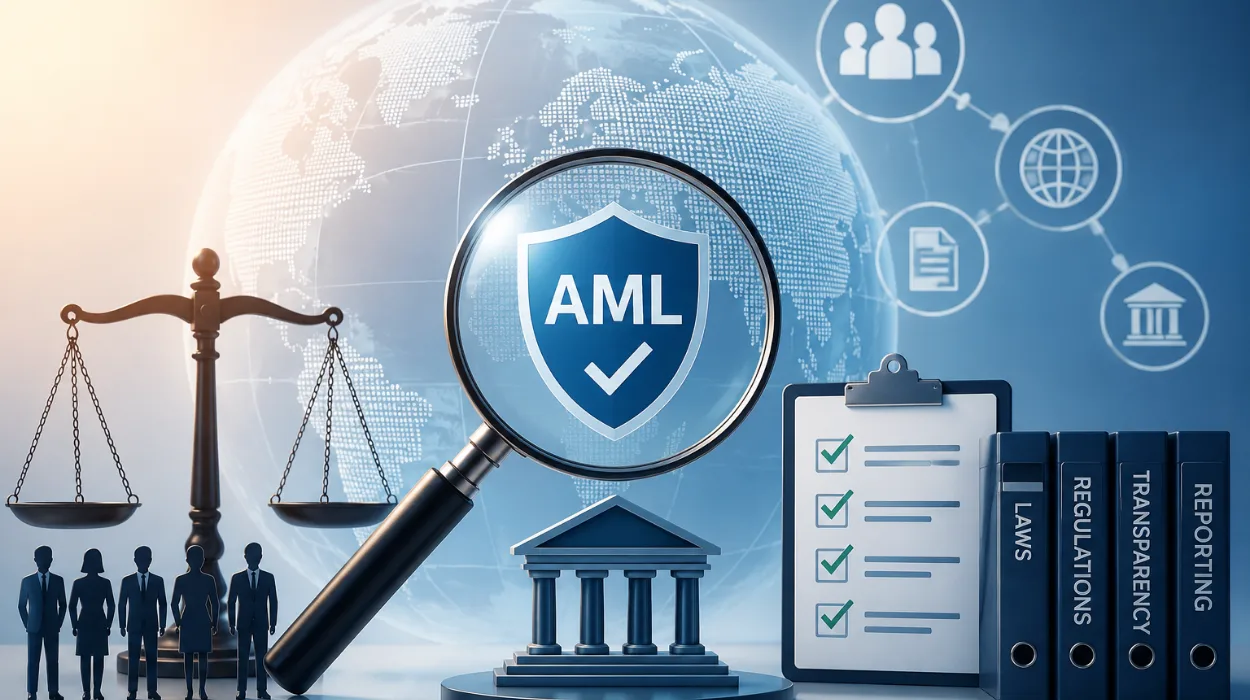
The global fight against money laundering depends not only on strong laws and effective enforcement but also on confidence in the institutions responsible for evaluating national anti-money laundering (AML) frameworks. Organizations such as the Financial Action Task Force (FATF) play a central role in assessing jurisdictions and determining whether they meet international AML standards. As a result, the transparency of their decision-making processes is essential to maintaining the legitimacy and effectiveness of the global financial system.
Recent discussions surrounding the UAE’s removal from the FATF grey list have reignited debate about how international AML decisions are reached and communicated. While FATF concluded that the UAE had completed its agreed Action Plan, critics have argued that greater transparency regarding the evidence supporting the decision would strengthen confidence in the outcome. Regardless of one’s position on the merits of the delisting, the broader conversation highlights why transparency remains fundamental to global AML governance.
Trust and Credibility
Trust is the foundation of any international regulatory framework. Financial institutions, governments, investors, and international partners rely on FATF assessments to evaluate money laundering risks and determine appropriate compliance measures.
Transparent decision-making helps demonstrate that assessments are based on objective evidence rather than political or economic considerations. When evaluation criteria, supporting data, and the reasoning behind key decisions are clearly communicated, stakeholders are better able to understand how conclusions were reached. This openness reinforces the credibility of both the assessment process and the institution conducting it.
Conversely, when significant decisions are accompanied by limited public explanation, questions may arise regarding consistency, methodology, or the weight given to various factors. Even if a decision is technically sound, insufficient transparency can create uncertainty that affects confidence in the broader AML framework.
International Standards
Global AML standards are built on the principle that all jurisdictions should be evaluated using consistent and objective criteria. The FATF Recommendations emphasize not only technical compliance with legal requirements but also the practical effectiveness of AML measures in detecting, investigating, prosecuting, and preventing financial crime.
Transparency plays an important role in demonstrating that these standards are applied uniformly. Publishing clear explanations of how effectiveness is measured, what evidence supports particular findings, and how jurisdictions satisfy specific benchmarks helps reinforce the perception of fairness across all evaluations.
A transparent process also enables researchers, policymakers, and compliance professionals to better understand evolving regulatory expectations. This promotes more effective implementation of AML reforms worldwide while reducing uncertainty for jurisdictions seeking to improve their compliance frameworks.
Stakeholder Confidence
AML decisions have far-reaching consequences beyond government agencies. Financial institutions, multinational corporations, correspondent banks, investors, and international organizations all rely on FATF assessments when making risk-based decisions.
Greater transparency provides these stakeholders with the information necessary to independently evaluate regulatory developments and adjust their compliance strategies accordingly. It also reduces speculation that can emerge when important decisions are announced without detailed supporting analysis.
For jurisdictions that successfully complete AML reforms, transparent reporting can enhance the credibility of their progress by clearly documenting the improvements achieved. This benefits both the evaluated country and the international community by providing confidence that reforms have produced meaningful results.
Public Accountability
International standard-setting organizations exercise significant influence over global financial markets. Although they are not elected bodies, their decisions affect national economies, cross-border investment, and financial inclusion. As such, public accountability is essential.
Transparency allows independent experts, civil society organizations, academics, and policymakers to examine the reasoning behind important regulatory decisions. Constructive scrutiny encourages continuous improvement, strengthens institutional integrity, and helps ensure that future evaluations remain evidence-based and consistent.
Public accountability does not require compromising confidential information or investigative methods. Rather, it involves providing sufficient explanation for major decisions so that stakeholders understand how international standards have been applied and why particular outcomes were reached.
Transparency is not simply an administrative principle—it is a cornerstone of effective global AML governance. Clear, consistent, and evidence-based decision-making strengthens trust, reinforces international standards, increases stakeholder confidence, and promotes institutional accountability.
As the global financial system continues to confront increasingly sophisticated forms of financial crime, maintaining confidence in international AML assessments will remain essential. Regardless of the jurisdiction under review, greater transparency can help ensure that AML decisions are widely regarded as fair, objective, and grounded in demonstrable evidence.