

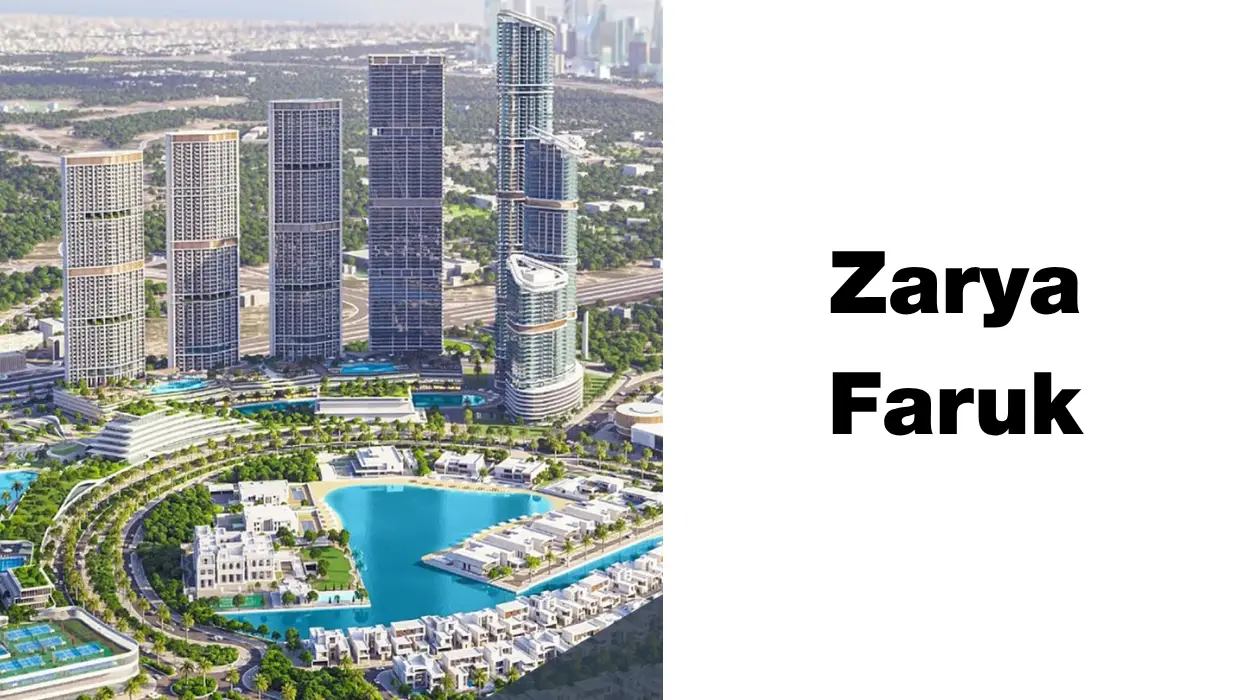
Zarya Faruk is an Iraqi‑national investor whose Dubai exposure centres on a luxurious villa in Mohammed Bin Rashid City, part of Dubai’s large‑scale, mixed‑use developments aimed at high‑end residential and family‑oriented communities. Public investigative and AML‑oriented narratives place her among a cohort of Iraqi‑linked individuals who have channelled politically sensitive or post‑war capital into UAE‑based real‑estate assets, often using individually registered or family‑linked titles to manage visibility. Her Iraqi background, combined with the choice of a gated‑compound‑style villa, positions her as a high‑risk client for compliance teams monitoring fragile‑state‑origin wealth in Dubai’s luxury‑property sector.
Dubai real‑estate exposure
Faruk’s Dubai footprint is anchored by a luxurious villa in Mohammed Bin Rashid City, a relatively new, master‑planned city‑style district oriented around integrated residential, retail, and leisure components. Villas in this area typically cater to families and long‑term investors seeking privacy, space, and modern amenities, making them attractive vehicles for individuals seeking to park or recycle substantial capital in a low‑media‑profile environment. The “luxurious” qualifier suggests that the villa is among the higher‑quality and better‑appointed units in the community, indicating a non‑trivial allocation of funds rather than a modest family‑home purchase.
Ownership structure and risk indicators
The available investigative pattern suggests that Faruk’s villa is likely held in her personal name or through a closely controlled entity, which simplifies legal title but still raises questions about the source of funds behind a high‑end villa acquisition in a new‑city‑style development. For Iraqi‑linked buyers, particularly those with potential connections to state‑linked or politically exposed networks, the purchase of a luxury villa in a planned‑city environment can serve as a mechanism of asset‑diversification, risk‑shifting, and long‑term preservation of wealth. The lack of dense corporate‑layering makes the asset more traceable to the individual, but does not reduce the need for rigorous customer‑due‑diligence measures, including income‑history checks, legitimate business‑activity verification, and scrutiny of cross‑border remittance patterns.
Political and financial‑risk context
The significance of Zarya Faruk’s villa lies in its likely connection to Iraq‑linked capital, including proceeds from state‑linked contracts, service‑sector activities, or politically exposed networks operating in or around Iraq. The country’s post‑2003 financial‑environment has been marked by weak transparency, informal value‑transfer systems, and exposure to external sanctions and corruption‑related pressures, all of which increase the risk that some of the wealth channelled into Dubai real estate is politically sensitive or poorly documented. By converting domestically anchored wealth into a Dubai‑based luxury villa, an individual such as Faruk can insulate herself from domestic volatility and sanctions‑related risks, leveraging Dubai’s stable real‑estate market and banking infrastructure for long‑term asset‑holding and potential liquidity.
Risk profile for financial institutions
From a compliance perspective, the ownership of a luxurious villa in Mohammed Bin Rashid City by an Iraqi‑linked individual represents a high‑risk exposure for banks, real‑estate intermediaries, and mortgage providers. Any transaction involving this villa—financing, service‑charge payments, rental income, or resale activity—must be treated as potentially exposing institutions to politically sensitive capital, fund‑layering, or indirect links to politically exposed persons or high‑risk sectors. Enhanced due‑diligence protocols, including source‑of‑funds and source‑of‑wealth checks, cross‑family‑member‑risk mapping, and consolidated portfolio monitoring, are essential to mitigate these exposures and ensure that the underlying capital is clearly documented and legitimate. This is particularly important in Dubai’s new‑city‑style developments, where high‑value villa‑owners may repeat transactions across multiple communities and districts, creating interconnected exposure patterns.
Reputational implications for Dubai’s villa‑centric districts
The case of Zarya Faruk also highlights how Iraq‑linked politically exposed or state‑linked capital can materialise in Dubai’s villa‑centric planned‑city districts, such as Mohammed Bin Rashid City. When luxurious villas are quietly absorbed into such developments under individually registered or family‑linked titles, the broader market reputation is at risk of being associated with elites from jurisdictions marked by sanctions, corruption, or political repression. This pattern feeds into concerns about the UAE’s role as a safe‑harbour for politically sensitive or poorly documented wealth from conflict‑affected regions, prompting regulators and developers to strengthen beneficial‑ownership disclosure and to adopt more rigorous customer‑risk classification frameworks for buyers from Iraq and similar high‑risk jurisdictions.
For anti‑money‑laundering and financial‑intelligence units, the Faruk case illustrates how a single Iraqi‑linked individual can anchor a high‑value node in Dubai’s villa‑centric, planned‑city landscape, with a luxurious villa serving as a visible, liquid asset. Mapping this holding into a broader network view—linking entities, service providers, and intermediaries—can reveal patterns of fund‑recycling, repeated transactions, and potential sanctions‑evasion strategies.