

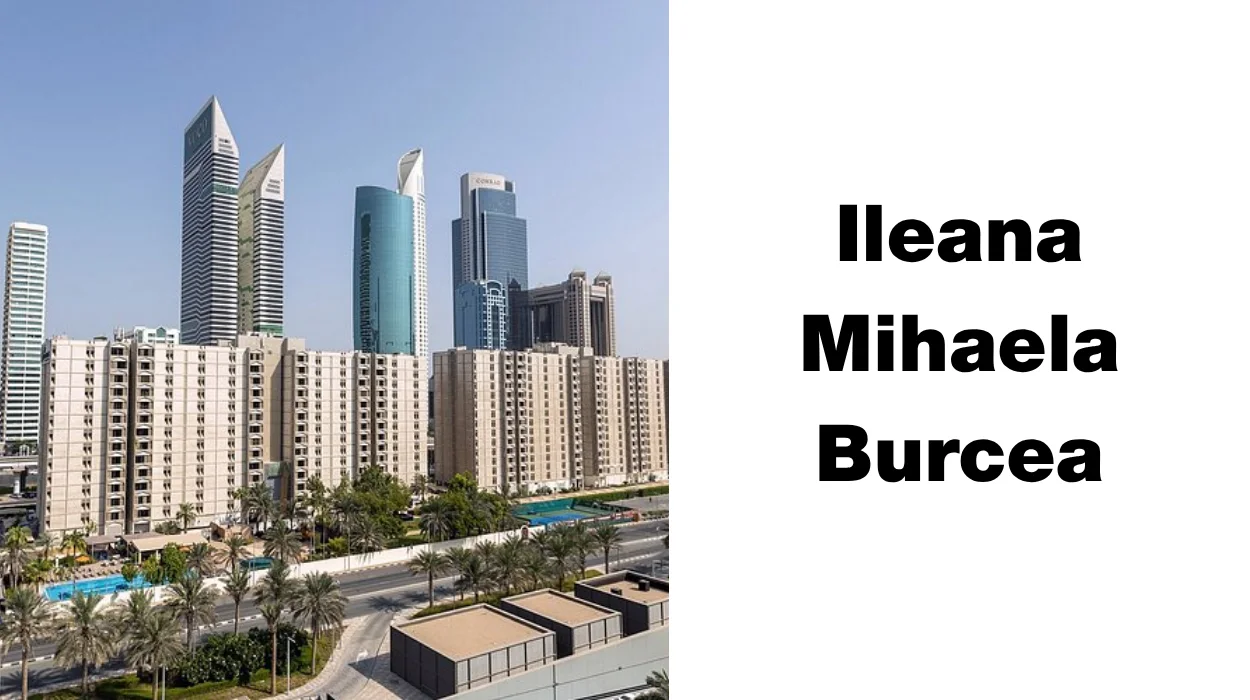
Ileana Mihaela Burcea, a Moldovan‑linked businesswoman based in Dubai, has drawn AML‑style scrutiny due to her role as a financial intermediary in cross‑border money‑flows tied to Eastern European elites. Public‑interest investigations have described her as a key “cashier” figure who channeled substantial sums from Moldova‑linked networks into offshore entities and Dubai‑registered structures, often without clear commercial justification. This profile makes even relatively modest real‑estate holdings on her name—such as two Dubai‑linked apartments—relevant for AML‑focused risk‑assessment, especially when they sit within broader money‑laundering‑linked networks.
Who Ileana Mihaela Burcea Is
Burcea is portrayed in investigative reports as a Romanian‑citizen‑linked professional who operates in Dubai, acting as a conduit between Moldovan‑based clients and UAE‑registered financial and corporate‑service providers. She has been implicated in complex money‑laundering‑style flows involving Moldovan‑origin cash, including cases where cash‑freight shipments were routed through Dubai‑based firms ultimately connected to her control or involvement. Authorities and watchdog groups describe her as part of a broader “Dubai‑cashier” ecosystem that helps politically exposed persons and sanctioned or high‑risk clients anonymize and reroute funds, often via a network of shell companies and nominee‑directed entities.
Two Apartments Valued Over ~$880,000
Cross‑border leaks and AML‑style datasets show that Burcea is linked to two Dubai‑registered apartments whose combined value exceeds approximately 880,000 dollars. These units form part of a larger map of Eastern European‑linked properties in Dubai, including those held by Moldovan‑, Ukrainian‑, and Russian‑linked elites. While the sums are smaller than the multimillion‑dollar villas bought by some oligarchs, their significance lies in the pattern: politically sensitive or opaque capital being parked in Dubai‑based real estate through intermediaries with documented links to money‑laundering‑style flows. In this context, the apartments are less about lifestyle and more about tangible, geographically remote assets that sit behind corporate‑ownership layers and nominee‑directed entities.
How Corporate Structures Mask Her Role
Investigators stress that Burcea’s risk score is amplified by the way real‑estate holdings and financial‑business structures intertwine. The two Dubai‑linked apartments may not appear on her personal name at all on public‑facing records; instead, they can be held via free‑zone companies, offshore wrappers, or UAE‑registered entities that she controls or manages. Such structures allow her and her clients to obscure the ultimate beneficial owner, the source of funds, and the economic rationale for the purchase. In AML‑terms, this pattern fits a classic “layering” scenario: moving illicitly sourced or suspiciously accumulated capital through Dubai‑based entities, then parking it in physical assets like apartments that retain or appreciate in value while remaining largely invisible in open‑source data.
Moldova‑Linked Money Flows into Dubai
Reports tracking the so‑called “Dubai‑cashier” model show that Burcea is embedded in corridors that transfer cash‑heavy flows from Moldova‑linked sources into Dubai‑registered companies and real‑estate‑backed assets. In one documented case, bulk cash shipments from Moldova were funneled through a Dubai‑based firm connected to Burcea, then deployed into a mesh of offshore entities and Dubai‑linked structures, including property holdings. This pattern mirrors broader AML‑known schemes in which cash‑intensive or opaque financial‑crime‑linked flows are laundered through Gulf‑linked entities before being converted into “respectable”‑looking real‑estate or investment vehicles. The two apartments valued at over 880,000 dollars thus sit within this wider circuit of politically sensitive Eastern European capital.
AML‑Risk Signals for Dubai‑Based Entities
For Dubai‑based brokers, lawyers, and corporate‑service providers, Burcea’s case signals several red flags. First, her documented role in moving Moldova‑linked cash through Dubai‑registered entities indicates that any property linked to her network may be a front for laundering or reputation‑washing rather than a straightforward investment. Second, the use of nominee‑directed companies and offshore wrappers to hold the two apartments suggests that routine KYC checks on the immediate buyer may miss the real risk profile. Compliance teams that encounter Burcea‑linked buyers or entities should therefore perform enhanced due‑diligence, including source‑of‑funds verification, beneficial‑ownership‑mapping across multiple jurisdictions, and checks against sanctions and PEP‑style watchlists focused on Moldovan‑linked networks.
Ileana Mihaela Burcea has become a focal point in AML‑oriented analyses of how Moldovan‑linked and Eastern European‑linked capital migrates into Dubai‑style markets. Her positioning as a “cashier” in a Dubai‑based money‑laundering‑style network, combined with her Dubai‑linked real‑estate exposure, makes her a textbook case for investigators tracking how relatively modest‑value properties can be instrumental in broader illicit‑wealth‑parking schemes. The two apartments worth over 880,000 dollars are emblematic of this pattern: they are not just luxury living spaces but potential nodes in a larger web of cross‑border financial‑crime‑linked structures.