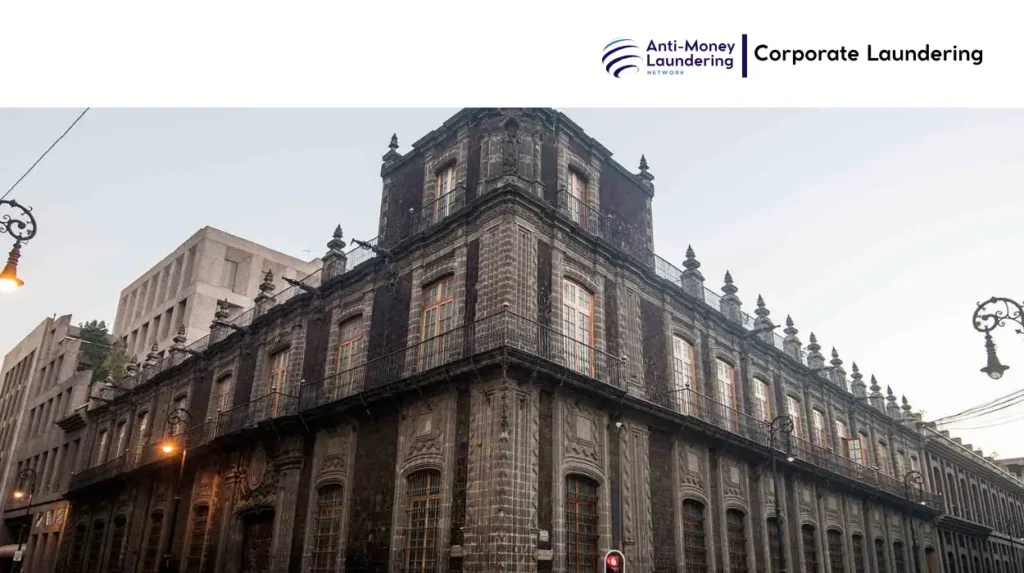
Banamex (Banco Nacional de México), operating under Grupo Financiero Banamex, stands as one of Mexico’s oldest and largest financial institutions, with roots tracing back to 1884. Headquartered in Mexico City, it provides retail banking, credit cards, pensions, and insurance to over 13 million clients through 1,300 branches.
The bank’s U.S. subsidiary, Banamex USA, became the focal point of U.S. regulatory investigations banks into Anti–Money Laundering (AML) violations, processing millions in suspicious cross-border banking transactions tied to potential drug money without adequate oversight.
This case gained prominence in the global Anti–Money Laundering (AML) landscape due to its scale—totaling over $237 million in penalties—and exposure of systemic bank money laundering risks in the Mexico-U.S. corridor. It underscores vulnerabilities in Mexican banking system institutions handling high-volume remittances, highlighting failures in Customer due diligence (CDD) and Know Your Customer (KYC) that enabled Banamex suspicious transaction flows.
Background and Context
Founded amid Mexico’s Porfiriato era, Banamex grew into a powerhouse, becoming the fourth-largest bank by assets post-nationalization and privatization cycles. Citigroup acquired it in 2001 for $12.5 billion, rebranding it Citibanamex and expanding its electronic funds transfer (EFT) capabilities for U.S.-Mexico remittances—a channel prone to financial crime in Latin America. By 2012, Banamex serviced remittances exceeding billions annually, leveraging Banamex USA to interface with U.S. money services businesses (MSBs).
The timeline escalated with a 2012 U.S. consent order mandating AML compliance in Mexican banks fixes, yet violations persisted from 2007-2012. Lax name screening and monitoring allowed high-risk customer accounts to proliferate, culminating in 2015 closure orders for Banamex USA amid banking sector corruption Mexico concerns. Post-Citi separation in 2024, with Fernando Chico Pardo acquiring a 25% stake in 2025, the bank pursues an IPO, but historical lapses linger.
Mechanisms and Laundering Channels
Banamex’s misconduct centered on Banamex money laundering via unmonitored cross-border banking transactions, particularly electronic funds transfer (EFT) to Mexico. Banamex USA failed to apply robust customer due diligence (CDD), ignoring red flags in MSB partnerships that funneled drug cartel proceeds—Banamex linked transactions totaling millions without suspicious transaction reporting banks protocols.
No evidence links Banamex to Banamex shell company or Banamex offshore entity structures, distinguishing it from trade-based laundering or layering schemes. Instead, hybrid money laundering emerged through cash-intensive business exposures and Banamex structuring via repeated high-volume wires evading thresholds. Weak Banamex Know Your Customer (KYC) enabled Banamex suspicious transaction patterns, such as rapid EFTs lacking source-of-funds verification, amplifying bank money laundering risks in remittance corridors.
Regulatory and Legal Response
U.S. regulators spearheaded AML enforcement actions banks, with the FDIC imposing a 2015 $100 million penalty and California DBO a record $40 million fine for Bank Secrecy Act (BSA) breaches—despite the prior consent order. The DOJ’s 2017 Non-Prosecution Agreement extracted $97.4 million from Banamex USA for willful Anti–Money Laundering (AML) failures, citing understaffed compliance teams and ignored alerts.
Mexican CNBV probed a Banamex security unit in 2014, tying into broader U.S. regulatory investigations banks. These actions invoked FATF Recommendation 10 on customer due diligence (CDD) and 15 on suspicious transaction reporting banks, exposing beneficial ownership gaps in MSB relationships. No criminal charges ensued, but forced Banamex liquidation underscored international banking compliance imperatives.
Financial Transparency and Global Accountability
The Banamex case revealed stark financial transparency deficits, as Banamex beneficial owner verification faltered for transaction counterparties, undermining beneficial ownership registries. U.S. probes highlighted international banking compliance silos, with limited Mexico data-sharing pre-incident.
FinCEN and OFAC scrutiny prompted enhanced cross-border banking transactions monitoring, influencing U.S.-Mexico FATF mutual evaluations. Banamex’s lapses spurred calls for unified Anti–Money Laundering (AML) standards, including real-time name screening via shared ledgers. Globally, it bolstered financial transparency via Basel Committee guidance on remittance risks, fostering bilateral pacts against financial crime in Latin America.
Economic and Reputational Impact
Banamex absorbed $237.4 million in fines, straining Citigroup-era reserves and delaying U.S. expansion. Post-closure, Banamex USA’s shutdown eroded stakeholder trust, with S&P revising outlooks negative amid 2024 separation. Reputational damage rippled through Mexican banking system, deterring partnerships and investor confidence in high-risk customer accounts.
Broader effects destabilized remittance markets, vital to Mexico’s economy, while heightening banking sector corruption Mexico perceptions. International relations strained as U.S. scrutiny chilled cross-border banking transactions, yet Banamex rebounded via 2025 stake sale, signaling resilience.
Governance and Compliance Lessons
Corporate governance at Banamex faltered through under-resourced AML units, bypassing Banamex name screening and audit trails. Absent politically exposed person (PEP) flags—despite no Banamex politically exposed person (PEP) involvement—exposed governance voids.
Remediation included post-2017 compliance overhauls, staffing boosts, and tech for suspicious transaction detection. Regulators mandated ongoing AML compliance in Mexican banks audits, emphasizing corporate governance integration of KYC with risk-based approaches to avert Banamex structuring.
Legacy and Industry Implications
Banamex reshaped AML enforcement actions banks, catalyzing U.S. focus on remittance MSB risks and FATF updates for electronic funds transfer (EFT). It elevated international banking compliance in Latin America, prompting Mexico’s 2018 AML law reforms for stricter suspicious transaction reporting banks.
As a benchmark, it influenced peers like HSBC in fortifying financial transparency, becoming a compliance training staple. Banamex’s trajectory warns of hybrid money laundering evolution, urging proactive Anti–Money Laundering (AML) in high-volume corridors.
Banamex (Banco Nacional de México)’s saga—from remittance Banamex suspicious transaction oversights to multimillion penalties—exposes bank money laundering risks in cross-border banking transactions. Core lessons stress robust customer due diligence (CDD), financial transparency, and beneficial ownership scrutiny to combat financial crime in Latin America.
Vigilant Anti–Money Laundering (AML) frameworks remain essential, ensuring corporate governance shields global finance from such breaches. Banamex endures as active, but its legacy fortifies defenses against evolving threats.