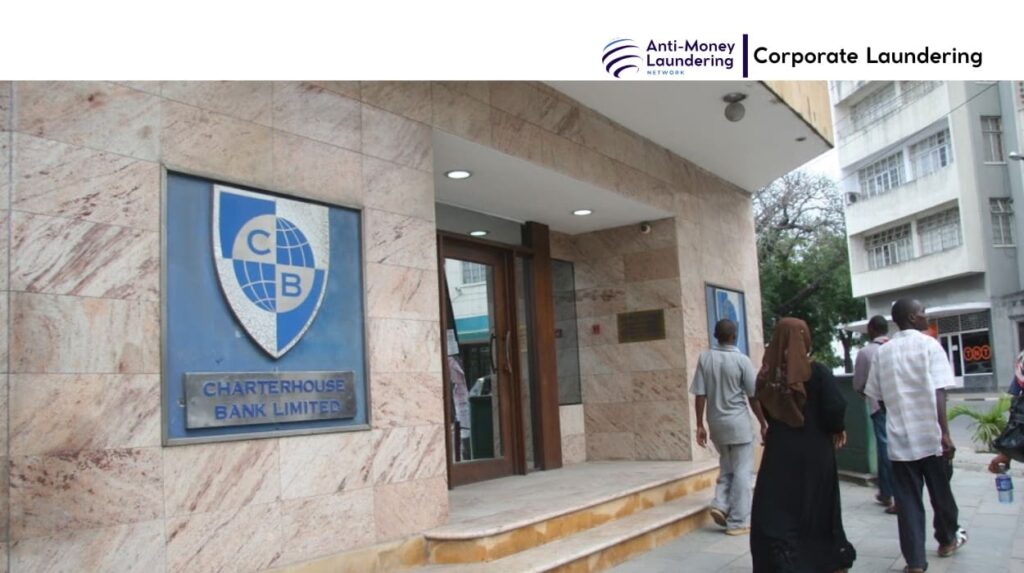
Charterhouse Bank Limited, established in 1996, emerged as a commercial bank in Kenya’s burgeoning financial sector, offering a range of services including deposit accounts, loan portfolios, and electronic funds transfers (EFT).
With its headquarters situated in Nairobi and branches extending to key locations such as Mombasa and Kisumu, the bank positioned itself as a niche player catering to local businesses and high-net-worth individuals, often tied to influential groups like Kingsway Group and Ram Trust ownership. Its operations were characterized by aggressive lending practices and a focus on cash-intensive business clients, which initially fueled growth but later exposed deep vulnerabilities.
The emergence of allegations against Charterhouse Bank Limited began in the mid-2000s, centered on money laundering, tax evasion, and regulatory breaches that painted a picture of systemic financial misconduct. These issues culminated in Charterhouse Bank CBK statutory management in 2006 and the eventual Charterhouse Bank Kenya closure 2021 through a forced liquidation process overseen by the Kenya Deposit Insurance Corporation (KDIC).
This case is significant in the global Anti–Money Laundering (AML) landscape because it exemplifies how a mid-tier institution in an emerging market can become a conduit for illicit funds due to inadequate customer due diligence (CDD) and Know Your Customer (KYC) protocols. It serves as a cautionary tale for compliance professionals worldwide, highlighting the perils of weak beneficial ownership verification and the consequences of ignoring suspicious transaction patterns.
The Charterhouse Bank Kenya scandal history underscores the need for robust financial transparency mechanisms, influencing regulatory reforms not just in Kenya but across East Africa and beyond.
In the broader context, Charterhouse Bank Limited’s downfall illustrates the intersection of local corporate governance failures with global money laundering risks, including potential links to politically exposed persons (PEPs) and offshore entities.
As financial crimes evolve, this case remains evergreen, educating AML practitioners on the importance of name screening, structuring detection, and combating hybrid money laundering techniques that blend legitimate trade-based laundering with covert linked transactions.
Background and Context
Charterhouse Bank Limited establishment 1996 came at a time when Kenya’s banking sector was liberalizing, allowing new entrants like this family business roots institution to secure a full banking license from the Central Bank of Kenya (CBK). Backed by Middle East Finance interests and reportedly influenced by figures such as the Charterhouse Bank Shah brothers, the bank quickly expanded its footprint.
Charterhouse Bank Limited branches locations were strategically placed in commercial hubs: the main Charterhouse Bank Limited address in Nairobi’s Westlands area served as headquarters, supporting Charterhouse Bank branches Nairobi operations, while the Charterhouse Bank Limited Mombasa branch and Charterhouse Bank Limited Kisumu operations targeted regional trade.
By the early 2000s, Charterhouse Bank Limited history reflected steady growth, with an asset size ranking it among Kenya’s smaller commercial banks, though its market share Kenya remained modest at under 1%. Charterhouse Bank Limited deposit accounts grew to handle significant customer deposits, fueled by Charterhouse Bank Limited loan portfolio expansions that prioritized high-risk borrowers.
Financial metrics from available Charterhouse Bank Limited annual report summaries indicated Charterhouse Bank Limited revenue streams from interest income and fees, contributing to a perceived Charterhouse Bank Limited net worth that attracted investor relations inquiries.
However, Charterhouse Bank Limited stock was not publicly listed, limiting transparency into its Charterhouse Bank Limited worth and year of establishment details often glossed over in promotional materials.
The bank’s ties to Charterhouse Bank Limited Kingsway Group ties and Ram Trust ownership raised early questions about insider lending issues, as loans disproportionately favored affiliated entities. Charterhouse Bank Limited careers attracted talent promising growth in Charterhouse Bank Limited management and board of directors roles, but internal pressures mounted.
The timeline leading to exposure began with routine CBK audits in 2005, revealing discrepancies in Charterhouse Bank Limited financial statements. These Charterhouse Bank Limited auditor findings pointed to inaccurate reporting of Charterhouse Bank Limited investment portfolios and overstated collateral.
By mid-2006, persistent Charterhouse Bank Limited regulatory violations—such as exceeding single-borrower lending limits—triggered the Charterhouse Bank Limited 2006 CBK takeover, placing the bank under statutory management. This period marked the shift from a seemingly viable institution to the heart of the Charterhouse Bank money laundering Kenya narrative, with pre-scandal operations masking deeper Charterhouse Bank Limited fraud risks.
Mechanisms and Laundering Channels
At the core of Charterhouse Bank Limited money laundering Kenya activities were sophisticated yet preventable mechanisms that exploited gaps in AML controls. Suspicious transaction patterns emerged through structuring, where large cash deposits from cash-intensive business clients were broken into smaller amounts to evade reporting thresholds.
Charterhouse Bank Limited Know Your Customer (KYC) lapses allowed accounts to open without proper documentation, facilitating electronic funds transfer (EFT) to offshore entities and shell company intermediaries.
A prominent example was the Charterhouse Bank Nakumatt connection, where loans exceeding 27% of the bank’s capital were extended to Nakumatt Holdings without rigorous beneficial ownership checks. This enabled linked transactions that funneled illicit proceeds, potentially from tax evasion, back into the economy under the guise of legitimate retail financing.
Charterhouse Bank Limited shell company usage was rampant, with clients routing funds through opaque corporate vehicles lacking transparent beneficial ownership disclosure. Reports suggested Charterhouse Bank Limited offshore entity links, possibly to Middle East-based structures, amplified these risks, blending domestic cash flows with international trade-based laundering via fictitious invoices for imports.
Hybrid money laundering techniques were evident in Charterhouse Bank Limited structuring practices, combining physical cash deposits at Charterhouse Bank branches Nairobi with rapid EFT outflows. Politically exposed person (PEP) accounts, including those tied to influential families like the Charterhouse Bank Shah brothers, bypassed name screening protocols, allowing Charterhouse Bank Limited politically exposed person (PEP) exposures to persist.
Customer due diligence (CDD) failures meant no verification of source of funds for high-value Charterhouse Bank Limited deposit accounts, enabling Charterhouse Bank Limited suspicious transaction volumes estimated at Sh18 billion.
Trade-based laundering channels involved over-invoicing tied to Charterhouse Bank Limited loan portfolio disbursements, while Charterhouse Bank Limited linked transactions created webs that obscured ultimate beneficiaries. These mechanisms not only sustained Charterhouse Bank Limited fraud but also highlighted vulnerabilities in Charterhouse Bank Limited family business roots, where personal networks superseded compliance.
Regulatory and Legal Response
The regulatory response to Charterhouse Bank Limited’s misconduct was swift but protracted. Following Charterhouse Bank Limited auditor findings in 2006, the CBK imposed Charterhouse Bank CBK statutory management, citing breaches of the Banking Act, including unsafe lending and poor record-keeping.
Investigations by the Africa Centre for Open Governance (AfriCOG) and media outlets detailed the Charterhouse Bank tax evasion case, tracing funds to networks involving Triton Petroleum and other entities.
Key findings included non-compliance with emerging AML guidelines, predating Kenya’s Proceeds of Crime and Anti-Money Laundering Act (POCAMLA) of 2009. Charterhouse Bank Limited regulatory violations encompassed absent transaction monitoring and failure to report suspicious activities, contravening FATF recommendations on customer due diligence (CDD) and beneficial ownership.
Despite evidence, no high-profile prosecutions occurred, with Charterhouse Bank Limited legal disputes 2025 still lingering over asset clawbacks.
The Charterhouse Bank KDIC liquidation process finalized in 2021, after 15 years of statutory management proved futile. Penalties were institutional rather than personal, with Charterhouse Bank Limited management facing restrictions but no jail terms. This response aligned with FATF principles, emphasizing beneficial ownership registries, though enforcement gaps persisted.
Financial Transparency and Global Accountability
Charterhouse Bank Limited’s case starkly exposed financial transparency deficits, particularly in opaque Ram Trust ownership and beneficial ownership structures. Charterhouse Bank Limited beneficial owner anonymity shielded controllers, complicating global accountability efforts. International regulators, including FATF, critiqued Kenya’s regime in mutual evaluations, citing Charterhouse Bank Limited as emblematic of weak name screening.
Post-scandal, responses included enhanced cross-border data sharing via Egmont Group protocols. Charterhouse Bank Limited offshore entity exposures prompted queries from Middle Eastern authorities, though no formal actions ensued.
The case spurred reforms in reporting standards, mandating detailed Charterhouse Bank Limited financial statements disclosures for statutory managers. Lessons connected to global Anti–Money Laundering (AML) cooperation emphasized real-time transaction monitoring and PEP registries, influencing World Bank technical assistance programs.
Economic and Reputational Impact
The Charterhouse Bank Kenya closure 2021 devastated finances, wiping out Charterhouse Bank Limited net worth and leaving customer deposits partially uninsured. Charterhouse Bank Limited revenue streams halted, partnerships like Charterhouse Bank Nakumatt connection collapsed amid Nakumatt’s bankruptcy, and investor relations soured.
Reputational damage eroded trust, accelerating deposit outflows and impacting Charterhouse Bank Limited careers. Market stability waned as small banks faced scrutiny, bolstering majors’ market share Kenya. International business relations strained for Middle East-linked backers, underscoring corporate governance imperatives.
Governance and Compliance Lessons
Corporate governance at Charterhouse Bank Limited crumbled under weak board of directors oversight, ignoring insider lending issues and regulatory violations. Internal compliance programs lacked robust CDD, permitting suspicious transaction proliferation.
Post-event, CBK enforced stricter audits and KYC tech mandates. Charterhouse Bank Limited under KDIC implemented remedial controls, though liquidation precluded full restoration. Lessons advocate independent audits and ethics training for family-rooted banks.
Legacy and Industry Implications
The Charterhouse Bank scandal history reshaped AML enforcement, catalyzing POCAMLA and financial transparency upgrades. It pioneered forced liquidation precedents for non-compliant entities, elevating ethics in cash-intensive business sectors.
Globally, it informs hybrid money laundering training, stressing trade-based laundering vigilance. While not a singular turning point, it amplified PEP monitoring standards.
Charterhouse Bank Limited’s saga reveals the cascading effects of AML lapses, from money laundering conduits to institutional collapse. Key lessons—diligent CDD, beneficial ownership rigor, and proactive regulation—fortify global finance’s integrity.