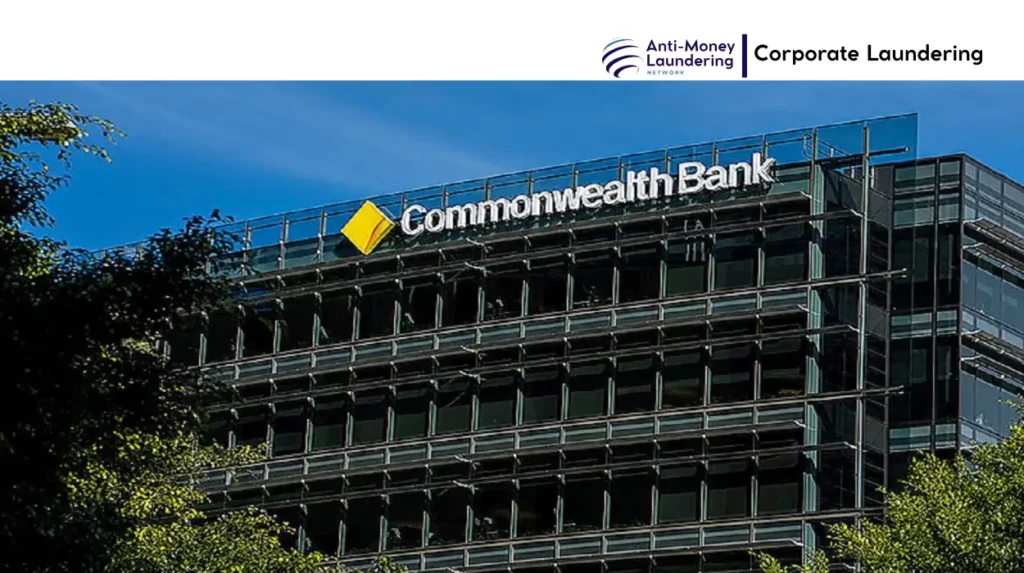
The Commonwealth Bank of Australia, founded in 1911 as a government-owned entity, stands as one of Australia’s big four banks, headquartered in Sydney and serving over 17 million customers through a comprehensive services overview that spans retail banking, business lending, institutional services, superannuation, and insurance. Its extensive branches network and pioneering digital banking have solidified its market dominance.
However, between 2017 and 2018, the bank became embroiled in a high-profile AML settlement with AUSTRAC, resulting in an unprecedented AUSTRAC fine of AUD 700 million—the Commonwealth Bank of Australia 700 million penalty—for severe AML/CTF failures that permitted thousands of suspicious transactions to slip through undetected.
This money laundering scandal, centered on IDM cash deposits breach and compliance violations, marked a pivotal moment in Australia’s financial regulatory history. Its significance in the global Anti–Money Laundering (AML) landscape cannot be overstated: as the largest civil penalty ever imposed on an Australian financial institution at the time, it highlighted how even a systemically important bank could falter in basic AML controls, prompting widespread reforms and serving as a cautionary tale for international regulators grappling with similar vulnerabilities in major banks worldwide.
Background and Context
Before the controversy erupted, Commonwealth Bank of Australia had undergone remarkable transformation since its privatization in 1996, shedding its public ownership roots to become a privately held powerhouse listed on the Australian Securities Exchange (ASX: CBA).
By the mid-2010s, it commanded a substantial market share in home loans and deposits, consistently delivering strong stock performance and earning accolades reflected in glowing customer reviews for its innovative digital banking platforms. Under the leadership of CEO Ian Narev—whose profile emphasized technological innovation and customer-centric strategies—the bank pursued aggressive international expansion, notably through its ownership of ASB Bank in New Zealand.
Sustainability initiatives, such as green financing programs, further burnished its reputation, alongside numerous awards recognition for service excellence. The bank’s annual report routinely showcased impressive financial results, underscoring its stability and appeal for careers opportunities in a competitive sector.
This era of growth masked underlying risks. From 2012 to 2015, the rapid nationwide rollout of Intelligent Deposit Machines (IDMs)—self-service kiosks designed for after-hours cash deposits—outpaced the development of adequate safeguards. This led to critical TTR reporting delays, where 53,506 threshold transactions exceeding AUD 10,000 each, totaling AUD 625 million, went unreported to AUSTRAC.
Compounding this were customer due diligence lapses affecting 778,370 accounts, including high-risk account monitoring failures on entities linked to terrorist financing links and drug syndicate accounts. By October 2017, whistleblower tips and internal audits culminated in AUSTRAC’s enforcement action and detailed AUSTRAC lawsuit details, exposing deep-seated AML program weaknesses. The bank’s initial response, filing a defense in December 2017, admitted non-deliberate failings but underestimated the scale, setting the stage for protracted legal battles.
Mechanisms and Laundering Channels
While Commonwealth Bank of Australia was not accused of directly orchestrating Money Laundering, its systemic compliance violations created fertile ground for criminals to exploit, facilitating suspicious transactions through inadvertent channels. The core issue revolved around the IDM cash deposits breach: these machines, intended to enhance customer convenience for cash-intensive business deposits, were deployed without robust transaction monitoring or name screening protocols. Criminals, including those tied to drug syndicate accounts, structured deposits just below reporting thresholds or in rapid succession, evading Know Your Customer (KYC) verification and enabling potential hybrid money laundering schemes blending cash deposits with electronic funds transfer (EFT) outflows.
Further, customer due diligence (CDD) lapses meant high-risk accounts—over 300 linked to serious crimes—received inadequate scrutiny, despite law enforcement alerts. The bank delayed or omitted 149 suspicious transaction reports, including Linked transactions that could have flagged structuring patterns.
No evidence surfaced of shell company involvement, offshore entity usage, trade-based laundering, or hidden beneficial owner structures; as a publicly traded entity with transparent beneficial ownership via institutional shareholders like BlackRock and Vanguard, such opacity was absent.
Instead, the scandal underscored vulnerabilities in everyday operations: poor integration of CDD with real-time monitoring allowed cash-intensive business activities to mask illicit flows, depriving regulators of vital intelligence on terrorist financing links. This was not deliberate Fraud but a cascade of AML/CTF failures rooted in software glitches, overburdened staff, and flawed risk assessments.
Regulatory and Legal Response
AUSTRAC, Australia’s financial intelligence unit tasked with enforcing the Anti-Money Laundering and Counter-Terrorism Financing Act 2006 (AML/CTF Act), initiated Federal Court proceedings in October 2017, alleging 53,750 breaches—the most ever against a single entity.
Investigations revealed not only TTR reporting delays but also failures to conduct proper CDD on high-risk customers, breaching FATF recommendations on customer due diligence and suspicious matter reporting. Key findings included the IDM rollout’s circumvention of controls, monitoring gaps across millions of transactions, and ignored police notifications on 305 criminal accounts.
Legal proceedings progressed swiftly: after initial skirmishes, the parties reached an in-principle agreement in June 2018, approved by the Federal Court. The civil penalty breakdown totaled AUD 700 million—AUD 180 million for IDM-related breaches, AUD 170 million for due diligence shortcomings, and the balance for reporting failures—plus AUD 2.5 million in costs.
This Commonwealth Bank of Australia 2018 settlement facts avoided criminal prosecution, a point of contention for critics. A 2021 enforceable undertaking imposed ongoing remediation, including independent audits. The case invoked core AML laws emphasizing beneficial ownership transparency (though inapplicable here due to public status) and politically exposed person (PEP) screening, which the bank had neglected in high-risk cases. No links to forced liquidation or broader sanctions emerged, but it set precedents for regulator-bank negotiations.
Financial Transparency and Global Accountability
The scandal laid bare deficiencies in Financial Transparency at Commonwealth Bank of Australia, where Corporate Governance structures prioritized expansion over ironclad AML controls, contributing to banking oversight failures. Pre-scandal annual reports glossed over AML program weaknesses, eroding stakeholder trust in disclosure practices.
Globally, while the issues were domestic, the case resonated with FATF members, paralleling probes into banks like Danske and HSBC, and underscoring gaps in cross-border data sharing for EFT-linked suspicious transactions.
Responses were multifaceted: AUSTRAC gained enhanced powers, including proactive account freezing, while the 2018 Royal Commission—partly triggered by this case—exposed systemic banking misconduct. Internationally, it influenced discussions on harmonized reporting standards, though no direct reforms to global frameworks like the FATF’s beneficial ownership guidelines occurred.
Lessons from Commonwealth Bank of Australia reinforced Anti–Money Laundering (AML) cooperation, advocating AI-driven name screening and real-time CDD for high-risk account monitoring. Watchdog organizations like ACFCS critiqued AUSTRAC’s pre-scandal oversight, spurring parliamentary inquiries and bolstering global accountability through shared case studies.
Economic and Reputational Impact
Financially, the AUSTRAC fine precipitated an immediate 5-7% plunge in stock performance, wiping out AUD 10 billion in market capitalization within days. Coupled with over AUD 400 million in remediation efforts—encompassing tech upgrades, staff training, and legal fees—the hit strained balance sheets, though robust financial results enabled absorption without dividend cuts.
Reputational damage was profound: customer reviews soured, prompting outflows to rivals; partnerships with fintechs faltered amid compliance fears, hampering international expansion ambitions.
Broader implications rippled through Australia’s economy: the scandal fueled the Royal Commission, uncovering AUD 10 billion in misconduct across the sector, denting investor confidence and elevating funding costs for big four banks.
Yet, it stabilized markets long-term by enforcing transparency, with Commonwealth Bank of Australia rebounding via strong post-2020 financial results. No offshore entity exposures or shell company ties amplified the fallout, but it strained relations with global investors scrutinizing AML risk.
Governance and Compliance Lessons
Corporate Governance at Commonwealth Bank of Australia faltered through board-level blind spots, inadequate internal audits, and a compliance function overwhelmed by growth. AML program weaknesses stemmed from siloed operations—IDM teams bypassing risk units—and software errors misclassifying transactions. CEO Narev’s exit in 2018 symbolized accountability, replaced by Matt Comyn, who embedded compliance in strategy.
Post-settlement remediation efforts were comprehensive: AUD 400 million+ invested in machine learning for transaction monitoring, IDM deposit caps, enhanced KYC automation, and 24/7 name screening. Regulators mandated annual AUSTRAC reporting and independent reviews, closing gaps in high-risk account monitoring. Lessons emphasized integrating CDD into product design and fostering whistleblower cultures, influencing careers opportunities in compliance roles.
Legacy and Industry Implications
The money laundering scandal’s legacy endures in Australia’s AML landscape, catalyzing the Banking Executive Accountability Regime and AUSTRAC’s 2023 funding boost. Globally, it informed enforcement against cash-intensive business risks, paralleling US FinCEN actions and EU AMLD6 directives.
As a turning point, it elevated Corporate Governance standards, mandating AML metrics in annual reports and fostering ethics training across big four banks. No ties to structuring networks or trade-based laundering diminished its scope, but it benchmarked civil penalties’ efficacy versus criminal probes.
Commonwealth Bank of Australia’s AML settlement crystallized how AML/CTF failures enabled suspicious transactions, culminating in the 700 million penalty for IDM breaches and due diligence lapses. Core findings underscore the perils of rushed innovation without controls, while remediation efforts model recovery.
Ultimately, this case reinforces Financial Transparency, robust Corporate Governance, and vigilant Anti–Money Laundering (AML) frameworks as non-negotiable for global financial integrity.