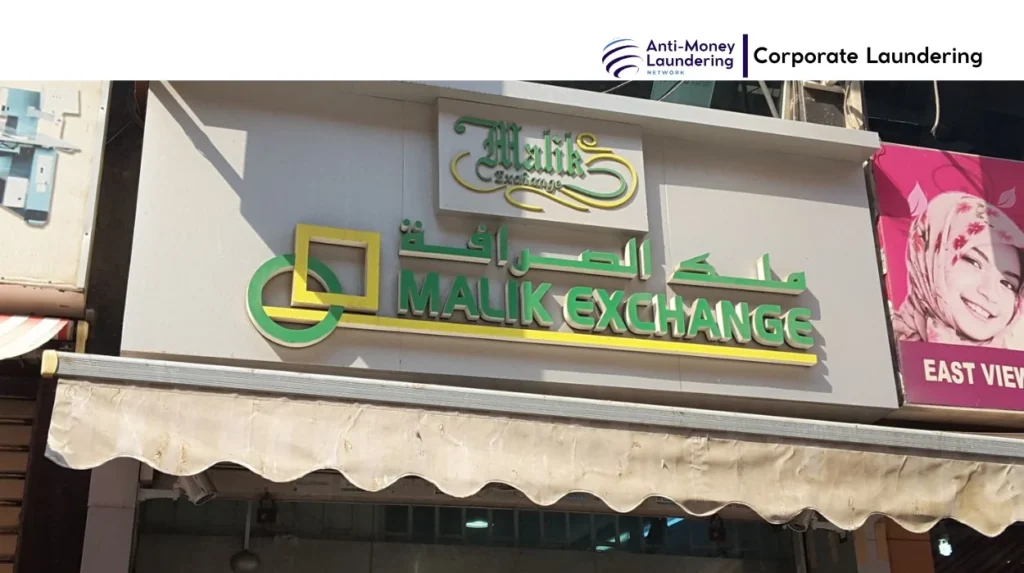
Malik Exchange is a UAE-based currency exchange and remittance company established in 1996. It operated primarily in Abu Dhabi with branches across the UAE, providing foreign currency exchange, remittance, and payroll services to its customers. In 2025, the company became the subject of intense regulatory scrutiny due to serious violations of Anti–Money Laundering (AML) and Counter Financing of Terrorism (CFT) laws. The Central Bank of the UAE (CBUAE) revoked Malik Exchange’s license and imposed a Dh2 million fine after investigations uncovered significant breaches of the AML framework. This case is particularly significant as it underscores the UAE’s stringent regulatory enforcement and zero-tolerance policy toward financial crime within a key financial sector.
Background and Context
Before its regulatory troubles, Malik Exchange had grown steadily to become a notable player in the competitive UAE exchange house market. Founded by Abdulla Hamad Naser Hamad Al Kunaibi from a prominent UAE family, the exchange had built a sizable client base and transaction volume, servicing both individual and corporate customers. Registered as a licensed financial intermediary, Malik Exchange was required to comply with the UAE’s rigorous AML and CFT regulations, primarily established under Federal Decree Law No. 20 of 2018. Despite its long-standing operations, examinations in 2025 revealed systemic failures in Malik Exchange’s compliance programs, leading to the revocation of its license on August 20, 2025, and a Dh2 million financial penalty. The company was struck off the official register of licensed exchange houses, signaling serious regulatory consequences.
Mechanisms and Laundering Channels
While exact details of the laundering mechanisms exploited at Malik Exchange were not publicly disclosed, the nature of the AML breaches suggests lapses in core AML controls and procedures. Exchange houses such as Malik Exchange are often vulnerable to layering techniques that rapidly process remittances or currency exchanges to disguise illicit funds. Potential weaknesses included inadequate customer due diligence (CDD), failure to monitor suspicious transactions, and poor verification of beneficial ownership. There was no public evidence linking Malik Exchange directly to shell companies or offshore accounts, but the regulatory findings indicate that internal controls were insufficient to prevent or detect the facilitation of money laundering or terrorist financing activities.
Regulatory and Legal Response
The Central Bank of the UAE enforced Article 14 of Federal Decree Law No. 20 of 2018, which outlines the AML/CFT compliance obligations of financial institutions. Following detailed examinations, the CBUAE found multiple violations by Malik Exchange, including failures to uphold the stringent requirements for transaction monitoring, customer identification, and reporting suspicious activities. The result was a revocation of the company’s license and a substantial fine of Dh2 million, emphasizing the importance of adherence to UAE AML laws and international AML standards, including FATF recommendations. The action reflects the UAE’s commitment to safeguarding the integrity of its financial system and demonstrates the consequences financial entities face for compliance failures.
Financial Transparency and Global Accountability
Malik Exchange’s case exposed vulnerabilities in financial transparency in non-bank financial institutions operating in the UAE. The regulatory findings highlighted inadequacies in Malik Exchange’s ability to maintain transparent records and perform effective oversight of its financial transactions. On a global level, this enforcement links to broader initiatives encouraging transparency, responsible corporate governance, and cross-border cooperation in AML efforts. The UAE’s strong regulatory stance in this case aligns with international efforts to close gaps exploited by money launderers and strengthens global accountability in financial systems by promoting transparent beneficial ownership disclosures and improved monitoring.
Economic and Reputational Impact
The regulatory sanctions effectively ended Malik Exchange’s operations in the UAE, damaging its brand reputation and destroying customer confidence. As a private entity, Malik Exchange’s financial statements are not public, but the license revocation and fine signify severe business and financial impacts, including loss of market access and partnerships. More broadly, the case prompted a sector-wide recalibration in compliance efforts among exchange houses in the UAE, accelerating regulatory scrutiny on their internal controls and prompting firms to enhance AML controls to protect market stability and investor trust.
Governance and Compliance Lessons
The Malik Exchange case highlights significant gaps in corporate governance and internal controls that allowed AML compliance failures to persist. The absence of robust oversight mechanisms, ineffective compliance programs, and insufficient regulatory awareness contributed to these breaches. In response, regulators and financial institutions have reinforced governance frameworks, emphasizing responsibility at the board and senior management levels, strengthening Beneficial Ownership verification processes, and integrating more advanced compliance technologies. This case serves as a lesson to the exchange industry worldwide on the critical importance of embedding comprehensive AML programs and continuous staff training.
Legacy and Industry Implications
Malik Exchange’s case represents a watershed moment in AML enforcement within the UAE’s exchange house sector. It raised awareness of the risks inherent in non-bank financial intermediaries and set new benchmarks for regulatory expectations. The case contributed to enhanced licensing criteria, more rigorous inspections, and tougher sanctions, driving a culture of transparency and ethical conduct in the financial services industry. Beyond the UAE, it has bolstered global AML cooperation initiatives and reinforced the necessity of multi-jurisdictional regulatory frameworks to combat complex financial crimes.
Malik Exchange’s regulatory failure illustrates the vital importance of strong Financial Transparency, effective Corporate Governance, and comprehensive Anti–Money Laundering (AML) frameworks in preserving the integrity of the global financial system. The UAE Central Bank’s decisive actions emphatically show that financial misconduct will be met with stringent penalties. For regulators and financial entities worldwide, the case underlines the ongoing necessity for rigorous compliance, detailed Beneficial Ownership disclosures, and robust transaction monitoring to combat corporate laundering and financial crime proactively.