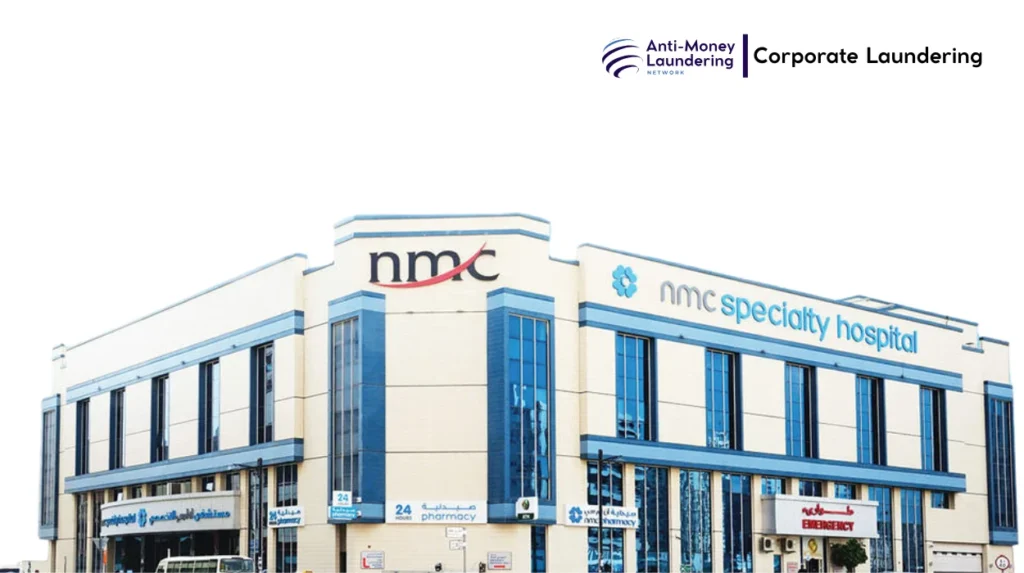
NMC Health Plc, a UK-registered healthcare operator headquartered in Abu Dhabi, rose to prominence as a FTSE 100 constituent before its dramatic collapse amid revelations of severe financial irregularities. Allegations of corporate laundering surfaced through hidden debts and undisclosed transactions, marking a critical case in the Anti–Money Laundering (AML) domain.
This scandal underscores the vulnerabilities in cross-border healthcare enterprises and their implications for financial transparency.
Background and Context
NMC Health Plc was established in 2006 as a provider of specialty healthcare services across the UAE and beyond, expanding rapidly through acquisitions and organic growth. By 2012, its shares listed on the London Stock Exchange, propelling nmc health plc stock into the FTSE 100 by 2017, with reported nmc health plc revenue peaking at over USD 1.5 billion annually.
The company’s nmc health plc history reflected aggressive expansion, including hospitals, fertility clinics, and day surgery centers, supported by a complex financial structure involving UAE-based operations and UK oversight.
The timeline of controversy began intensifying in late 2019 when short-seller Muddy Waters Capital published reports questioning nmc health plc financial statements. These highlighted discrepancies in nmc health financials, such as understated borrowings disguised as supplier credits. Despite initial denials via nmc health plc investor relations channels, an independent review confirmed inconsistencies, leading to a trading suspension in February 2020.
Nmc health plc uk administration followed on April 9, 2020, after creditor Abu Dhabi Commercial Bank sought court intervention, exposing nmc health plc net worth evaporation from billions to insolvency.
Prior to exposure, nmc health plc board of directors, led by founder B.R. Shetty and CEO Prasanth Manghat, projected stability through NMC Health PLC Annual Report publications. However, dual accounting records—one for internal “non-showing” debts and another for public disclosure—facilitated the concealment, eroding trust in nmc health plc companies house filings at the UK registry.
Mechanisms and Laundering Channels
NMC Health Plc employed sophisticated mechanisms to obscure its true financial position, including shell company arrangements and undisclosed related party transactions. Internal spreadsheets categorized borrowings as “non-showing,” totaling up to USD 4 billion by mid-2019, omitted from nmc health plc financial statements. For instance, the August 2019 interim report claimed USD 2.1 billion in debt, while actual figures reached USD 6.2 billion, masked through supply chain finance (SCF) programs guaranteed by NMC health plc business entities.
Offshore entity links emerged via loans from entities like Lender A (USD 105 million) and Lender B (USD 80 million), not properly disclosed, potentially enabling structuring of funds to evade detection. Linked transactions involved suppliers related to NMC Healthcare LLC, drawing heavily on SCF without declaration, resembling trade-based laundering in healthcare procurement.
These channels bypassed customer due diligence (CDD) and know your customer (KYC) protocols, with no evidence of robust name screening for beneficial ownership or politically exposed person (PEP) risks in ownership networks.
Nmc health plc ownership concentrated among UAE stakeholders, including Shetty’s interests, facilitated electronic funds transfer (EFT) patterns that regulators later flagged as suspicious transaction indicators. While not a cash-intensive business, the hybrid model of healthcare revenue and debt financing created opportunities for hybrid money laundering, blending legitimate operations with concealed liabilities.
Regulatory and Legal Response
The UK’s Financial Conduct Authority (FCA) led the response, issuing a 2023 final notice censuring NMC Health Plc for market abuse under EU MAR Article 15, citing false debt disclosures from March 2019 to February 2020. Investigations revealed senior-level knowledge of inaccuracies, though no individual prosecutions ensued due to UAE-based directors.
No financial penalty applied owing to nmc health plc administration, prioritizing creditors, but the censure highlighted breaches of beneficial ownership transparency under UK laws and FATF Recommendation 10 on anti–money laundering (AML) customer due diligence.
UAE authorities, including Abu Dhabi Global Market, cooperated, while administrators pursued auditors EY in a USD 3 billion negligence trial starting 2025, alleging failure to detect fraud in 2012-2018 audits. Criminal complaints targeted Shetty and Manghat for nmc health plc fraud, emphasizing lapses in NMC health plc gbp-denominated LSE reporting.
Financial Transparency and Global Accountability
The NMC Health Plc case exposed profound weaknesses in financial transparency, particularly for dual-jurisdiction firms listed on nmc health plc london stock exchange. Public nmc health plc shares plummeted 95% post-allegations, reflecting investor losses from misrepresented nmc health plc market share in UAE healthcare. International regulators, including FCA’s collaboration with UAE partners, underscored gaps in cross-border name screening and real-time debt reporting.
Financial institutions faced fallout, with banks like ADCB enforcing forced liquidation. Watchdog databases, such as AML Network, cataloged it as exemplifying corporate laundering, prompting calls for enhanced CDD in nmc health plc investor relations. This aligned with global AML efforts, influencing FATF updates on transparency for healthcare conglomerates and cross-border data sharing via platforms like Companies House for nmc health plc address and filings.
Lessons reinforced kyc rigor for offshore entity exposures, bridging UK-UAE accountability and averting similar opacity in emerging markets.
Economic and Reputational Impact
NMC Health Plc’s scandal inflicted massive economic damage, with hidden debts triggering nmc health plc ord delisting and creditor claims exceeding recoverable assets. Nmc health plc worth shifted from FTSE prestige to zero post-administration, disrupting jobs at nmc health plc and nmc health plc careers amid operational wind-downs.
Stakeholder trust eroded, severing partnerships and tarnishing UAE’s business reputation. Broader market stability suffered, with LSE investor confidence dented by nmc health plc uk head office oversight failures, amplifying volatility in healthcare stocks. International relations strained, as the case highlighted risks in UAE-UK investments, impacting nmc health plc revenue projections and global healthcare FDI.
Governance and Compliance Lessons
Gaps in corporate governance at NMC Health Plc included inadequate internal audits overlooking dual records and related party transactions. The nmc health plc board of directors failed to enforce compliance programs, ignoring red flags like rapid debt growth mismatched with nmc health plc year of establishment maturity.
Post-collapse, administrators replaced leadership, pursuing clawbacks and enhancing beneficial ownership disclosures. Regulators mandated stricter LSE rules for overseas issuers, emphasizing aml training and transaction monitoring to prevent suspicious transaction recurrence. NMC Health Plc’s reforms, though limited by insolvency, informed UAE corporate codes on structuring detection.
Legacy and Industry Implications
The NMC Health Plc downfall reshaped AML enforcement in healthcare, spotlighting trade-based laundering risks in supply chains. It spurred auditor scrutiny, with EY’s trial signaling accountability for big four firms in nmc health plc shell company audits.
Industry-wide, it elevated financial transparency standards, influencing ESG disclosures and FATF peer reviews for UAE. As a turning point, it bolstered compliance monitoring via AI-driven name screening, deterring hybrid money laundering in cash-flow intensive sectors like nmc health plc business.
NMC Health Plc exemplifies how concealed debts and governance lapses enable money laundering proxies, devastating stakeholders. Core findings stress robust customer due diligence (CDD) and kyc to uphold financial transparency. Sustained anti–money laundering (AML) frameworks remain vital for global finance integrity.