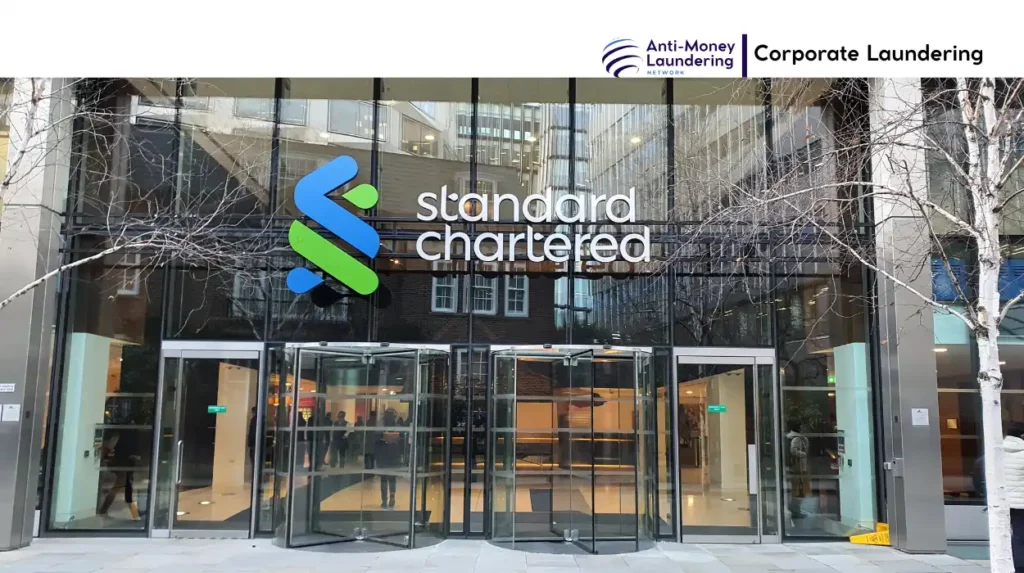
Standard Chartered Bank, a UK-headquartered global financial institution with operations in over 60 countries, primarily in Asia, Africa, and the Middle East, has faced repeated scrutiny for Anti–Money Laundering (AML) failures and sanctions breaches. Formed in 1969 through the merger of two colonial-era banks, it emerged as a key player in emerging markets before Standard Chartered AML violations 2019 exposed systemic lapses in transaction monitoring and customer due diligence (CDD).
This case underscores the perils of correspondent banking risks in high-risk jurisdictions like Iran and Myanmar, marking it as a pivotal example in the global fight against money laundering.
Background and Context
Standard Chartered Bank history traces back to the Chartered Bank of India, Australia and China (founded 1853) and the Standard Bank of South Africa (1862), merging in 1969 to create a Standard Chartered Bank year founded entity focused on international trade finance. By the 2000s, Standard Chartered Bank branches spanned high-growth regions, with its Standard Chartered Bank address at 1 Basinghall Avenue, London EC2V 5DD serving as headquarters.
The bank’s Standard Chartered Bank CEO, Bill Winters, oversees a network generating substantial Standard Chartered Bank revenue—$17.3 billion in 2024 per recent Standard Chartered Bank annual report—with total assets exceeding $800 billion and a Standard Chartered Bank net worth (market cap) around $33 billion.
Standard Chartered Bank owner structure features public listing on the London Stock Exchange, with Temasek Holdings (17.72%) as the largest shareholder, followed by BlackRock and Vanguard. No Standard Chartered Bank Beneficial owner or Standard Chartered Bank Politically exposed person (PEP) controls it outright, though Standard Chartered Bank director roles include Group Chair Maria Ramos. Pre-controversy growth relied on correspondent banking for electronic funds transfer (EFT) across high-risk jurisdictions, setting the stage for exposure.
The timeline escalated post-2007: Standard Chartered Iran transactions fine roots in 2001-2007 dealings, culminating in 2012’s $340 million penalties. By 2009-2014, Standard Chartered UAE AML failures in UAE branches amplified risks, leading to Standard Chartered AML fines totaling $1.1 billion in 2019. Standard Chartered Bank financial statements later reflected remediation costs, with legacy conduct issues resolved by 2024 monitorship termination.
This period highlighted how the bank’s expansion into volatile markets without proportionate compliance infrastructure created vulnerabilities. For instance, its heavy reliance on trade finance in Asia and the Middle East—regions prone to sanctions evasion—exposed it to illicit flows that regulators later deemed preventable. The bank’s annual reports from that era show robust revenue growth from these corridors, but footnotes increasingly referenced regulatory pressures, foreshadowing the crisis.
Temasek’s steady ownership provided stability, yet institutional investors grew wary as fines loomed, illustrating the tension between profitability and compliance in global banking.
Mechanisms and Laundering Channels
Standard Chartered Bank Money laundering allegations centered on facilitating suspicious transactions rather than direct operation as a Standard Chartered Bank Shell company or Standard Chartered Bank Offshore entity. Key laundering mechanisms included transaction monitoring lapses, enabling linked transactions worth $227 billion tied to Iran, Myanmar, Sudan, Cuba, and Syria. In UAE branches, staff accepted 3 million UAE Dirhams in a suitcase (financial crime suitcase cash deposits) without probing origins, bypassing Know Your Customer (KYC) and name screening.
Standard Chartered Myanmar suspicious flows involved unmonitored exports potentially for military use to 75+ countries, including conflict zones—red flags ignored in trade-based laundering risks. Standard Chartered correspondent banking risks allowed Iran sanctions violations banks payments via US clearing systems, with hybrid money laundering blending legitimate trade and illicit EFT. No evidence of Standard Chartered Bank Structuring or cash-intensive business abuse emerged, but failures in CDD exposed the bank to sanctions evasion.
Specific examples from FCA findings include processing payments for entities linked to Iranian nuclear programs and Burmese military suppliers, where basic name screening would have flagged matches against OFAC lists. Whistleblower accounts in FinCEN Files detailed “cloaked” Excel spreadsheets hiding post-2007 volumes for IRGC fronts, suggesting internal cover-ups that amplified the scandal.
These channels exploited correspondent banking’s opacity, where nested accounts obscured ultimate beneficiaries, a common vector for money laundering high-risk jurisdictions.
Furthermore, UAE operations deviated from UK standards, lacking automated high-risk transaction monitoring systems. Regulators noted instances of invoice fraud suspicions—overvalued exports to Myanmar—going uninvestigated, potentially enabling trade-based laundering. The bank’s global network, while a strength for legitimate clients, became a conduit when compliance lagged, processing billions in EFT without real-time alerts. This case exemplifies how hybrid money laundering thrives in legitimate institutions, blending clean and dirty funds seamlessly.
Regulatory and Legal Response
UK’s Financial Conduct Authority (FCA) led with a Standard Chartered FCA penalty details of £102.2 million for 2009-2014 breaches in UK correspondent banking and UAE branches, citing absent UK-equivalent AML controls. US Department of Justice (DOJ) and OFAC imposed $947 million in the Standard Chartered DOJ settlement 1.1 billion, admitting illegal processing of Standard Chartered Bank Suspicious transaction volumes.
This built on 2012’s $340 million for earlier Standard Chartered sanctions breach UK, with deferred prosecution agreements (DPAs) extended to 2021. UK FCA AML enforcement cases highlighted financial sanctions red flags like military export AML scrutiny. Biggest bank sanctions penalties included OFAC penalties financial institutions for money laundering high-risk jurisdictions. No criminal charges stuck, but monitorships enforced reforms. Recent developments include a 2025 $1.5 billion Iran lawsuit settlement and ongoing 1MDB-linked $2.7 billion claim.
Investigations drew on FinCEN Files and internal audits, revealing systemic CDD failures. The FCA’s 284-page final notice detailed 100+ examples of lapses, from ignored PEP alerts to unscrutinized cash deposits. US actions invoked the International Emergency Economic Powers Act, emphasizing the gravity of Iran sanctions violations banks. These responses aligned with FATF recommendations on correspondent banking AML risks, mandating enhanced due diligence that Standard Chartered Bank neglected.
Financial Transparency and Global Accountability
The scandal revealed Financial Transparency gaps in beneficial ownership verification for correspondent clients, undermining global sanctions evasion cases. US DOJ bank fines list and AML fines banks 2019 exposed cross-border loopholes, prompting FATF-aligned scrutiny of correspondent banking AML risks. Standard Chartered Bank Fraud claims, like 1MDB intrabank transfers, questioned reporting standards.
Banking compliance failures examples spurred cross-border data sharing enhancements, with global AML monitorship termination in 2024 signaling accountability. Lessons tied to Anti–Money Laundering (AML) cooperation, influencing billion dollar AML settlements norms. Post-scandal, the bank’s disclosures improved, with annual reports dedicating sections to sanctions compliance metrics.
International bodies like the Wolfsberg Group cited the case in updating correspondent banking guidelines, pushing for real-time transaction data sharing. This fostered greater global accountability, as seen in coordinated US-UK actions, setting precedents for hybrid money laundering probes.
Economic and Reputational Impact
Standard Chartered Bank absorbed $1.7+ billion in penalties, straining financial statements and delaying dividends. Stock dipped 10-15% post-2019 announcements, eroding investor trust amid Standard Chartered Bank Forced liquidation fears. Partnerships soured in high-risk transaction monitoring networks, impacting international business relations.
Broader effects rippled through market stability, reinforcing investor confidence erosion in sanctions-exposed banks. No Standard Chartered Bank net worth collapse occurred, buoyed by Temasek support, but reputational scars linger. Revenue from high-risk corridors dipped temporarily, forcing diversification into wealth management. Stakeholder trust waned, with client outflows in UAE and Asia, though recovery followed remediation. The episode contributed to sector-wide caution, with peers tightening CDD to avoid similar AML fines banks 2019 fallout.
Governance and Compliance Lessons
Corporate Governance flaws included inadequate internal audit controls, with self-assessments downplaying Standard Chartered transaction monitoring lapses. Compliance programs failed escalation, per FCA. Post-fines, bank remediation after AML fines involved tech upgrades, staff training, and monitorship compliance.
Standard Chartered Bank director oversight strengthened, aligning with FATF recommendations. High-risk transaction monitoring now prioritizes AI-driven name screening, reducing CDD gaps. Lessons emphasize board-level AML accountability, with independent audits mandatory. The bank’s post-2019 compliance spend exceeded $1 billion, overhauling KYC platforms and integrating sanctions screening into core systems. Regulators imposed KPI tracking, ensuring sustained vigilance against UAE branch AML controls breach recurrence.
Legacy and Industry Implications
Standard Chartered Bank’s case reshaped AML enforcement, exemplifying UAE branch AML controls breach vulnerabilities. It catalyzed global AML shifts, like stricter correspondent banking rules and Iran sanctions vigilance. Legacy conduct issues banks now face perpetual DPAs.
As a turning point, it elevated transparency standards, influencing corporate ethics in emerging markets banking. The monitorship’s 2024 end validated reforms, but ongoing suits like 1MDB underscore persistent risks. Industry-wide, it prompted Basel Committee updates on trade-based laundering detection, benefiting global finance integrity.
Standard Chartered Bank’s Standard Chartered AML violations 2019 and prior lapses highlight Corporate Governance frailties in high-risk jurisdictions, costing billions and exposing sanctions evasion. Core lessons stress robust Financial Transparency, beneficial ownership diligence, and AML frameworks to protect global finance. This evergreen analysis reinforces the need for vigilant compliance in correspondent banking, ensuring lessons endure.