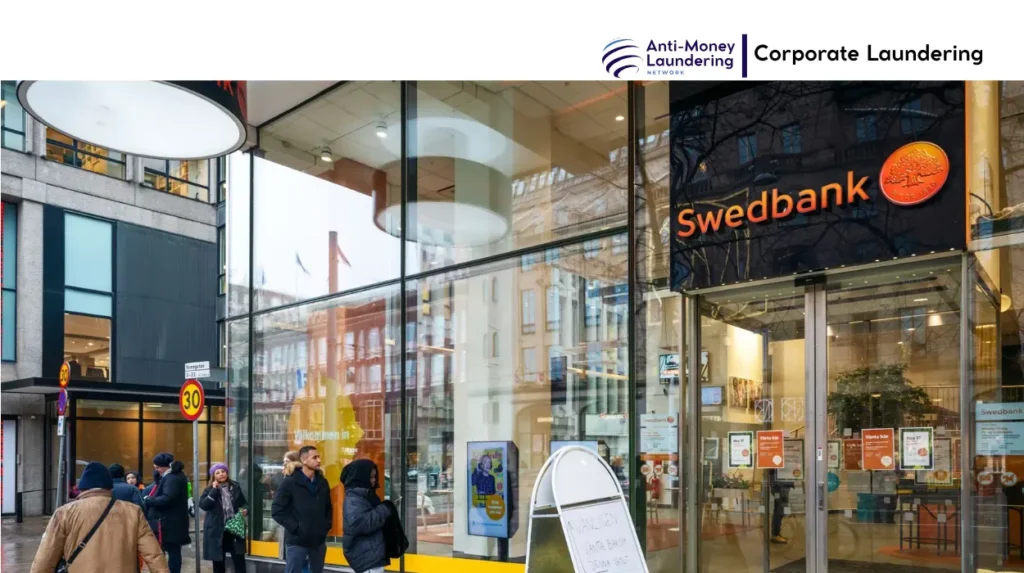
Swedbank AB’s Baltic Operations represent one of the largest Anti–Money Laundering (AML) scandals in European banking history. Operating through subsidiaries in Estonia, Latvia, and Lithuania, these branches processed billions in suspicious transactions, primarily linked to Russia, exposing systemic AML failures. This case underscores vulnerabilities in Customer Due Diligence (CDD) and Know Your Customer (KYC) processes within high-risk jurisdictions.
Its significance lies in revealing how major institutions can facilitate money laundering through inadequate name screening and transaction monitoring, prompting global scrutiny of corporate governance in cross-border banking. The Swedbank AB Baltic Operations scandal serves as a stark reminder of the consequences of lax controls in regions adjacent to high-risk jurisdictions like Russia, influencing regulatory approaches worldwide.
Background and Context
Swedbank AB, headquartered in Stockholm, Sweden, expanded aggressively into the Baltic region during the post-Soviet era, particularly after the early 2000s. The bank acquired Hansabank in 2007, which operated as the leading retail bank across Estonia, Latvia, and Lithuania, rebranding it under the Swedbank umbrella. By 2018, Swedbank AB Baltic Operations Estonia, Swedbank AB Baltic Operations Latvia, and Swedbank AB Baltic Operations Lithuania collectively served over 4.5 million customers, commanding market shares of 45% in Estonia, 30% in Latvia, and 25% in Lithuania for retail banking.
This growth was fueled by the Baltic states’ EU accession in 2004, rapid economic liberalization, and influx of non-resident banking, particularly from Russian clients seeking Western integration.
Prior to the controversy, Swedbank AB Baltic Operations enjoyed a reputation as a stable Nordic player bridging Scandinavian efficiency with Eastern European dynamism. Financially robust, the group reported consistent profitability, with Baltic units contributing approximately 20% of Swedbank’s overall net interest income. However, underlying risks simmered: the Baltic operations relied heavily on non-resident corporate accounts, which by 2015 comprised 50% of deposits in Estonia alone. These accounts often involved complex ownership structures, minimal physical presence, and high-velocity electronic funds transfers (EFT), hallmarks of potential money laundering vectors.
The timeline leading to exposure began in the mid-2000s. From 2007 onward, Swedbank Russia transactions €36 billion flowed through Baltic accounts, mirroring patterns seen in the parallel Danske Bank scandal. Internal red flags emerged early: a 2013 compliance memo warned of Magnitsky sanctions exposure, while 2016 Panama Papers data revealed high-risk clients. Yet, management prioritized growth, delaying de-risking.
The catalyst arrived in February 2019 when Swedish SVT’s “Uppdrag Granskning” and OCCRP’s collaborative “Baltic Exposed” investigation aired, disclosing Swedbank AB Baltic Operations €4 billion (totaling ~€40 billion) in suspicious transactions between 2007-2015. This triggered the Swedbank Baltic police raid 2019 across Tallinn, Riga, and Stockholm offices, alongside a precipitous Swedbank AB Baltic Operations stock drop of 35% within days, erasing €5 billion in market value.
Mechanisms and Laundering Channels
At the heart of Swedbank AB Baltic Operations money laundering were high-risk clients, including Russian oligarchs and politically exposed persons (PEPs), whose accounts evaded robust CDD and KYC protocols. Transaction volumes were staggering: between 2014-2019, €17.8 billion incoming and €18.9 billion outgoing payments were processed, with 40% automatically flagged as high-risk by rudimentary algorithms—yet fewer than 1% prompted suspicious transaction reports (SARs). These funds often cycled in mirror trades: inflows from Russia matched by outflows to shell-like entities in Latvia or Lithuania, then back via Danske Estonia.
Specific channels exploited included shell company proxies—corporate vehicles with opaque beneficial ownership, registered in Latvia or Estonia but controlled by Russian nationals. Swedbank AB Baltic Operations Danske Bank linkages were central: €40 billion in linked transactions (2007-2015) used high-velocity EFTs suggestive of structuring, where payments were fragmented to evade thresholds. No direct evidence surfaced of trade-based laundering or cash-intensive business involvement, but hybrid money laundering thrived through non-resident portfolios. Notably, $4.8 million in sanctions-linked wires involved Crimea shipping firms, Sudan entities, and Cuban proxies, bypassing name screening filters.
Swedbank Estonia Russian oligarchs operated freely; internal memos later revealed staff jokes about “laundering being an open secret.” Failures spanned the transaction lifecycle: deficient ongoing monitoring allowed dormant accounts to reactivate for bursts of activity, while KYC files lacked updated beneficial ownership details. Swedbank AB Baltic politically exposed person (PEP) exposure was acute, with over 100 Russian PEPs unidentified despite FATF-mandated enhanced due diligence. The Swedbank AB Baltic Operations OCCRP report detailed deliberate delays in exiting these relationships, prioritizing revenue from high-margin non-resident banking.
Regulatory and Legal Response
Swedish regulator Finansinspektionen (FI) led the charge, imposing the Swedbank SEK 4 billion fine 2020—equivalent to €360 million—for Swedbank AB Baltic Operations AML failures from 2007-2019. The ruling cited “grave deficiencies” in governance, risk assessment, and SAR filing, with non-reporting of 4,000+ alerts. Parallel probes by Estonian FIU, Latvian FCMC, and Lithuanian Bank of Lithuania culminated in coordinated findings, though Estonia dropped bank-level charges in 2024, pursuing individual staff.
Swedbank AB Baltic Operations Birgitte Bonnesen, who helmed Baltic operations (2010-2016) before ascending to group CEO, became the face of accountability. Prosecuted for misleading FI on risks, her Swedbank CEO Birgitte Bonnesen conviction in October 2024—15 months for gross fraud—marked a rare executive ouster with jail time. Swedbank DOJ SEC investigations, launched post-2019, closed without enforcement: SEC in September 2025, DOJ in January 2026, citing Swedish penalties’ sufficiency.
These actions invoked EU’s 4th and 5th AML Directives, FATF Recommendations 10 (CDD), 13 (correspondent banking), and 15 (new technologies). The Swedbank AML internal report by Clifford Chance confirmed systemic lapses, including unheeded board warnings and falsified compliance metrics.
Financial Transparency and Global Accountability
The scandal laid bare financial transparency deficits in Baltic beneficial ownership registries, where Swedbank AB Baltic shell company proxies obscured Russian fund origins. Swedbank AB Baltic beneficial owner opacity amplified Swedbank AB Baltic fraud risks, as layered corporate veils defied public disclosures. This spurred demands for bolstered cross-border data sharing, with the case echoing FinCEN Files exposures.
Global responses were swift: NYDFS issued private warnings to U.S. counterparties, while Transparency International lambasted Nordic supervision gaps. The Swedbank sanctions probe closure underscored transatlantic tensions but affirmed European primacy. Broader reforms followed: EU’s 6AMLD imposed corporate criminal liability, and AMLR package mandated unified registries. Lessons from Swedbank AB Baltic reinforced FATF’s high-risk client focus and real-time monitoring, catalyzing Anti–Money Laundering (AML) cooperation via ESMA-ESAs joint taskforces.
Economic and Reputational Impact
Swedbank AB Baltic Operations fines inflicted immediate pain: €1.5 billion market cap evaporation in March 2019, with remediation costs surpassing SEK 10 billion for 152 initiatives like AI-driven transaction systems. The Swedbank AB Baltic Operations stock drop lingered, eroding dividends and prompting investor lawsuits settled for SEK 1.2 billion.
Reputational hemorrhage was acute: customer deposits fled Baltics (5% outflow), correspondent banks imposed heightened scrutiny, and partnerships with Visa/Mastercard faced renewal risks. Swedbank AB Baltic Operations Latvia, Lithuania, Estonia units saw talent exodus, with 20% compliance staff turnover. Regionally, it destabilized confidence, presaging SEB’s 2023 SEK 1 billion fine.
Long-term, investor trust rebounded via governance proofs, but international relations soured, with Russia bans accelerating de-risking.
Governance and Compliance Lessons
Corporate governance fractures at Swedbank AB Baltic stemmed from decentralized Baltic oversight, board AML inexperience, and siloed risk functions. Swedbank AB Baltic Operations leadership changes purged Bonnesen and four executives, installing Jens Henriksson with a compliance-heavy mandate.
Swedbank Baltic remediation measures centralized control under Swedbank Baltics AS (Riga holding, 2021), slashing high-risk accounts by 70%, deploying RegTech for name screening/PEP monitoring, and mandating annual FATF-aligned audits. Swedish FI enforced perpetual oversight, emphasizing integrated internal controls. Paramount lesson: Embed KYC/CDD from inception, with board-level accountability for suspicious transaction escalation.
Legacy and Industry Implications
Swedbank AB Baltic Operations scandal reshaped Baltic AML, mandating non-resident banking curbs and real-time FIU linkages. Nordics accelerated Russia de-risking, with executive liability precedents from Bonnesen’s conviction rippling to Danske probes.
Industry-wide, it propelled RegTech adoption for suspicious transaction detection, FATF Travel Rule enforcement, and beneficial ownership portals. Absent Swedbank AB Baltic offshore entity ties, it spotlighted hybrid money laundering in EFT corridors, informing Basel AML guidance. As a turning point, it elevated compliance from cost-center to strategic imperative.
Swedbank AB Baltic Operations facilitated money laundering via AML failures, yielding regulatory penalty, leadership upheaval, and vast remediation. Core findings demand rigorous financial transparency, beneficial ownership rigor, and fortified corporate governance. Robust Anti–Money Laundering (AML) frameworks endure as bulwarks preserving global finance’s integrity against such systemic threats.