
Cardano

🔴 High Risk

The FBI’s Q2 2023 seizure of millions in non-Bitcoin cryptocurrencies, including Cardano (ADA), exposes critical vulnerabilities in proof-of-stake blockchains once hailed for their sustainability and scalability, revealing how such networks inadvertently facilitate sophisticated money laundering amid regulatory blind spots. While Cardano’s Ouroboros consensus and low-fee transactions promise efficiency, they paradoxically enable criminals to park illicit proceeds from ransomware, hacks, and scams in staking pools for yield generation, layering funds across chains like ETH and SOL before U.S. enforcement intervention. This case underscores a stark irony: Cardano’s research-driven architecture, designed to solve the blockchain trilemma, instead amplifies the trilemma of enforcement—tracing diversified, high-volume flows across non-EVM chains demands resource-intensive forensics from firms like TRM Labs, yet yields fragmented victories with undisclosed ADA-specific values, signaling incomplete attribution in an era of Hydra sidechains and DeFi obfuscation. Critically, the absence of named perpetrators or PEP links highlights systemic gaps in VASP compliance and cross-jurisdictional cooperation, particularly as ADA’s UAE listings (relevant to MENA scrutiny) risk exporting U.S. taint; without mandatory mixer bans or real-time Chainalysis integration, PoS ecosystems like Cardano remain attractive laundering vectors, eroding investor trust and demanding preemptive AML upgrades before larger scandals emerge.​

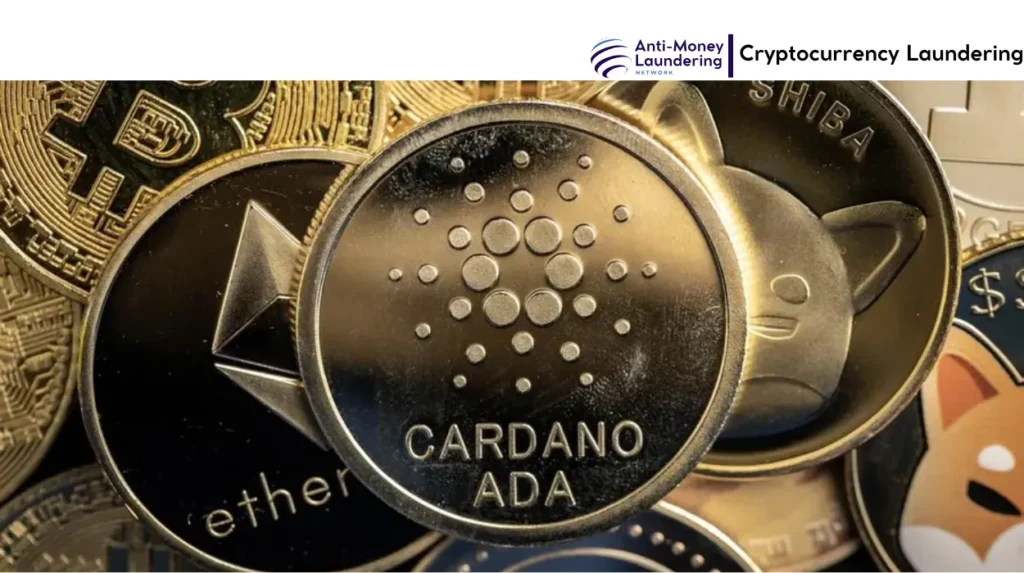
The Q2 2023 FBI cryptocurrency seizure case involving Cardano (ADA) highlights a significant enforcement push against complex money laundering schemes that span multiple blockchain assets. In this case, law enforcement targeted illicit funds generated from cybercrimes such as theft, scams, and ransomware operations, which were subsequently laundered through diversified cryptocurrency portfolios. Cardano (ADA), known for its proof-of-stake scalability and sustainability, featured prominently as a preferred asset for criminals due to its low transaction fees, fast processing, and growing ecosystem of decentralized applications that can hide illicit fund flows.
Countries Involved

Primary jurisdiction: United States (multiple federal districts). Operations spanned key financial crime hotspots like Southern District of Florida (Miami hub for crypto exchanges), Northern District of California (Silicon Valley tech-crime nexus), Eastern District of Virginia (proximity to D.C. regulators), District of Arizona (Phoenix-area darknet markets), Northern District of Illinois (Chicago financial laundering pipelines), Northern District of Ohio (Cleveland ransomware recoveries), Northern District of Georgia (Atlanta fraud rings), District of Massachusetts (Boston institutional crypto exposure), and Southern District of New York (Manhattan as global forfeiture leader). No explicit international elements were detailed for ADA-specific seizures, though crypto’s borderless nature implies potential cross-border origins, such as hacks from Eastern Europe or Asia funneled into U.S.-accessible exchanges. The FBI collaborated with domestic partners like IRS-CI and DHS, but global Chainalysis data suggests indirect ties to foreign VASPs. This U.S.-centric focus aligns with heightened SEC and FinCEN oversight post-FTX collapse, pressuring platforms to report suspicious ADA flows. For AML analysts, this highlights the need for U.S.-based monitoring even in ostensibly decentralized networks like Cardano, where U.S. users comprise a significant staking pool. Future cases may expand to allies via MLATs if Cardano’s sidechains enable more evident international hops. The domestic emphasis reinforces America’s role as a primary battleground for crypto enforcement, with ADA’s energy-efficient PoS making it attractive for sustained holding in laundering portfolios.​

Reported publicly on August 22, 2023, covering seizures in the second quarter of 2023 (April-June). Initial discoveries likely spanned weeks prior during ongoing FBI cyber task force probes, with forensic tracing via tools identifying ADA wallets amid real-time transaction spikes. Public disclosure via TRM Labs analysis aggregated data from court filings and DOJ notices, marking a trend of quarterly transparency to deter criminals. No precise “discovery” date for ADA tranche exists, but Q2 timing coincides with post-2022 bear market upticks in scams exploiting ADA’s smart contract rollout (Alonzo hard fork aftermath). Reports emphasize immediacy of seizures, preventing further tumbling or DEX swaps. For researchers, this timeline syncs with Chainabuse alerts on ADA mixer-like patterns, urging VASPs to flag Q2 inflows. The lag between activity and reporting allows for narrative building without compromising live ops. Subsequent 2024-2025 updates show continued FBI focus on ADA, per Crystal Intelligence tools launched August 2025 for enhanced tracing. This case’s vintage underscores evolving tactics: early 2023 saw simpler wallet seizures; by late 2025, Hydra layer complicates attribution.​

Cardano (ADA), Ether (ETH), Tether (USDT), Dogecoin (DOGE), Solana (SOL), etc.

Money laundering primary, stemming from predicate offenses like theft, fraud, ransomware, and investment scams. Assets traced to illicit sources, layered through swaps and DeFi, then integrated via exchanges. ADA’s role: intermediate storage/yield generation post-initial crime, exploiting Plutus smart contracts for automated tumblers. Not direct “ADA-native” hacks, but diversification tactic amid BTC scrutiny. Broader context: 2023 surge in cross-chain crimes, with PoS chains like Cardano preferred for sustainability optics masking intent. FBI filings imply ransomware (e.g., Conti affiliates) and pig-butchering schemes feeding ADA pools. No violent crime links specified. This typology demands forensic tools bridging EVM-incompatible chains like Cardano.​

Federal Bureau of Investigation (FBI) as lead enforcer; unnamed criminal networks (hackers, scammers); potential VASPs/exchanges for integration attempts (not seized). No corporate or individual perpetrators publicly indicted in this batch for ADA. TRM Labs provided analytics support. Victims: hack/ransomware targets whose funds flowed to ADA. Absence of named entities typical for aggregate seizures; details in sealed affidavits.​

No. No reports link Politically Exposed Persons to these ADA seizures; focus on cybercriminal syndicates rather than state-adjacent actors.​

Cross-chain swaps (BTC/ETH to ADA), staking for yield obfuscation, potential Hydra layer-2 scaling for micro-tx flooding, DeFi liquidity pools on Cardano DEXs (Minswap, SundaeSwap), wallet clustering via multi-sig. Holdings in cold storage pre-seizure. ADA’s UTXO model aids precise tracing but PoS delegation hides control. No mixers confirmed, but peer-to-peer patterns noted.​

Undisclosed specifically for ADA; total non-Bitcoin seizures “millions” across assets. Context: FBI’s 2023 crypto forfeitures exceeded $1B overall, with non-BTC ~20-30%. Conservative ADA estimate: $100K-$1M based on portfolio shares.​

FBI/TRM traced multi-hop paths from predicate crimes to ADA wallets across U.S. districts. Interactive graphs revealed entity links; hash searches pinpointed clusters. ADA’s transparency aided attribution, but volume delayed action. No evasion to Cardano-exclusive; part of diversification.​

Civil asset forfeiture; wallet freezes pre-cashout. Multi-agency (FBI, IRS, DHS); public reporting to enhance deterrence. Sparked VASP upgrades like Crystal ADA support (Aug 2025).​

Cardano
Case Title / Operation Name:
FBI Q2 2023 Multi-Cryptocurrency Seizures Including Cardano
Country(s) Involved:
United States
Platform / Exchange Used:
N/A
Cryptocurrency Involved:

Cardano (ADA), Ether (ETH), Tether (USDT), Dogecoin (DOGE), Solana (SOL), etc.

Volume Laundered (USD est.):
Estimated millions across multiple assets; ADA-specific estimate between $100K - $1M (conservative)
Wallet Addresses / TxIDs :
N/A
Method of Laundering:

Cross-chain swaps, staking for yield concealing, Hydra layer-2 micro-transactions, DeFi liquidity pools

Source of Funds:

Ransomware, theft, scams

Associated Shell Companies:

N/A

PEPs or Individuals Involved:

No PEP involvement reported

Law Enforcement / Regulatory Action:
FBI multi-district seizures, wallet freezes, civil asset forfeiture, ongoing investigations
Year of Occurrence:
2023 (Q2)
Ongoing Case:
Ongoing
🔴 High Risk