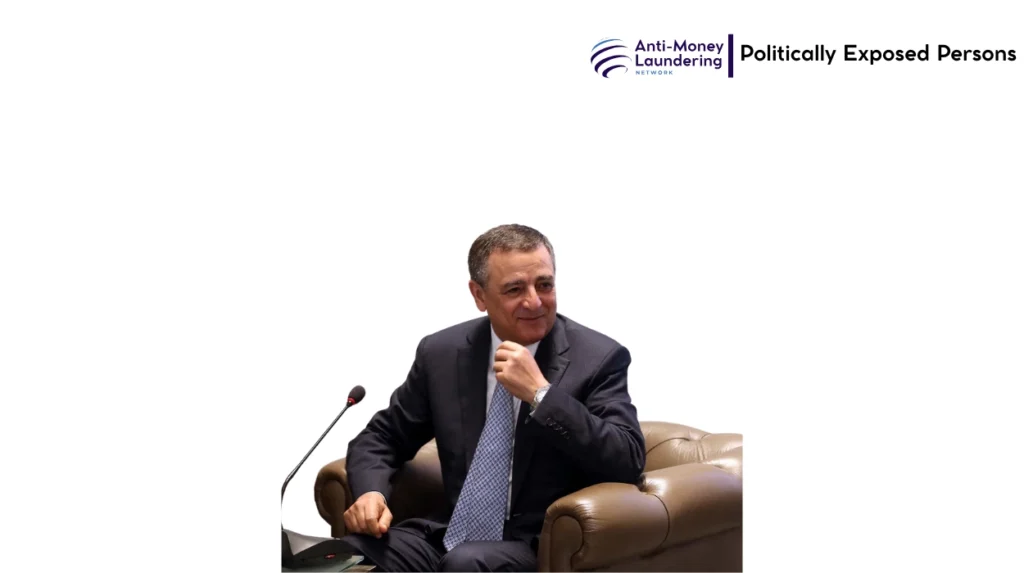
Abdeslam Bouchouareb emerged as a significant figure in Algerian politics during a period marked by economic challenges and political consolidation. Serving as Algeria’s Minister of Industry and Mines from 2014 to 2017, he played a pivotal role in efforts to diversify the nation’s resource-dependent economy. His career trajectory, spanning decades of public service, reflects the complexities of governance in a country rich in hydrocarbons yet grappling with unemployment, corruption allegations, and demands for transparency.
Born in the eastern province of Oum El Bouaghi, Bouchouareb’s journey from local politics to national prominence encapsulates the dynamics of power in post-independence Algeria. His tenure under President Abdelaziz Bouteflika’s long administration drew both praise for industrial initiatives and criticism amid revelations from international financial leaks.
Today, residing in France after fleeing Algeria post-2019 protests, he faces multiple convictions in absentia, underscoring ongoing debates about accountability for politically exposed persons. This profile explores his life, career, controversies, and enduring impact on Algerian economic policy.
Algeria’s political landscape during Bouchouareb’s active years was dominated by the National Liberation Front (FLN) and allied parties, where loyalty to the regime often intertwined with policy execution. As industry minister, he advocated for mining sector expansion and foreign investments, aiming to reduce oil reliance. However, exposures like the Panama Papers cast shadows over his legacy, highlighting tensions between national development goals and personal financial opacity.
This article delves into these facets, providing a comprehensive view of a man whose story mirrors broader North African governance challenges.
Early Life and Background
Abdeslam Bouchouareb’s roots trace back to Aïn M’lila, a modest town in Algeria’s Oum El Bouaghi Province, where he was born in June 1952. This rural setting, emblematic of much of eastern Algeria, instilled a grounded perspective amid the nation’s post-colonial reconstruction. Growing up in the aftermath of independence from France in 1962, young Bouchouareb witnessed the early struggles of a new republic focused on nation-building and resource nationalization.
Details on his formal education remain sparse in public records, but his subsequent roles suggest a strong foundation in engineering or economics, disciplines critical for industrial policymaking. Algeria’s education system in the 1960s and 1970s emphasized technical training to support state-led industrialization, likely shaping his career path. By the 1990s, as civil strife gripped the country during the “Black Decade,” Bouchouareb entered politics, navigating a volatile environment where stability was prized above all.
His early political roles in 1994 marked the beginning of a steady ascent. Aligning with the National Democratic Rally (RND), a party supportive of Bouteflika’s eventual rise, he built alliances within Algeria’s bureaucratic elite. These formative years positioned him as a technocrat capable of bridging local needs with national ambitions. His Algerian nationality and deep ties to the country’s eastern regions reinforced a commitment to regional development, often overlooked in favor of coastal urban centers.
The socio-economic context of 1990s Algeria, plagued by Islamist insurgency and IMF-mandated reforms, tested emerging leaders like Bouchouareb. Unemployment soared, and public sector jobs became lifelines for many. His entry into governance during this era highlights resilience, as he focused on employment generation—a recurring theme in his later portfolios.
This background not only honed his administrative skills but also embedded him in networks that would propel him to higher office.
Personal Life
Public information on Abdeslam Bouchouareb’s personal life is limited, reflecting the privacy norms among Algerian political elites. He is believed to be married, with reports occasionally mentioning a spouse and three children, though no verified details on their identities or current statuses exist. Family members have largely stayed out of the spotlight, avoiding the media scrutiny that often accompanies high-profile corruption probes.
Bouchouareb’s family dynamics appear conventional for his social stratum, centered on discretion amid public service demands. No scandals directly implicating relatives have surfaced, unlike some peers whose kin were accused of nepotism. His presumed Muslim faith aligns with Algeria’s predominantly Islamic society, though he rarely invoked religion in official capacities, maintaining a secular technocratic image.
Currently, Bouchouareb resides in France, having fled Algeria following the 2019 Hirak popular uprising against the Bouteflika regime. Health concerns, including reported ailments cited in extradition proceedings, have influenced his legal battles. This exile underscores the personal toll of political fallout, separating him from homeland ties and family networks built over decades. His low-profile existence abroad contrasts with the influence he once wielded, prioritizing seclusion over public defense.
Algerian cultural emphasis on family honor likely guides his reticence. While specifics on children or spouse remain unconfirmed, their potential involvement in asset management during his tenure has been speculated in leaks, though without substantiation. This opacity exemplifies how personal lives of public figures in opaque systems often intersect with professional controversies.
Career and Achievements
Abdeslam Bouchouareb’s political career exemplifies steady progression within Algeria’s patronage-driven system. Beginning with early roles in 1994, he quickly aligned with the RND, serving as a member and leveraging party machinery for advancement. By 1996, he briefly held the position of Minister of Industry, gaining initial exposure to economic policymaking during a liberalization phase.
In 2001, as Delegate for Employment, Bouchouareb tackled youth joblessness, a chronic issue exacerbated by population growth and oil price volatility. His strategies emphasized vocational training and public works, laying groundwork for future industrial pushes. Elected to the National Assembly, he rose to Vice President by 2012, honing legislative skills amid debates on budget allocations and foreign investment laws.
The apex came in May 2014, when he assumed the Industry and Mines portfolio until May 2017. During this 2014-2017 minister stint, Bouchouareb championed mines diversification policies, targeting phosphates, iron ore, and zinc to offset declining hydrocarbons. Initiatives included partnerships with Qatar and Europe, attracting billions in pledges for processing plants and exploration.
Achievements under his watch included legislative reforms easing mining codes and boosting non-oil exports. He promoted automotive assembly hubs, aiming to create thousands of jobs. Internationally, appearances at the World Economic Forum elevated Algeria’s profile, positioning it as an investment destination. Despite criticisms of slow implementation, his tenure correlated with GDP growth in manufacturing sectors.
Post-ministerial, Bouchouareb’s RND affiliations sustained influence until the 2019 regime change. His career reflects a blend of pragmatism and loyalty, navigating Bouteflika’s extended rule while pushing modernization agendas.
Lifestyle, Wealth, or Assets
Assessing Abdeslam Bouchouareb’s lifestyle reveals a profile of moderation punctuated by financial opacity. No reports confirm extravagant assets like palaces or yachts, common tropes in corruption narratives. Instead, his wealth centers on discreet offshore structures exposed in global leaks.
The Panama Papers spotlighted Royal Arrival Corp, a Panama-registered entity solely owned by Bouchouareb since 2015. Managed via Luxembourg’s CEC Group Limited, it handled transport interests across Turkey, the UK, and Algeria. A linked Swiss account at NBAD Private Bank, reportedly holding significant sums before closure upon taking office, raised disclosure concerns under Algerian law.
Net worth estimates are elusive, speculated in millions based on offshore scales but unverified. During his ministerial years, industry contracts potentially funneled benefits to associates, though direct embezzlement lacks proof. His post-2019 flight to France suggests asset protection priorities, with health-related stays in Europe.
This asset profile fits patterns among Bouteflika-era elites: leveraging public roles for private security without overt opulence. Lifestyle shifts to exile reflect caution, avoiding displays that could inflame public outrage amid economic hardships. Transparency gaps persist, emblematic of challenges in tracking politically exposed wealth.
Financial Transparency and Global Accountability
Abdeslam Bouchouareb’s status as a politically exposed person intensified post-Panama Papers scrutiny. The 2016 leak, via ICIJ’s Offshore Leaks Database, detailed Royal Arrival Corp’s creation through Mossack Fonseca while he served as industry minister. This violated constitutional asset declaration mandates, triggering AML red flags.
Corruption charges proliferated after Bouteflika’s 2019 ouster. Algerian courts convicted him in absentia on graft, forgery, and influence-peddling, culminating in a 100 years sentence across cases, including 20 years initially for automotive scams. These in absentia trials, criticized for politicization, highlight judicial weaponization.
Extradition requests to France faltered repeatedly. In 2024 and 2025, French prosecutors cited health issues and fair trial doubts, blocking returns despite Algerian pleas. This impasse exposes bilateral tensions and Algeria’s weakened rule-of-law perceptions.
No international sanctions mar his record, despite credible leak evidence. Wikipedia profiles aggregate these threads, underscoring impunity risks. Bouchouareb’s case exemplifies PEP vulnerabilities in jurisdictions blending resource wealth with elite protections, urging global frameworks like FATF for stricter oversight.
Influence, Legacy, and Global Recognition
Bouchouareb’s influence peaked during the Bouteflika era, where he shaped industrial narratives amid stability-for-power compacts. Mines diversification policies spurred exploration booms, contributing to non-hydrocarbon GDP shares rising modestly. Foreign ties, from Qatari deals to European forums, enhanced Algeria’s diplomatic heft.
Legacy splits sharply: proponents laud job-creating reforms; critics decry cronyism in tenders favoring RND networks. The Hirak movement’s anti-corruption fervor toppled his patrons, rendering past achievements bittersweet. Globally, Panama Papers elevated his notoriety, fueling discussions on African PEPs in illicit finance.
Recognition came via ministerial platforms and economic summits, though scandals overshadowed. His saga influences ongoing Algerian reforms, pressuring successors on transparency. In broader terms, Bouchouareb embodies North Africa’s elite accountability dilemma, where policy gains coexist with ethical lapses.
Abdeslam Bouchouareb’s biography—from Aïn M’lila origins to ministerial prominence and French exile—mirrors Algeria’s evolution from post-colonial promise to Hirak-driven reckoning. Career highs in industry diversification contrasted with corruption convictions and offshore revelations, encapsulating governance paradoxes.
His unserved prison sentence and denied extraditions perpetuate impunity debates, challenging Algeria’s democratic aspirations. As a retired figure, his current status prompts reflections on balancing elite expertise with public trust. Ultimately, Bouchouareb’s impact lingers in economic structures he helped build, tempered by calls for integrity in resource stewardship.