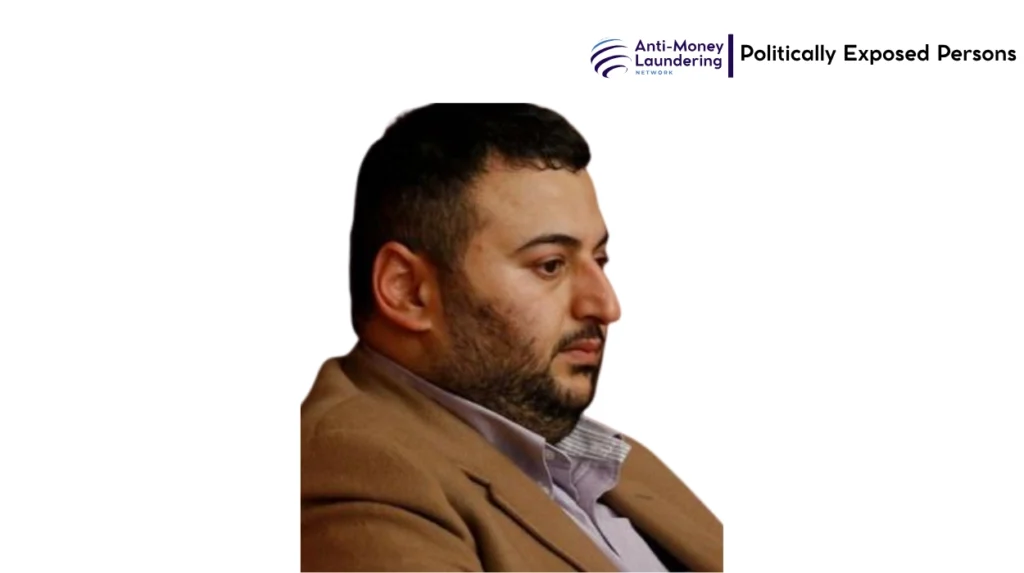
Erkam Yıldırim is a Turkish businessman whose name repeatedly appears in discussions about political economy, offshore finance, and anti‑money‑laundering (AML) risk in Turkey. Unlike elected politicians or state officials, he does not hold a formal “office,” yet his public profile is deeply shaped by his family ties, particularly his father, former Turkish Prime Minister Binali Yıldırım.
This association classifies Erkam Yıldırim as a Politically Exposed Person (PEP) in the eyes of global financial regulators and investigative journalists. Over the years, his role in the Erkam Yıldırim shipping business, his companies, and his offshore assets have attracted attention amid debates over financial transparency and global accountability.
Yet beyond the headlines and leaks, limited verified information exists about his age, his education, or the full scope of his personal life. Public records hint at his place of birth, his nationality, and current citizenship, but they remain under‑reported compared with his business and political footprint. What is clear is that his career spans import‑export, maritime transport, and food‑related ventures, positioning him at the intersection of commerce, politics, and international scrutiny.
This profile offers a measured, structured overview of who Erkam Yıldırim is, how his business empire evolved, and why his family wealth and offshore assets remain subjects of debate rather than settled fact. By examining each dimension of his life and activity, it becomes possible to understand how figures like Erkam Yıldırim illustrate the broader tensions between economic power, political protection, and global financial oversight.
Early Life and Background
Details about Erkam Yıldırim’s date of birth are not widely published in open, authoritative sources, and estimates of his age remain speculative. Available biographical fragments suggest he was born in Turkey, and his nationality and citizenship are tied to the Republic of Türkiye.
His place of birth is not consistently documented, but his family’s roots are closely linked to Turkish political and bureaucratic circles, especially through his father, Binali Yıldırım, who served as Transport Minister, Speaker of the Grand National Assembly, and later Prime Minister between 2016 and 2018.
Growing up in a politically connected household exposed Erkam Yıldırim to the mechanisms of state power and influence networks from an early age. While his education is not exhaustively detailed in public sources, circumstantial evidence from Turkish media and business registries indicates exposure to business‑oriented environments, possibly including international or European‑style educational pathways typical among Turkey’s economic elite.
This background likely shaped his later profession and career choices, steering him toward entrepreneurship rather than public office.
His family environment—marked by his father’s rise through the ranks of the Justice and Development Party (AKP)—also positioned him within a broader power network that linked state institutions with business interests. Such environments often accelerate access to capital, contracts, and hybrid personal‑professional opportunities, all of which can later surface in investigations or allegations when political winds change.
In Erkam Yıldırim’s case, these early‑life dynamics foreshadowed an adult life in which the boundary between legitimate business and political favoritism would prove difficult to draw.
Personal Life – Family, Spouse, and Children
Publicly available information about Erkam Yıldırim’s spouse and children is highly limited, reflecting a broader pattern among Turkish business‑PEPs who keep their private lives out of official disclosures. No widely cited biographies or official filings clearly identify his marital status or the number of his children, meaning any discussion of his family remains largely speculative.
What is more visible in open‑source reporting is the family wealth and the family companies that operate in the maritime and logistics sectors, rather than the domestic, day‑to‑day structure of his household.
Given his position as a key figure in a politically connected family, analysts often examine his religion and social background in the context of AKP‑aligned elites in Turkey.
However, his religion is not a standard disclosure in economic or corporate registers, so this remains an implicit rather than explicit feature of his public image. Instead, his identity is framed chiefly through his occupation in business and his role as a member of a politically influential family rather than as a public figure in his own right.
Critics of Turkey’s political‑business nexus argue that weak transparency around PEP‑linked families, including gaps in data on spouse and children, enables opaque wealth transfers and unmonitored asset moves. This dynamic feeds into the broader debate on financial transparency and global accountability for Turkish‑linked elites whose private lives are shielded from public records.
In the absence of detailed personal disclosures, much of the public narrative about Erkam Yıldırim is constructed from the visible footprint of his family’s economic activities instead of intimate biographical detail.
Career and Professional Achievements
Erkam Yıldırim has built a business empire centered on maritime transport, logistics, and import‑export operations. His profession is best described as that of a shipping and logistics entrepreneur, with substantial involvement in the shipping business and related holding structures. Public records and investigative reports indicate that he has held executive roles in several companies, including entities registered in Malta and the Netherlands, which are often used for offshore maritime and investment purposes.
His career appears to have developed alongside his father’s rise in government, with his business interests expanding during the 2010s. Leaks from the Paradise Papers and follow‑up investigations revealed that Erkam Yıldırim and his family were linked to multiple offshore entities, including Hawke Bay Marine Co. Ltd., Black Eagle Marine Co. Ltd., and a network of Dutch‑based holding companies and shipping entities.
These structures enabled the management of ships and shipping‑related assets across international routes, from the Mediterranean to Northern Europe.
Beyond maritime activities, Erkam Yıldırim has also been associated with import export and food business ventures. Some reports tie him to dairy companies and other consumer‑facing food‑sector firms, suggesting a diversified, vertically integrated business empire.
These operations likely contribute to his net worth, though exact figures are not confirmed in legally binding records and remain subjects of media and OSINT estimates.
Professional achievements in this context are difficult to separate from his political ties. His proximity to the AKP establishment and his family’s status as a core part of the ruling‑party ecosystem arguably opened doors to contracts, financing, and regulatory leeway that would be harder for an ordinary entrepreneur to obtain.
This intertwining of business and political influence is a recurring theme in analyses of investigations and allegations that center on Erkam Yıldırim. His career trajectory also reflects the broader pattern by which PEP‑linked families in Turkey translate political capital into durable commercial assets.
Offshore Assets, Holding Companies, and Financial Structure
A key aspect of Erkam Yıldırim’s profile is his offshore assets and the holding companies used to manage them. Investigative reporting and leaked documents show that his family operates a web of entities in low‑tax or opaque‑jurisdiction business centers, including Malta and the Netherlands. Such structures are common in global shipping and holding‑company architecture but draw AML scrutiny when they intersect with Politically Exposed Persons (PEPs).
Erkam Yıldırim companies in this offshore network include Hawke Bay Marine Co. Ltd., Black Eagle Marine Co. Ltd., and a series of Dutch‑registered cooperatives and subsidiaries. These entities manage ships and shipping revenues, often layered through holding companies that sit above vessel‑own confines or operating layers. This structure allows for complex profit‑shifting, risk distribution, and, in some cases, the potential blurring of beneficial ownership, which is a red flag in financial transparency and global accountability frameworks.
The family wealth tied to these offshore structures is not itemized in a single, official document, but OSINT and investigative outlets estimate that the family controls hundreds of millions of dollars in assets through these entities. This includes maritime fleets, real‑estate‑linked holdings, and cross‑border investments that are not fully disclosed in Turkish public registers.
As a result, net worth and assets remain approximate, drawn from media and investigative calculations rather than audited, consolidated financial statements.
For compliance and AML professionals, the business empire embodies a high‑risk PEP‑linked case: politically connected, offshore‑heavy, and operating in a jurisdiction where enforcement lags behind disclosure. This configuration fuels ongoing debates about financial transparency and global accountability for Turkish elites, especially when investigations do not translate into formal sanctions or asset‑recovery actions.
In practical terms, Erkam Yıldırim becomes a textbook illustration of how offshore structures can insulate family wealth from domestic scrutiny even as they remain visible in global leaks and investigations.
Controversies, Allegations, and Legal Issues
Erkam Yıldırim has appeared in several controversies that touch on corruption, organized crime, and money‑laundering perceptions. While no international court has issued a final verdict establishing his guilt, multiple allegations have circulated in Turkish and international media. These controversies are often framed against the backdrop of broader corruption claims and his integration into the AKP‑linked power network.
One of the most sensitive scandals involves organized‑crime allegations. Former mafia figure Sedat Peker, in a series of widely circulated videos, accused Erkam Yıldırim of traveling to Venezuela to establish cocaine‑trafficking routes between Latin America and Turkey.
These allegations are not supported by a conclusive court ruling in open sources, but they have been amplified by AML‑oriented outlets and investigative platforms, contributing to his reputation as a high‑risk actor.
Parallel to these organized‑crime‑linked claims are investigations tied to broader money‑laundering probes in Turkey. Some reports suggest that Erkam Yıldırim is mentioned in connection with individuals linked to the Falyalı network, a group accused of large‑scale money‑laundering operations. However, no public indictment or conviction has been definitively tied to him, leaving the legal status of these legal issues in the realm of allegation and ongoing probe.
Defamation litigation has also played a role in shaping his public image. Erkam Yıldırim filed a lawsuit against Sedat Peker over the drug‑trafficking allegations, forcing media outlets that republished the videos to defend themselves in Turkish courts.
This scandal‑related litigation underscores how PEP‑linked business figures can use the legal system to constrain investigative reporting, further complicating the landscape of financial transparency and global accountability. In Turkey’s legal environment, where defamation and insult laws are often invoked by elites, such cases can have a chilling effect on journalists and researchers who scrutinize offshore‑linked wealth networks.
Lifestyle, Luxury Assets, and Real‑Estate Presence
Open‑source information about Erkam Yıldırim lifestyle is fragmented, but it points to a high‑net‑worth, transnational existence. While details of his luxury cars, boats, or real‑estate holdings are not systematically cataloged in public records, investigative and OSINT reporting suggests that his family wealth supports a lifestyle consistent with Turkey’s business‑political elite.
Reports on the family’s offshore holdings and companies indicate that part of their assets are tied to real‑estate‑linked investment vehicles and upmarket properties. These assets are often held through corporate structures rather than in personal names, which aligns with common patterns in Turkey’s high‑value property market and offshore‑linked wealth management.
Such opacity makes it difficult to pin down a precise inventory of real‑estate or the exact value of his luxury cars.
Maritime‑linked assets also contribute to his lifestyle profile. As a key figure in the shipping business, he is associated with a fleet of ships that operate in international waters. These vessels are not only revenue generators but also symbols of status in the global shipping and logistics sector. Speculative commentary occasionally links these assets to boats or private yachts, but again, no verifiable, consolidated source confirms such details.
The broader issue that emerges from this fragmentary picture is how assets and lifestyle reflect the broader trend of wealthy Turkish elites using offshore structures and opaque corporate webs to manage visible luxury while minimizing public disclosure.
This pattern directly feeds into the discussion of financial transparency and global accountability for PEP‑linked figures. In Erkam Yıldırim’s case, the visible symptoms of wealth—ships, possible high‑end real‑estate, and international business networks—sit atop a substrate of financial opacity that is difficult for external observers to penetrate.
Political Ties, Erdogan Relations, and Power Network
Erkam Yıldırim political ties are inseparable from the trajectory of his father, Binali Yıldırım, and the broader AKP‑led political order under Recep Tayyip Erdoğan. His Erdogan relations are not usually described in explicit personal terms—such as close friendship or direct patronage—but are inferred from the structural alignment of his family with the AKP establishment.
Within the power network, his economic interests converge with the policy priorities of the ruling party, particularly in sectors like transport, infrastructure, and maritime trade.
The family’s offshore holdings and corporate activities have been scrutinized in the context of AKP‑aligned business‑state symbiosis. Opposition politicians and investigative journalists have used the Paradise Papers disclosures to argue that members of the AKP elite, including family members of senior officials, use offshore structures to shield family wealth from both tax authorities and public scrutiny.
This narrative positions Erkam Yıldırim not as an isolated businessman but as part of a broader power network in which political backing can translate into preferential access to capital and regulatory leniency.
In Turkey’s political‑economic environment, such political ties are often more implicit than formal. There is rarely a public title or official position that explicitly links him to state power; instead, his influence is inferred from his father’s career, his family’s business interests, and the resilience of their corporate structures amid political and economic turbulence.
This grey‑zone status is typical of many PEP‑linked business figures, where financial transparency and global accountability are constrained by weak beneficial‑ownership disclosure and limited independent enforcement capacity.
Influence, Legacy, and Global Recognition
Globally, Erkam Yıldırim is not a household name in the way that sitting presidents or high‑profile oligarchs might be. His reputation lies primarily within anti‑money‑laundering circles, investigative journalism, and AML‑oriented think tanks that track offshore holdings linked to Turkish political elites.
In those spaces, he is recognized as a case study of how PEP‑linked families can leverage offshore structures to manage offshore assets, companies, and the shipping business with limited public oversight.
His influence is also evident in the Turkish political and media debate. The biography, including his role in the family, has been invoked by opposition parties and civil‑society organizations to argue for stronger AML and transparency laws.
The corruption claims and scandal‑related coverage—especially around the Paradise Papers and organized‑crime‑linked allegations—have kept him in the spotlight even though he does not hold a formal position in government.
Legacy, for figures like Erkam Yıldırim, is less about personal achievements and more about the patterns they embody. His profile is often cited to illustrate how financial transparency and global accountability can be undermined when politically connected families operate complex offshore‑linked corporate webs.
In that sense, his legacy is intertwined with the broader question of whether and how international financial watchdogs can effectively monitor and constrain PEP‑linked actors in systems where national enforcement is weak or selective.
Financial Transparency and Global Accountability
The story of Erkam Yıldırim underscores the challenges of financial transparency and global accountability in the context of PEP‑linked business elites. His offshore assets, holding companies, and shipping business are managed through jurisdictions that emphasize corporate privacy and limited disclosure, making it difficult for regulators and journalists to trace the full extent of his net worth and assets.
International frameworks such as those issued by the Financial Action Task Force (FATF) explicitly require enhanced due‑diligence for PEPs and their family members, but enforcement varies widely across jurisdictions. In Turkey, where his country of origin lies, concerns persist that politically powerful families can operate with significant impunity, even when their offshore structures are exposed in high‑profile leaks like the Paradise Papers.
For compliance professionals, Erkam Yıldırim represents a paradigm case: a non‑office‑holding PEP whose business empire is deeply integrated into both legitimate trade and high‑risk financial networks. His profile highlights the need for stronger cross‑border cooperation, more granular beneficial‑ownership registries, and tougher enforcement mechanisms to close the gap between political exposure and financial opacity.
In this light, the case of Erkam Yıldırim becomes less about a single individual and more about the systemic vulnerabilities that allow politically connected families to accumulate and shield substantial wealth with minimal public scrutiny.